Speed Was a Service the Road Had to Supply
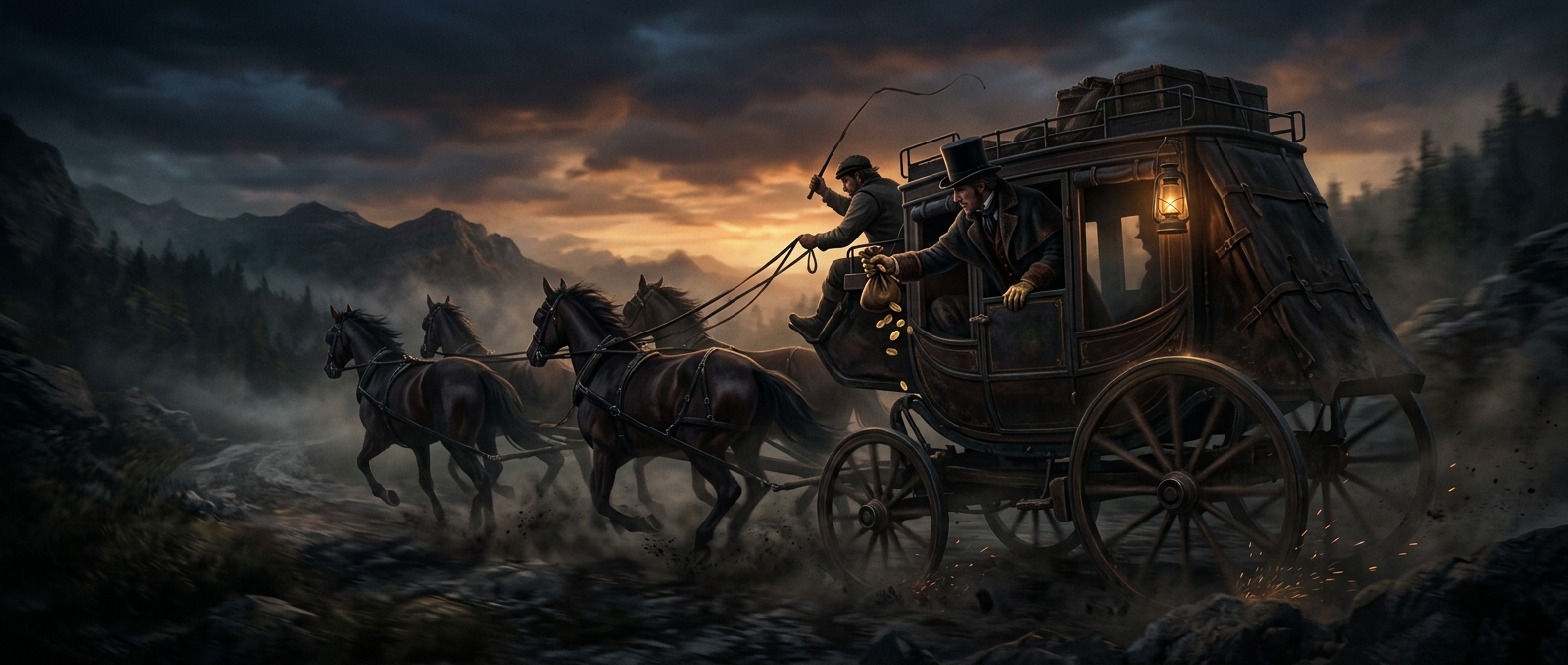
A faster stagecoach journey depended on more than the team pulling the vehicle. It required a chain of ready horses, people to harness them, and stations positioned along the route. At each change, the coach could move on while the horses that had just pulled it rested. The quicker service was therefore a logistical system: its pace came from coordinating many short efforts rather than demanding one long effort from the same animals.
Why the Faster Journey Cost More
Keeping that system ready meant maintaining spare teams and operating the stops where changes could happen. A service designed to move quickly also had to limit delays, since every prolonged stop could undo time saved on the road. Higher fares helped pay for that extra capacity and coordination. Passengers were buying a journey organized around speed, not a magically faster horse.
The advantage had limits. A relay could replace tired horses, but it could not erase poor roads, bad weather, or the distance between places where teams could be changed. Faster travel was most achievable where the route supported frequent, dependable changes—and it remained available chiefly to those able to pay for it. The coach’s speed was thus a product of both infrastructure and money: someone had to keep the next team ready before the passengers arrived.