Why one oar demands so much control
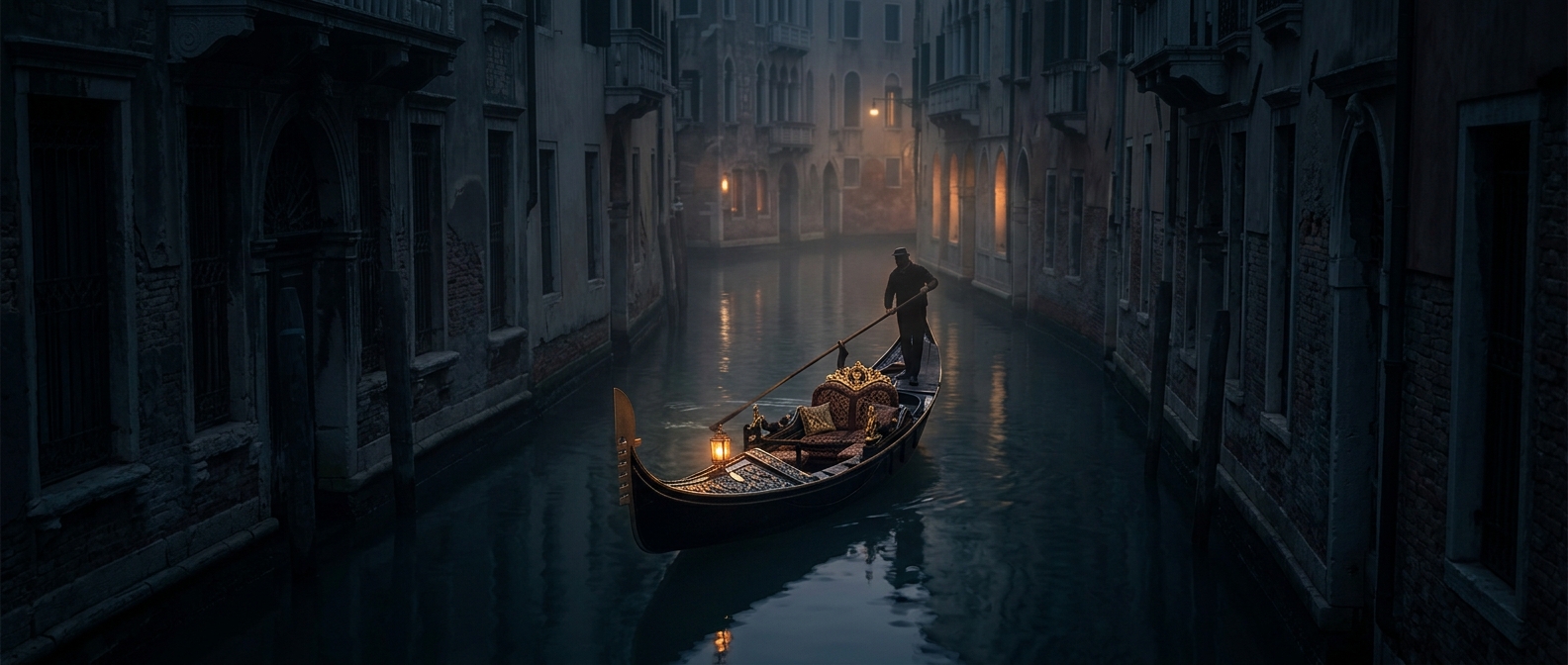
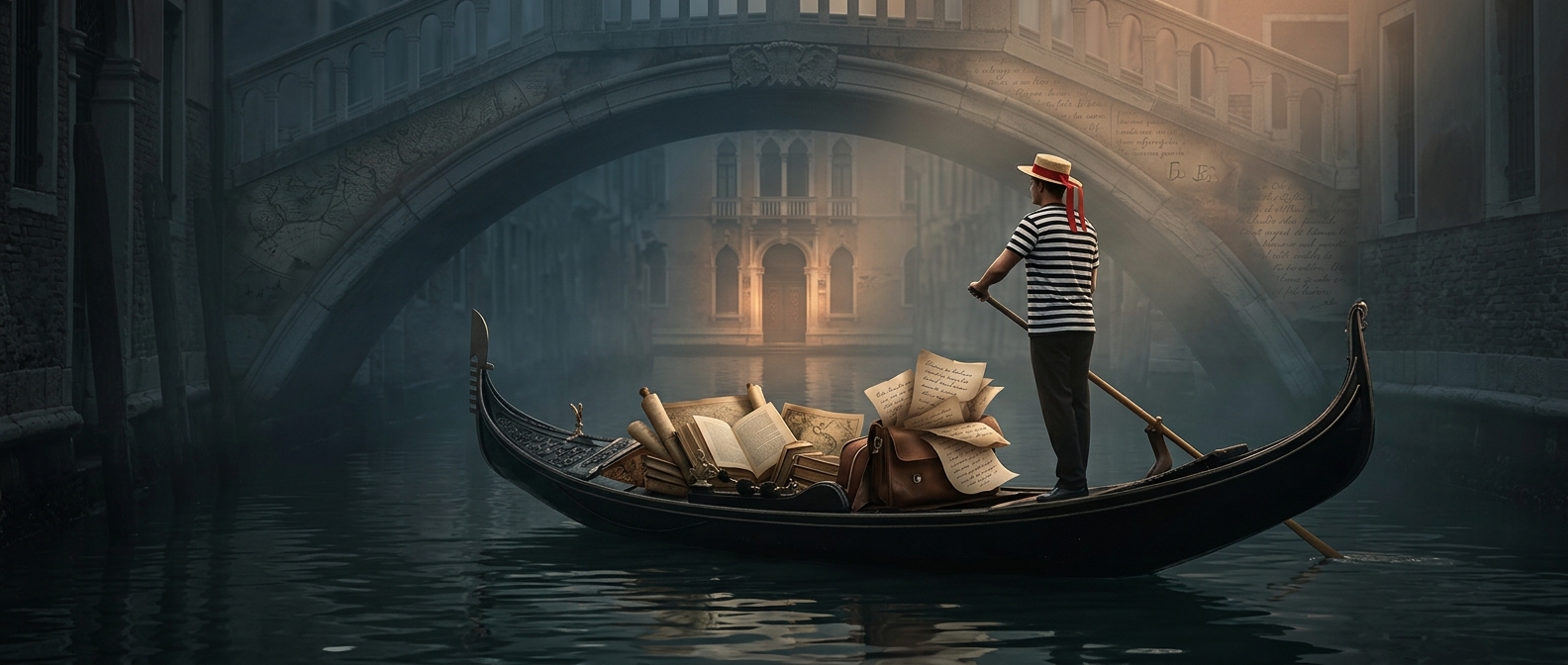
A gondola is not propelled like a pair of oars pulling evenly on opposite sides. The gondolier stands near the stern and works a single oar against a carved wooden support called a forcola. Its shape lets the oar sit at different angles, so a change in hand position can alter both the push and the boat’s direction.
That one-sided force naturally tends to turn the boat. Gondoliers compensate with the angle and rhythm of each stroke, steering while keeping the gondola moving forward. Their balance matters too: shifting their weight changes how the long, narrow hull responds. The skill is less about brute strength than about making small corrections before the boat has drifted off line.
Reading a canal before making a move
Venice’s waterways offer little room to correct a bad approach. A gondolier must judge a turn, the canal’s width, nearby boats and the movement of the water, then choose a stroke that carries the gondola through without scraping a wall or blocking traffic. A maneuver that works in open water may be too broad for a tight bend.
The forcola helps make that control possible, but it does not steer the boat automatically. The gondolier must learn how the oar responds at different positions and how the boat continues to move after a stroke. Repetition builds the timing to adjust course smoothly rather than waiting until a correction becomes abrupt.
Practice turns into judgment
Training therefore develops more than a set of rowing motions. It teaches a gondolier to connect what they see ahead with what the boat is likely to do next—and to make that decision while standing and working the oar. In a narrow canal, the difference between a graceful turn and a near miss can be a correction made a few strokes earlier.