A hull shaped around one-sided rowing
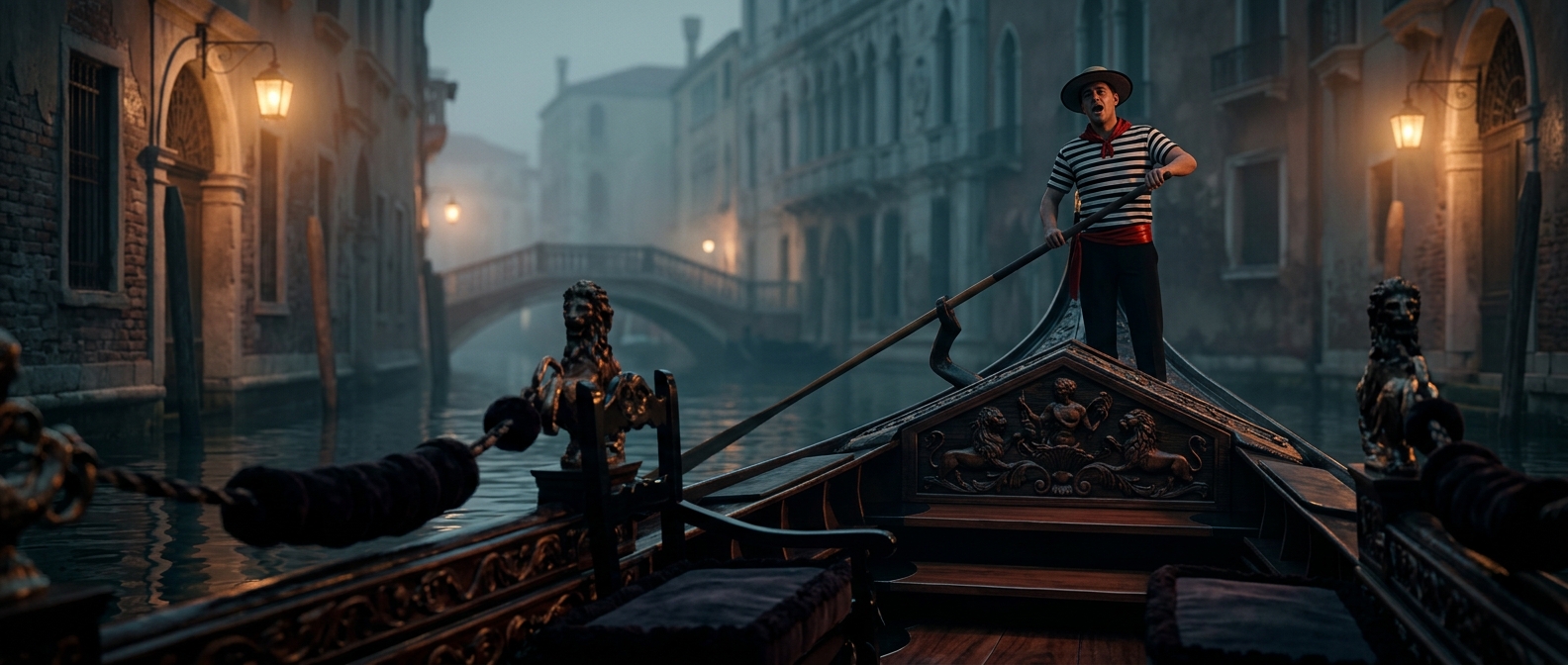
A gondola is not balanced like a small boat meant to carry a pair of oars. Its hull is built asymmetrically: the two sides do not mirror each other. That difference helps compensate for the sideways force created when a gondolier propels the boat with a single oar from the stern.
With one oar, every stroke does more than push the boat forward. It also tends to nudge the hull off course. A symmetrical boat would require the rower to correct that drift continually. The gondola’s uneven shape supplies part of the correction through the way the hull sits and moves in the water, helping it track forward rather than veer sharply to one side.
The oar is also the steering gear
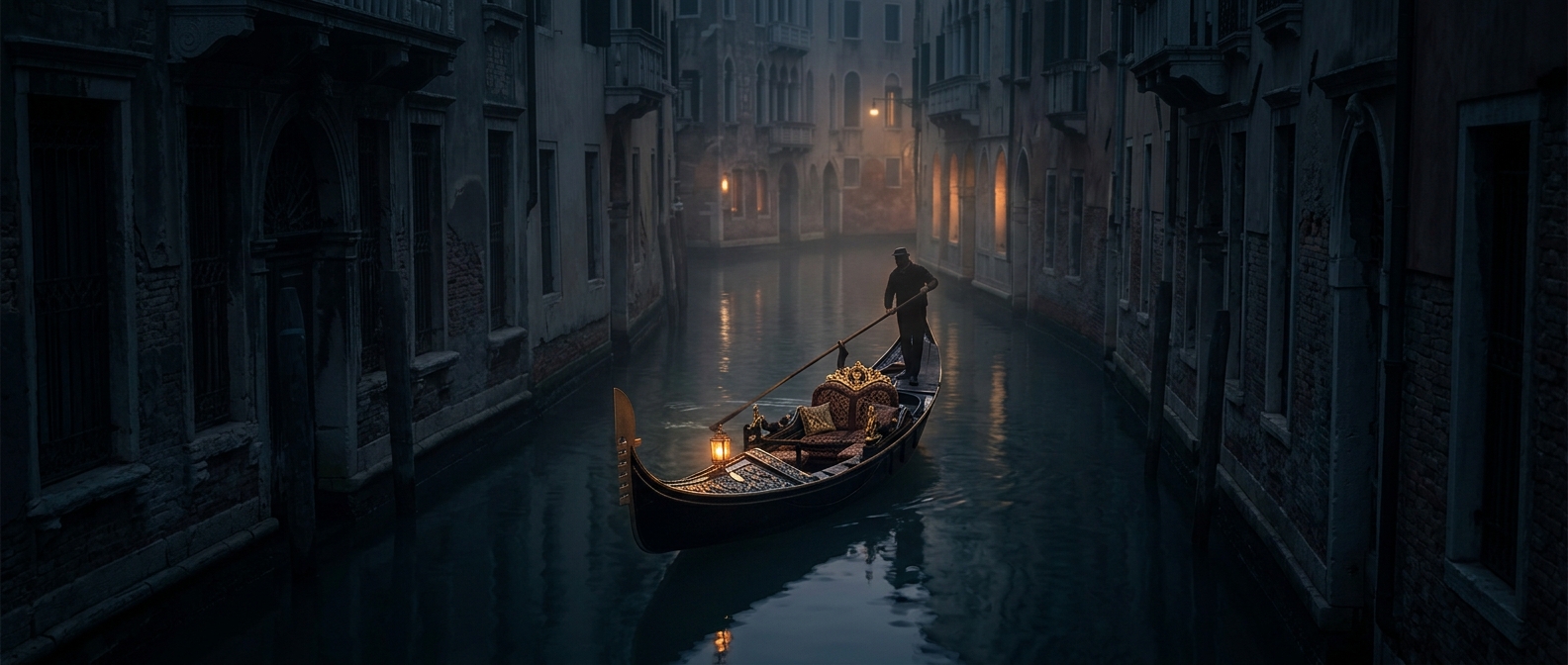
The hull does not steer itself. The gondolier works the oar against a carved support called a forcola, which holds it in different positions and lets the rower change the angle and pressure of each stroke. Small adjustments can propel, turn, or check the boat without changing seats or adding another rower.
That combination matters in Venice, where narrow canals and close-set buildings leave little room for broad turns. The gondolier can keep the boat moving with measured strokes, then use the same oar to guide its bow around a bend or bring it alongside a landing. The decorative exterior draws the eye, but underneath it is a carefully arranged compromise: a hull and rowing system designed to make one-sided power controllable in tight water.