Why a narrow waterway could move a heavy load
A canal worked by changing the problem from hauling a load over uneven land to moving it through water. The water supported the boat’s weight, so the mule did not have to lift the cargo or bear its full weight against the ground. It mainly had to overcome the boat’s resistance as it moved through the water—modest enough that a steady pull could shift a substantial load.
That advantage mattered most for goods such as coal, stone, and iron: bulky materials needed in large quantities, but not usually delivered in a hurry. A canal boat could carry more than a road cart, while the smoother route reduced the jolting and wear that made overland hauling costly.
The waterway had to be engineered as a route
Canals could not simply follow every dip and rise in the landscape. Their builders aimed to keep the channel at a controlled level, cutting through higher ground or banking it across low areas where needed. Where the route had to climb or descend, locks—chambers with gates that raise or lower boats by changing the water level—let vessels pass between sections at different heights.
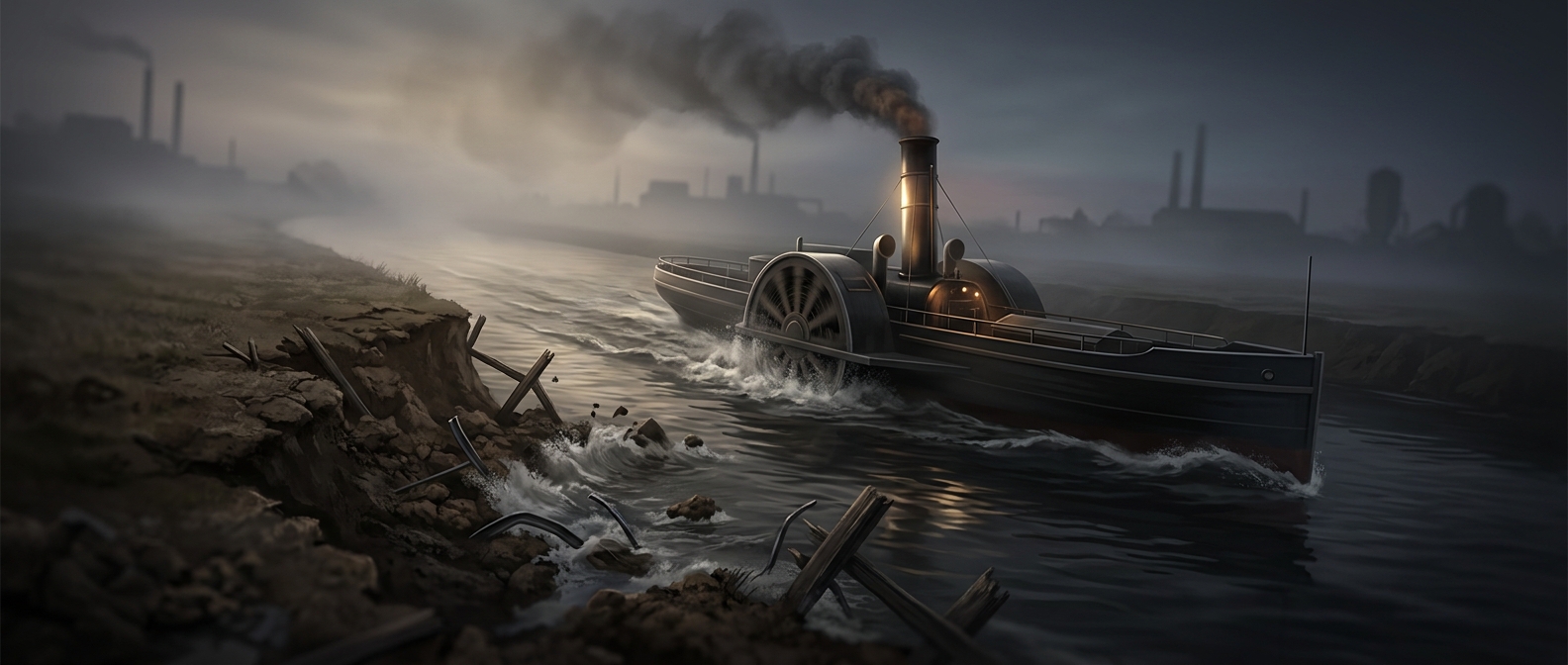
This made canal travel deliberate rather than fast. Boats moved at a pace suited to a tow animal, and locks added pauses. The route also depended on a reliable water supply and careful maintenance: a damaged bank or a shortage of water could interrupt traffic across a stretch of the network.
A new geography for industry
A canal’s value came from linking places that produced raw materials with towns, factories, and markets that needed them. Once a water route existed, heavy goods could travel farther without being divided among many carts on rough roads. That helped industries obtain fuel and materials more predictably, while giving producers access to customers beyond their immediate area.
The tradeoff was that factories and towns benefited most when they were connected to a canal. The network did not make distance disappear; it made certain routes far cheaper to use, reshaping where goods could move economically—and, in turn, where industrial growth was practical.