Why canals needed a path beside the water
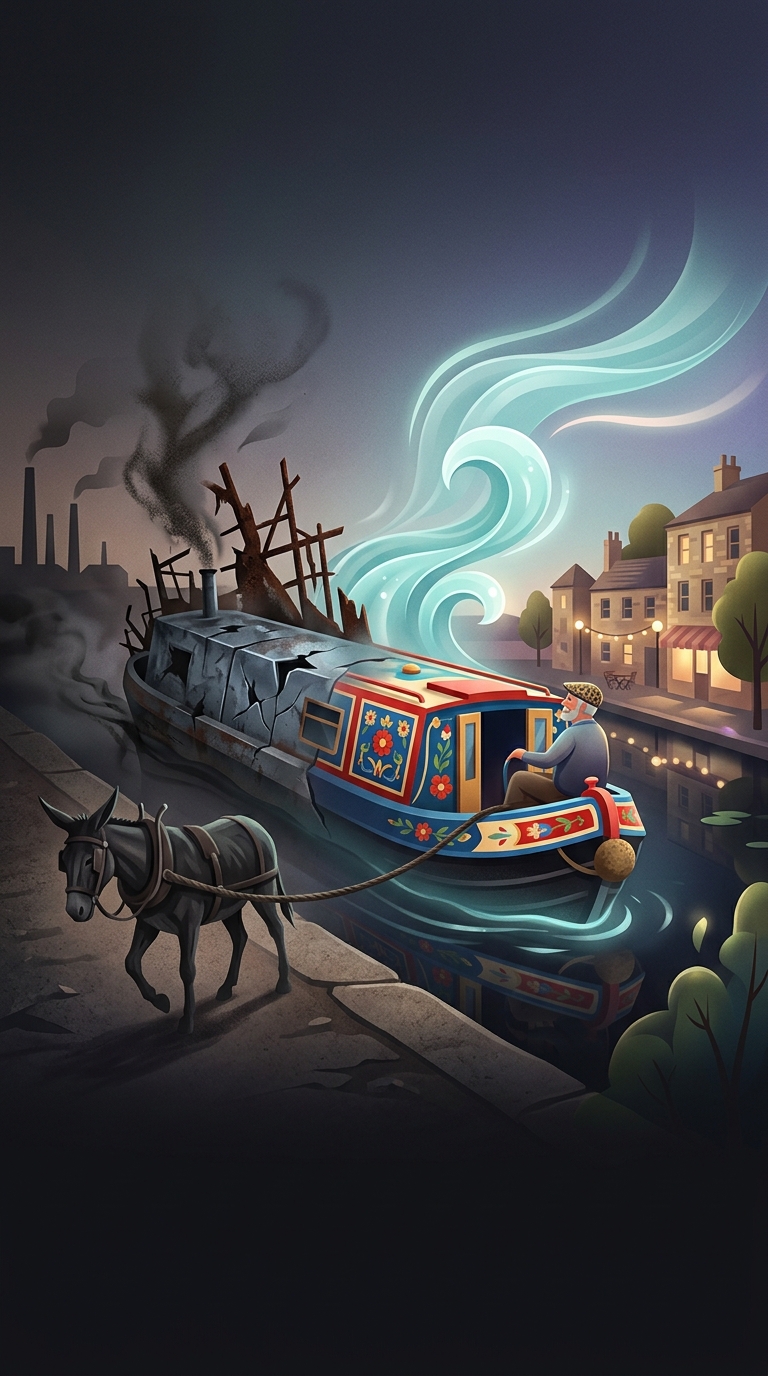
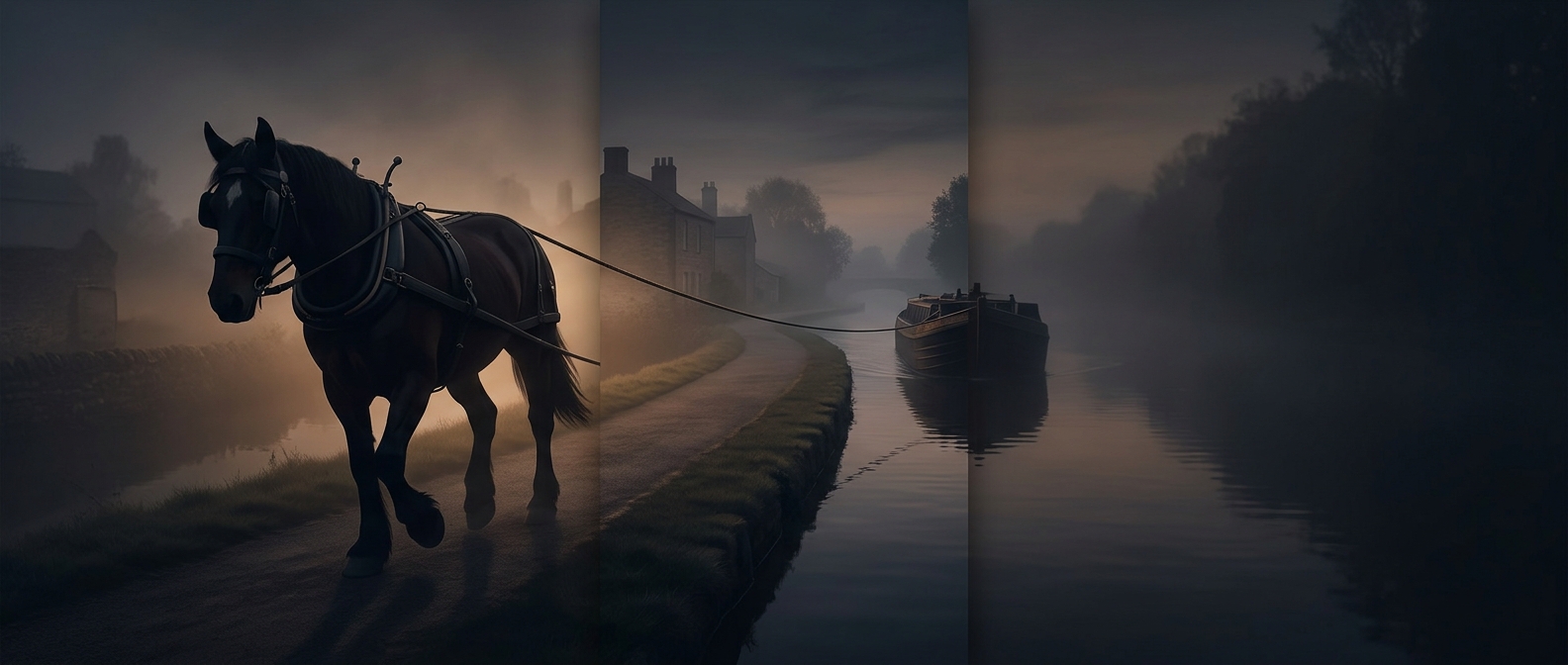
A loaded barge could carry far more cargo than a wagon, but its shallow-draft hull was designed to float in relatively calm water, not to power itself. Before engines became practical, a horse walking on the bank could supply steady forward pull through a rope. The narrow path beside the canal was therefore working infrastructure: it gave the animal firm ground and kept it moving in the same direction as the boat.
How the towline moved a barge
The horse’s harness transferred its pull to a long towline attached to the barge. As the horse advanced, tension in the rope drew the boat forward. The line had to be long enough to reach from the bank while allowing the barge to stay in the navigable channel; its angle also meant some force pulled sideways, so steering mattered. A person aboard could guide the barge and manage the line, keeping it clear of obstacles and other traffic.
This arrangement made use of a useful division of labor: the horse walked on land, where it could get traction, while the barge carried heavy loads on water, where buoyancy supported their weight. The towpath let the animal keep pace for long stretches without having to swim or walk through the canal.
A canal became a transport system
The waterway alone was not enough. A dependable towpath, suitable banks, and room for the towline had to be built and maintained alongside it. Locks and bends added further demands: boats had to be slowed, steered, or unhitched and repositioned as they passed through the canal’s changing levels and layout.
That shore-side route also mattered after engines arrived. Towpaths remained useful for canal work and later became walking and cycling routes. Their original purpose is still visible in the basic arrangement: the boat travels on water, but the power that moves it can come from the land.