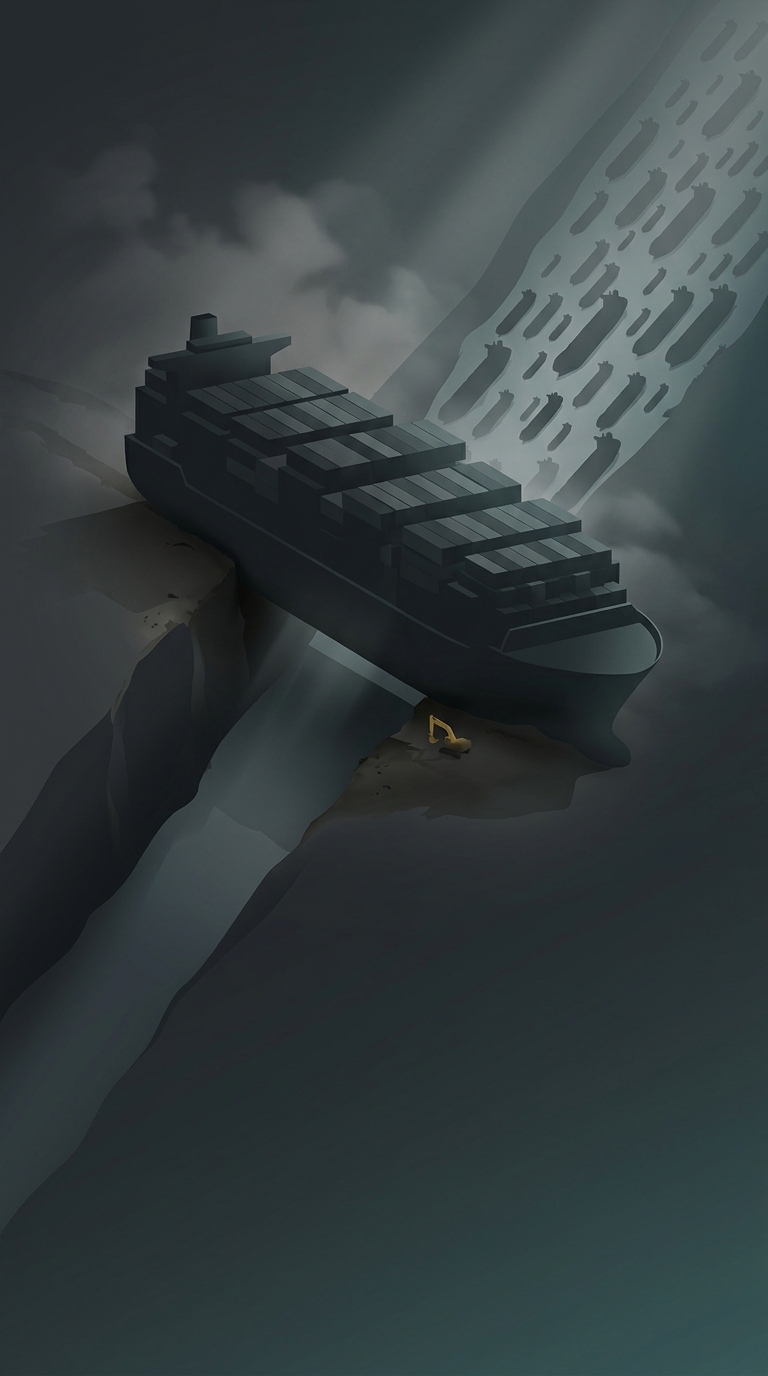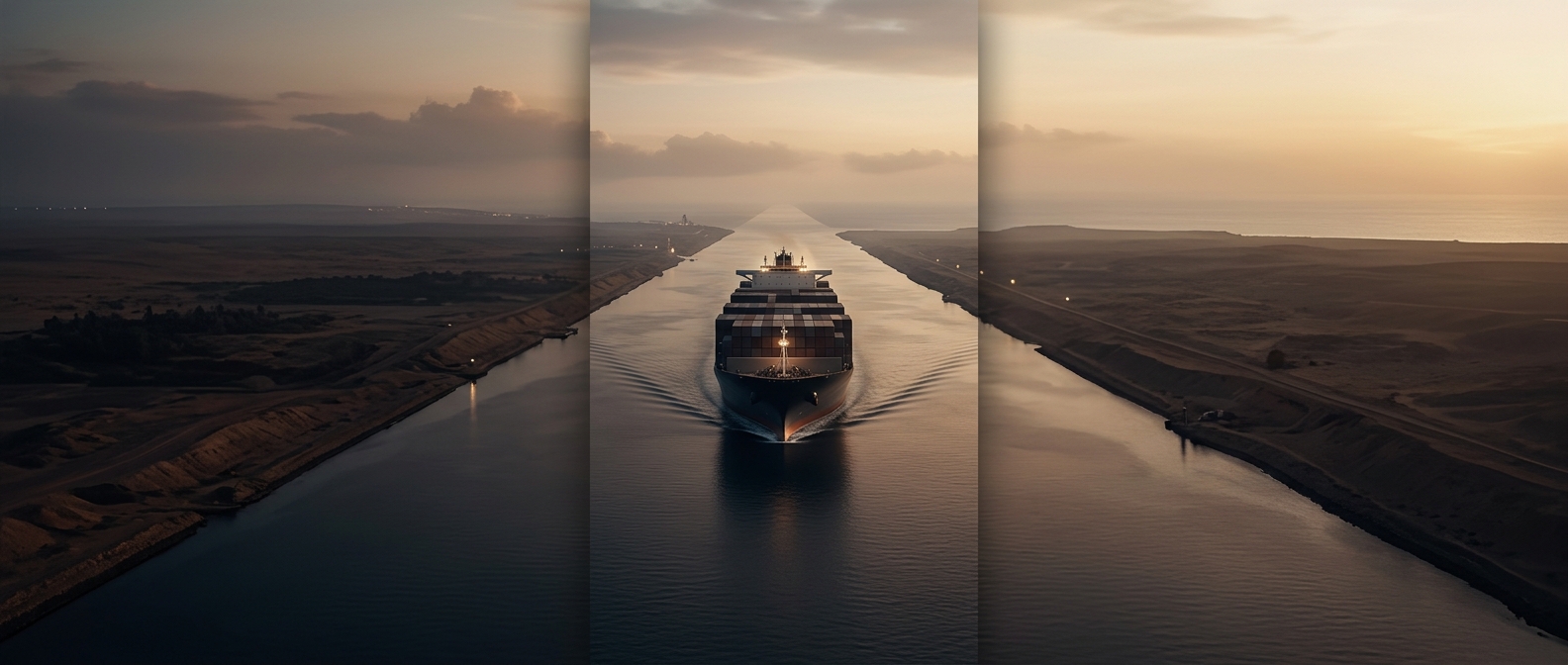
A canal cut through a low isthmus
Locks are needed when a canal must carry boats between stretches of water at different elevations. A lock works like a water-filled elevator: gates close around a ship, and the chamber is filled or drained until the vessel matches the level ahead.
The Suez Canal avoids that step because its route crosses the low, relatively flat land between northeastern Africa and the Sinai Peninsula. Engineers excavated a navigable channel through the isthmus rather than building a staircase over a high ridge. The Mediterranean and Red Sea are at nearly the same level, so ships can travel between them without being lifted or lowered.
Lakes along the route don’t act as steps
The canal passes through natural and enlarged lakes, including the Great Bitter Lake. These broad stretches form part of the waterway, but they do not create the large elevation changes that would require lock chambers. The canal is therefore a sea-level canal—a continuous route connecting two seas at roughly comparable elevations.
That design has a practical consequence: ships can pass through without waiting for a lock chamber to cycle. The canal’s challenge is not moving vessels up and down, but keeping a long, narrow channel navigable and managing traffic through it.