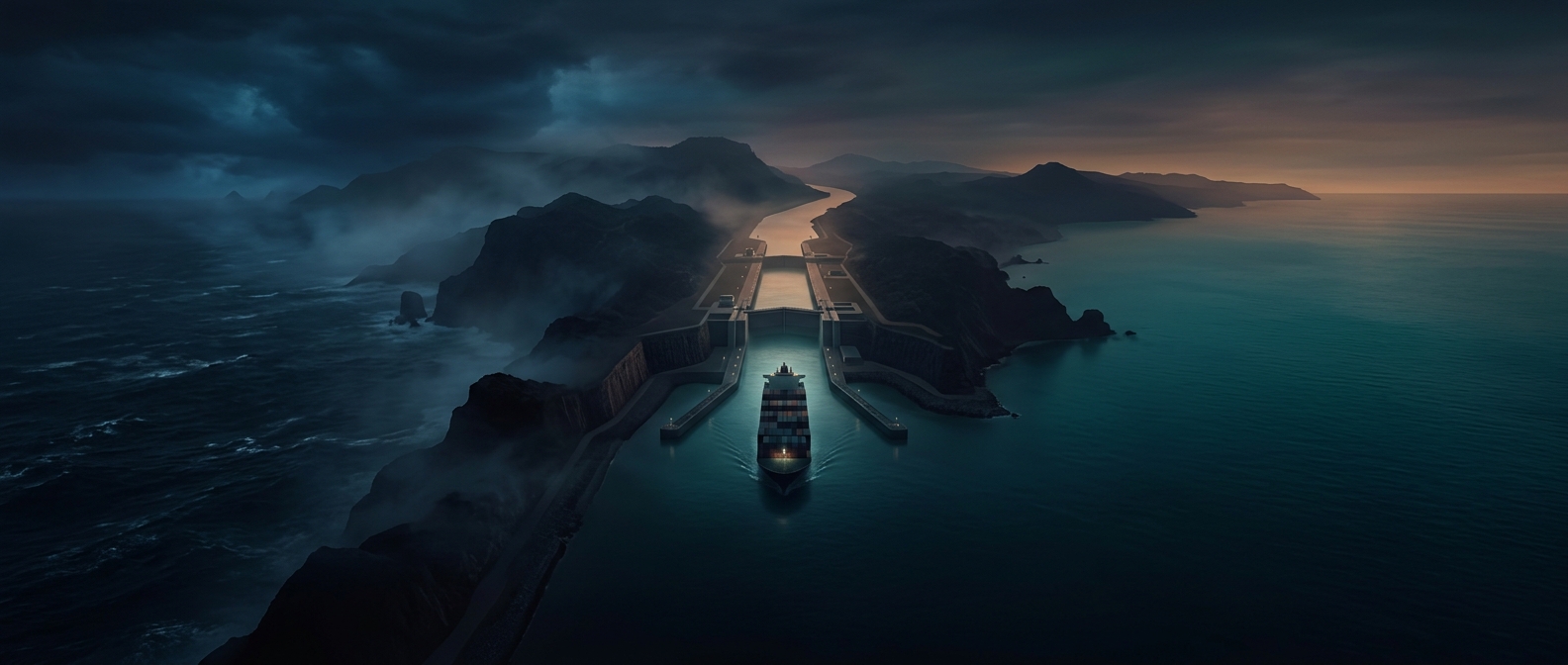
Why Panama needed locks, not a trench
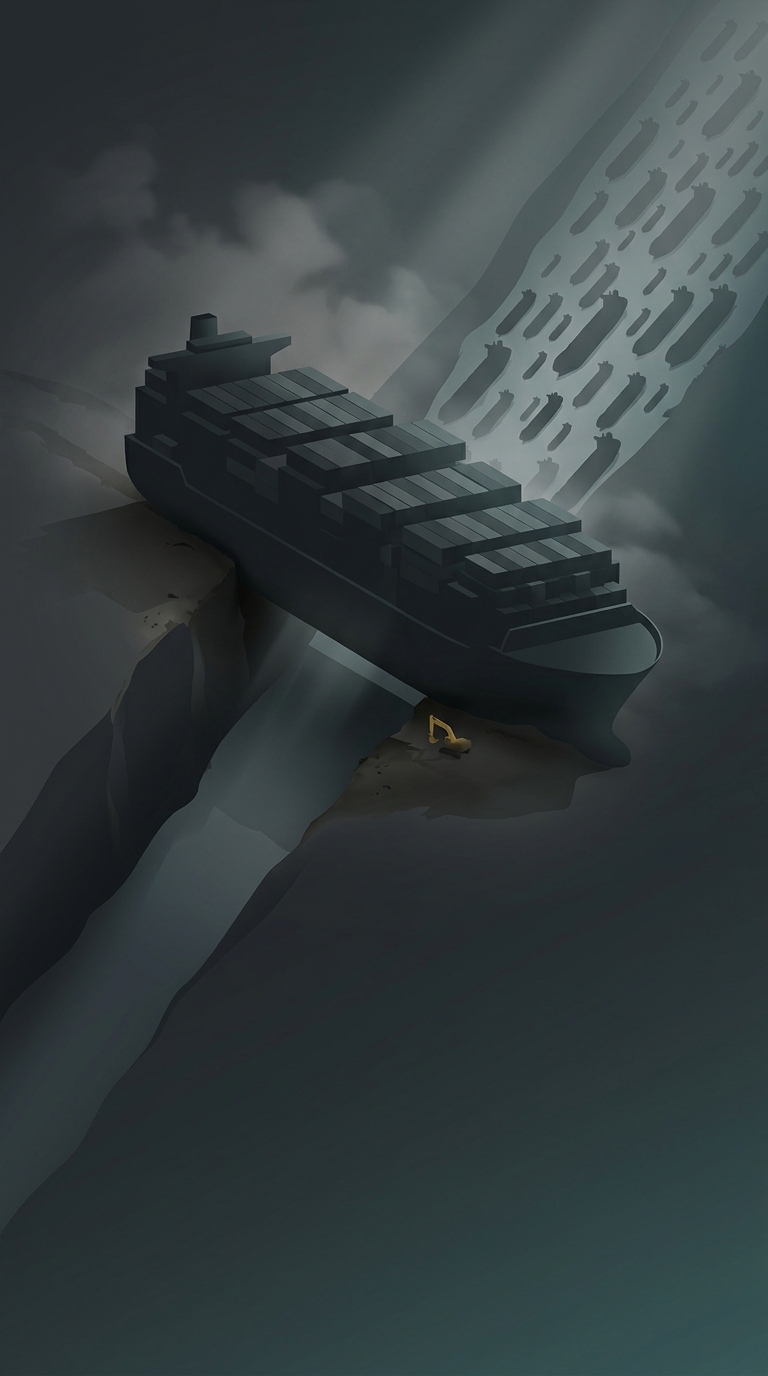
The narrow land bridge between North and South America looks like a natural shortcut, but its interior rises well above sea level. Cutting a channel low enough for ocean water to flow straight across would have meant excavating through hills and a rugged watershed—the land that drains into a river or lake. Engineers instead used locks to move ships up to an inland waterway and back down to sea level.
A lake becomes part of the route
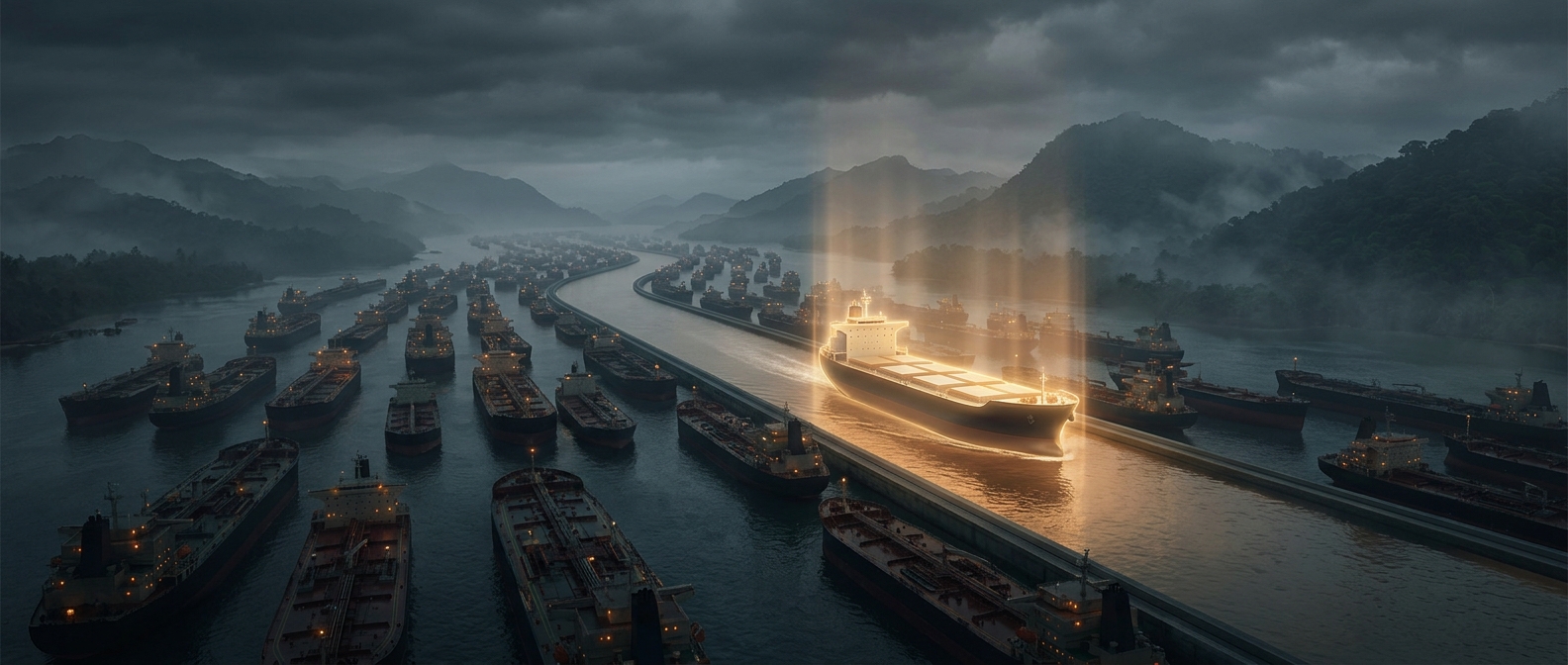
The canal’s central stretch runs through Gatun Lake, a vast artificial lake formed when a dam held back the Chagres River. That lake supplies much of the water needed for canal operations. At each lock, gates close behind a ship while water flows in or out of the chamber, changing its level until it matches the next section of the route. The ship can then move forward without being carried over land.
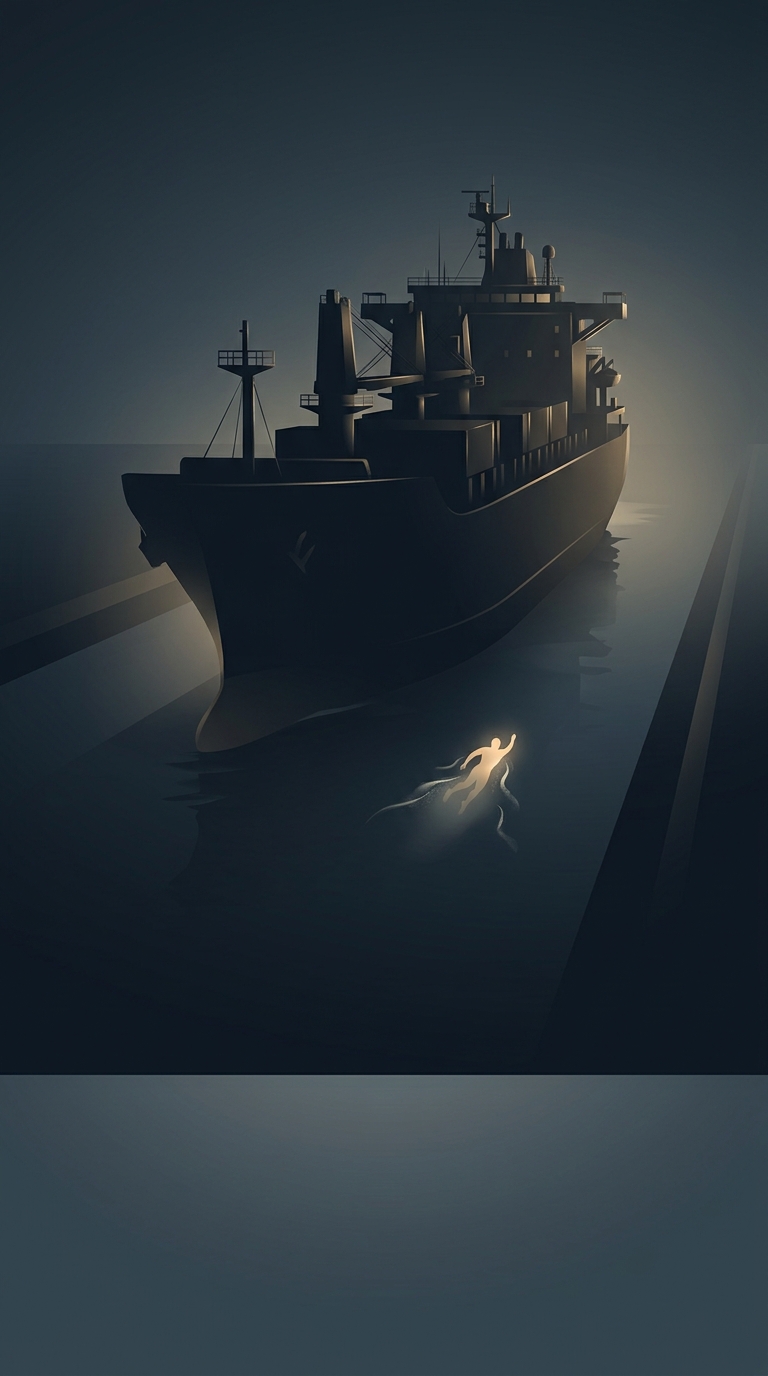
The water does the lifting: a lock is essentially a chamber whose level can be raised or lowered around a vessel. The canal therefore depends not only on its cuts and gates but also on rainfall and the lake’s stored water. Each transit uses freshwater that ultimately drains toward the sea.
A shortcut with a water cost
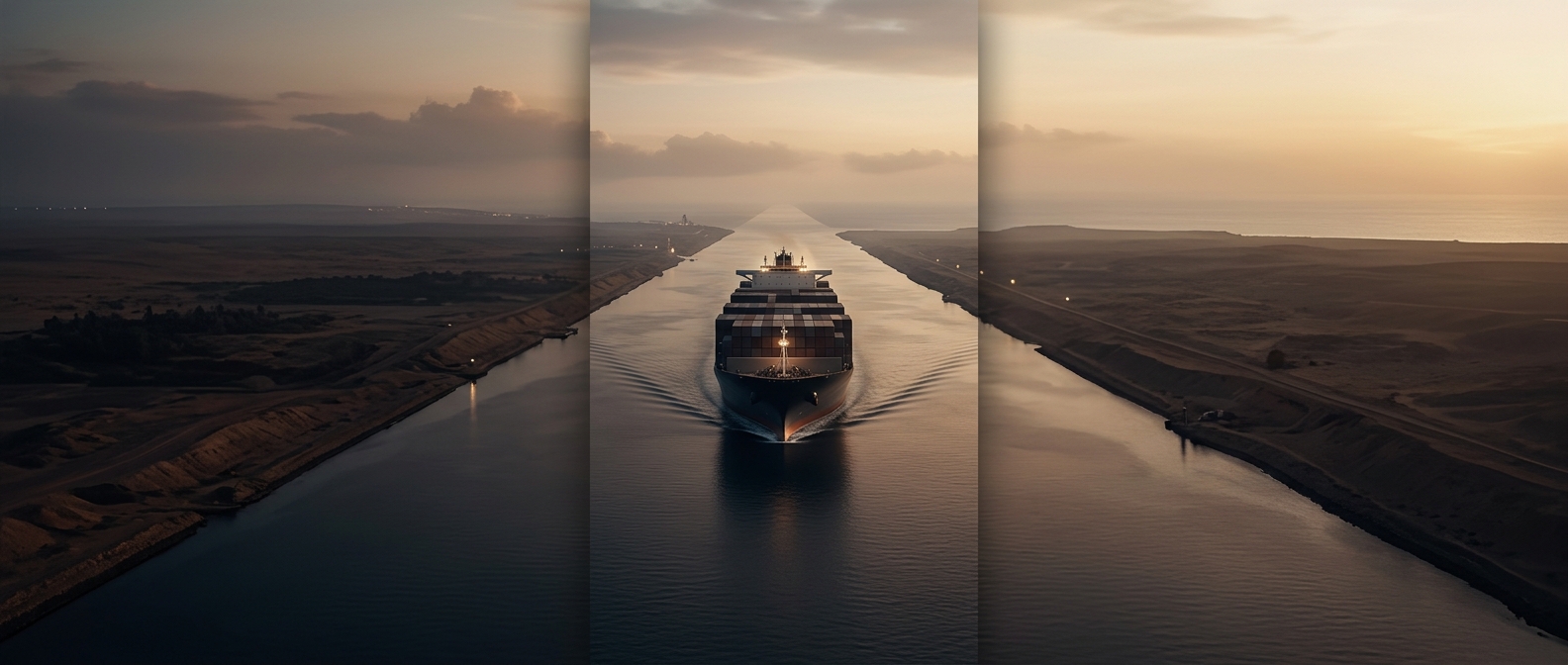
By linking the Caribbean Sea, part of the Atlantic, with the Pacific, the canal avoids the much longer voyage around South America. But it does not create a level passage between two oceans. Ships cross a managed inland watershed, lifted and lowered in stages—and every passage draws on the freshwater system that makes the shortcut possible.