Why a dry spell slows the canal
A ship crossing the Panama Canal is lifted and lowered through locks—water-filled chambers that act like stair steps between the oceans. The locks draw freshwater from Gatun Lake, so a drought can constrain not just how deeply loaded ships may travel, but how many transits the canal can schedule while conserving water.
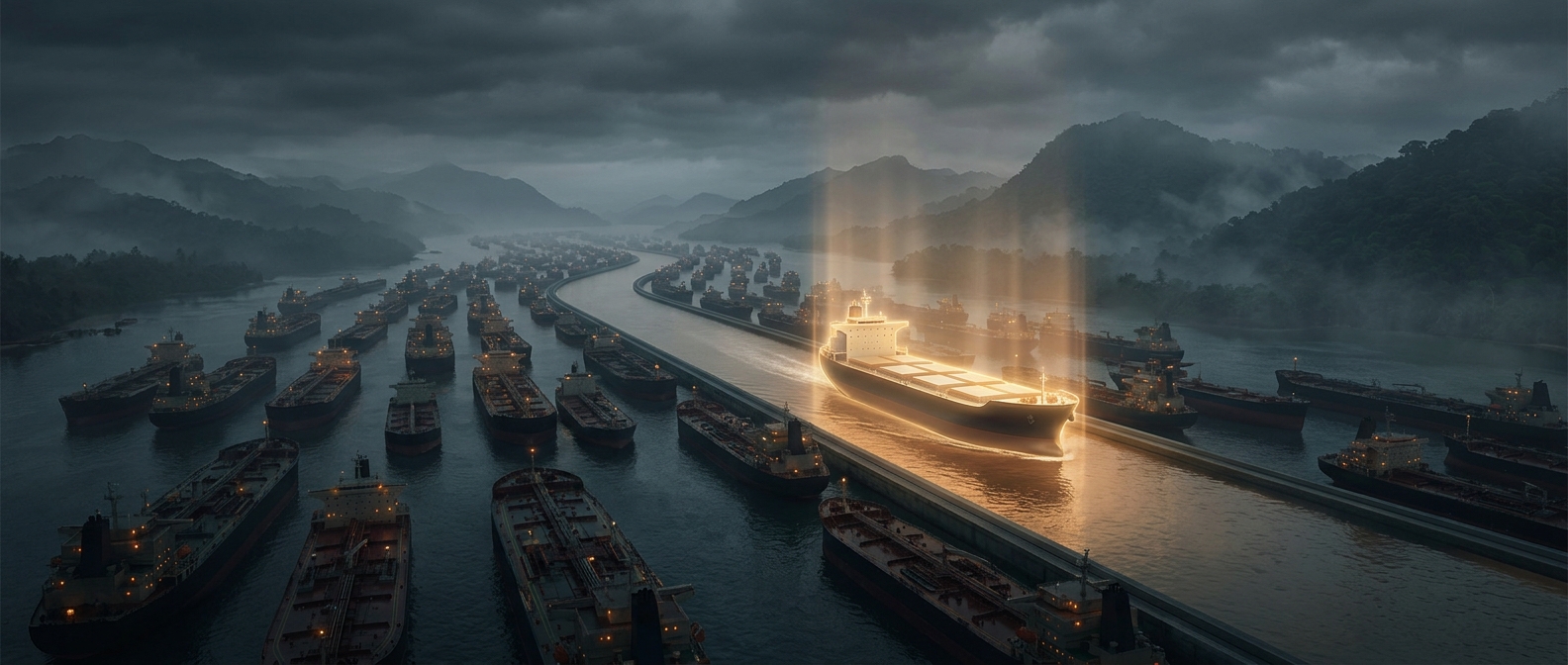
That turns a natural shortage into a scheduling problem: more ships want passage than there are available slots. A vessel that misses its planned transit may have to wait while its crew, cargo, and operating costs remain tied up.
What the auction buys
The auction is a way to allocate scarce priority slots. A shipping line bids for a chance to transit sooner; winning does not create extra canal capacity, but changes which ship gets to use a limited opening. The price can rise sharply when many operators face the same bottleneck.
For a carrier, the decision is economic, not simply a matter of impatience. Paying a large premium may make sense if waiting would disrupt a tightly timed voyage, delay valuable cargo, or keep a ship from beginning its next paying trip. If the delay is tolerable, the auction price may cost more than the time saved is worth.
A bottleneck with a price tag
The striking feature is that the drought’s cost does not stop at the canal’s gates. A delayed ship can throw off schedules elsewhere, while a successful bid shifts the immediate burden toward the operator that needs certainty most. The auction makes time itself the scarce resource being sold: the canal cannot move every ship faster, but it can let the highest bidder claim an earlier place in the schedule.