How a container terminal works without headlights
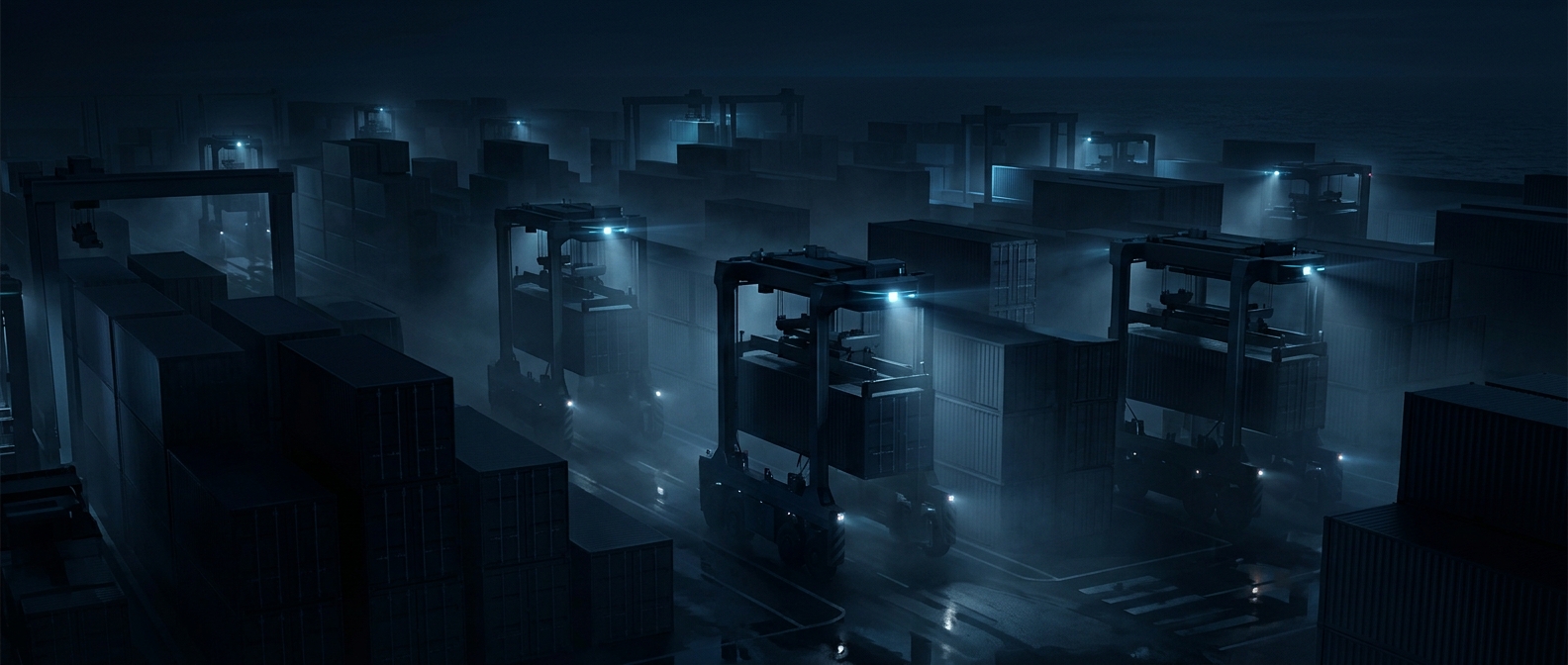
At a conventional port, a driver watches for obstacles and follows instructions while carrying a container between ship and storage yard. An automated guided vehicle (AGV) shifts that work to a control system: sensors detect the vehicle’s position and nearby hazards, while software assigns routes and coordinates movement with other machines.
The result is not a robot improvising its way across an empty lot. Its paths and handoffs are planned around the terminal’s layout and the flow of containers. When a vehicle reaches a transfer point, cranes or other equipment can take over the container, allowing the next move to begin without a driver getting out to direct it.
Darkness removes one requirement, not all visibility
Human operators need enough light to see pavement, equipment, and one another. A vehicle guided by electronic sensors does not need headlights to read the route, so broad work areas can operate with less illumination. Its sensors still need to detect obstacles and position; darkness is useful only because the navigation system relies on those signals rather than human eyesight.
That distinction matters in a busy yard. A container may be moving through several stages—off a vessel, across the terminal, then into a storage position—so a delay at one handoff can affect the next vehicle or crane. Automated routing helps keep those movements coordinated, while reducing the need to light the entire work area for drivers.
People still need safe access for inspection, repairs, and other work, so “dark” does not mean the terminal is unlit everywhere. It means lighting can be concentrated where people need it, while the vehicles keep moving through the lanes.