How a lost cargo became a current tracker
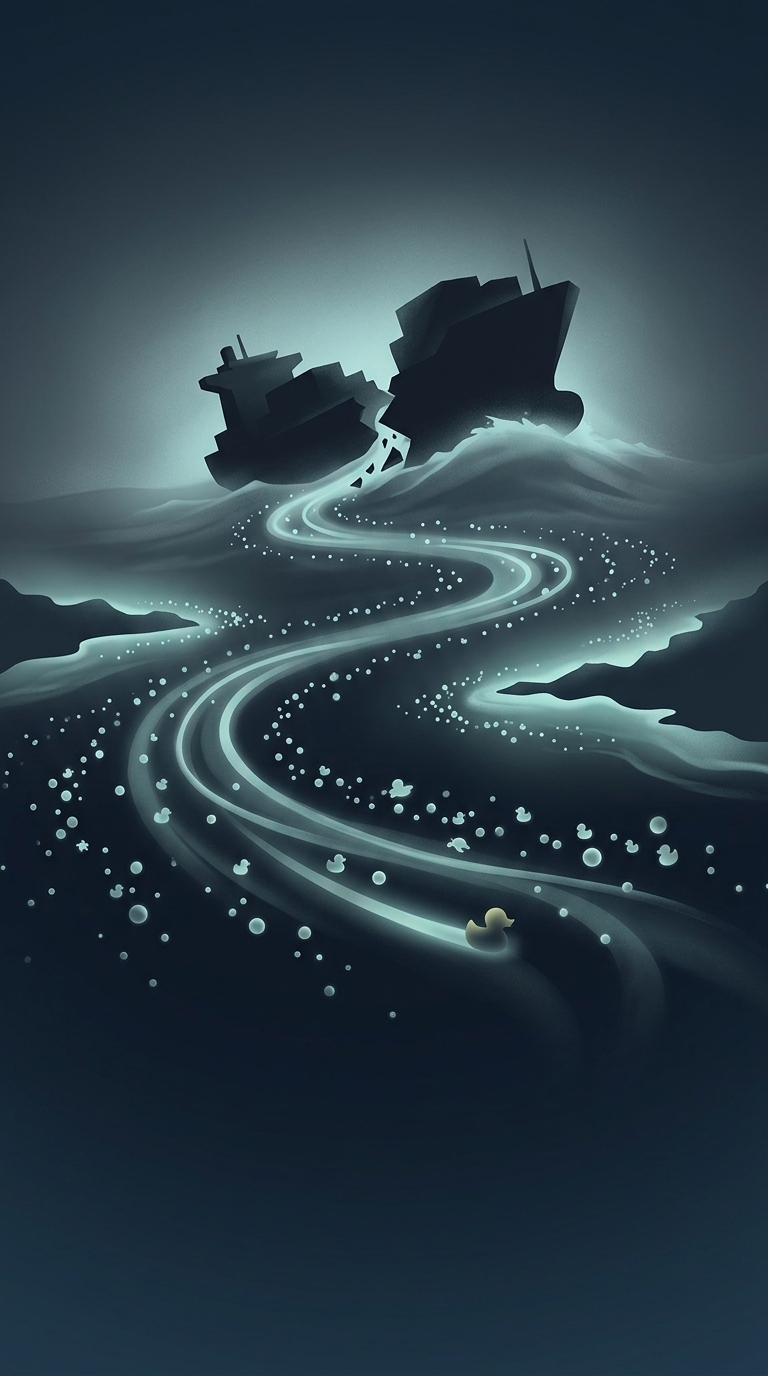
In 1992, a shipping container fell from a cargo vessel during a severe storm in the Pacific, releasing 28,000 plastic bath toys into the ocean. The spill was accidental, but the toys’ later journeys offered researchers a rare way to watch surface currents at work. Unlike a dye that quickly disperses or a single instrument that records conditions in one place, each floating toy traveled with the water and could eventually be found on a distant shore.
The ocean leaves clues on beaches
Researchers used reports of where the toys washed up to piece together their movements. A toy reaching a beach provided a rough endpoint for a long trip: its location and timing helped indicate which currents had carried it there. Comparing many landfall reports could reveal routes across the Pacific and show how floating material moves between open water and coastlines.
The method had limits. A toy’s path could be altered by wind and waves as well as currents, and not every toy was found or reported. Still, thousands of similar objects scattered across a wide area created a set of observations that would have been difficult to obtain from a single ship or instrument.
A transport accident with a lasting trace
The toys turned lost cargo into a kind of drifting experiment. Their beach arrivals helped researchers investigate ocean circulation—and also made the persistence of plastic waste visible. A container can disappear from a vessel’s deck in a moment; its contents may continue moving through the sea for years, tracing routes that connect distant waters and shores.