A floating dock that can travel
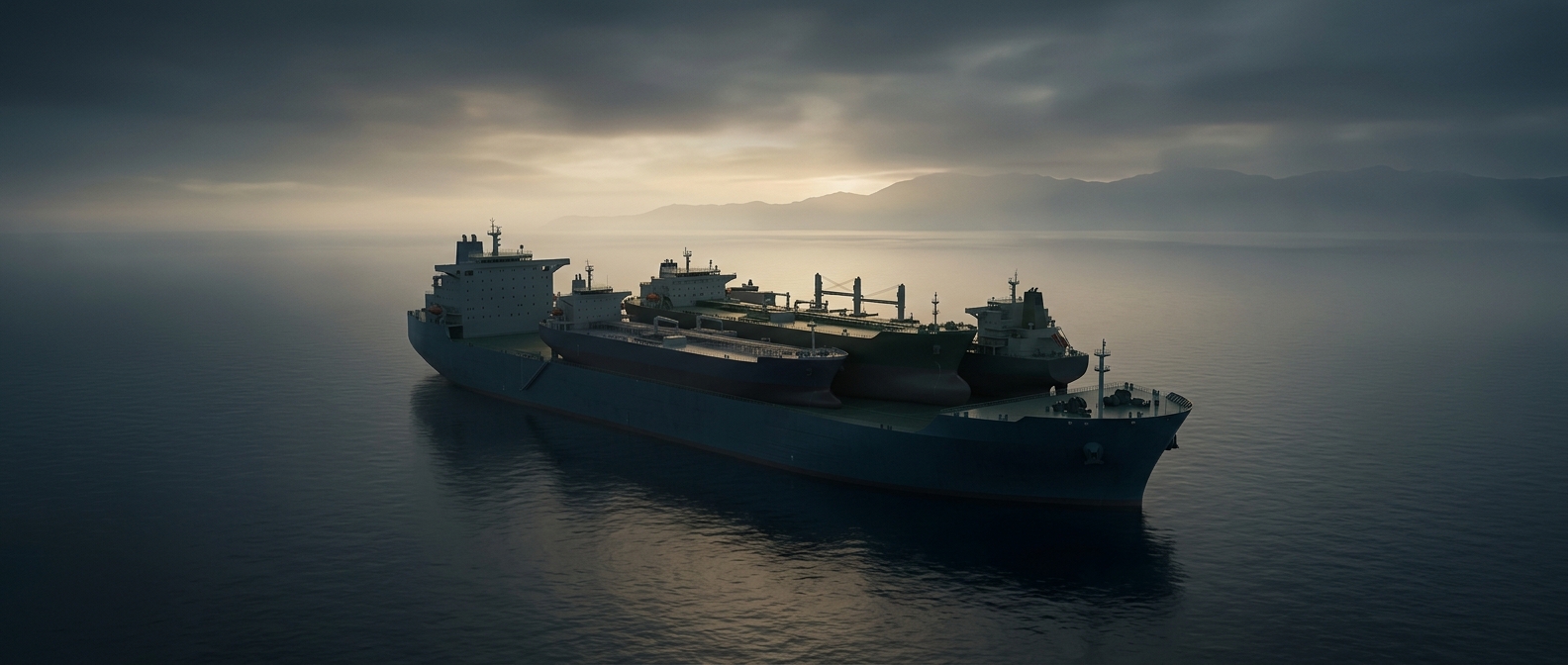
The trick is not simply to lift a ship, but to bring a broad, stable platform beneath it. A semi-submersible carrier uses ballast tanks—compartments filled with water or air—to change its own depth. By controlling how much water enters each tank, the crew can lower the cargo deck while keeping the carrier balanced.
Once the transported vessel is positioned above the deck, the carrier rises gradually. As the deck approaches the hull, the load’s weight transfers from the water to the carrier. The deck must support that weight across carefully planned contact points, rather than press against the hull wherever it happens to touch.
The hard part is staying balanced
A ship being loaded can shift with waves, wind, or small changes in position. Those movements matter: a heavy vessel resting unevenly can put excessive stress on the carrier’s deck or its own hull. Ballast is therefore managed across the carrier, not just pumped in or out all at once. The aim is to keep the deck level as the load settles and the carrier’s weight distribution changes.
Before the voyage, the cargo must also be secured against movement. At sea, rolling and pitching—the carrier’s side-to-side and fore-and-aft motion—can turn a stable load into a dangerous one if its restraints fail. The route and weather conditions are part of the engineering problem, not afterthoughts.
Moving what cannot make the journey
This method is useful when a vessel is too large, damaged, or otherwise unsuited to travel under its own power. Instead of requiring a ship to cross an ocean under its own propulsion, the carrier transports it as cargo. The payoff is a mobile repair berth or launch platform: a dock-like surface that can meet a vessel far from a conventional harbor, then carry it away once the job is done.