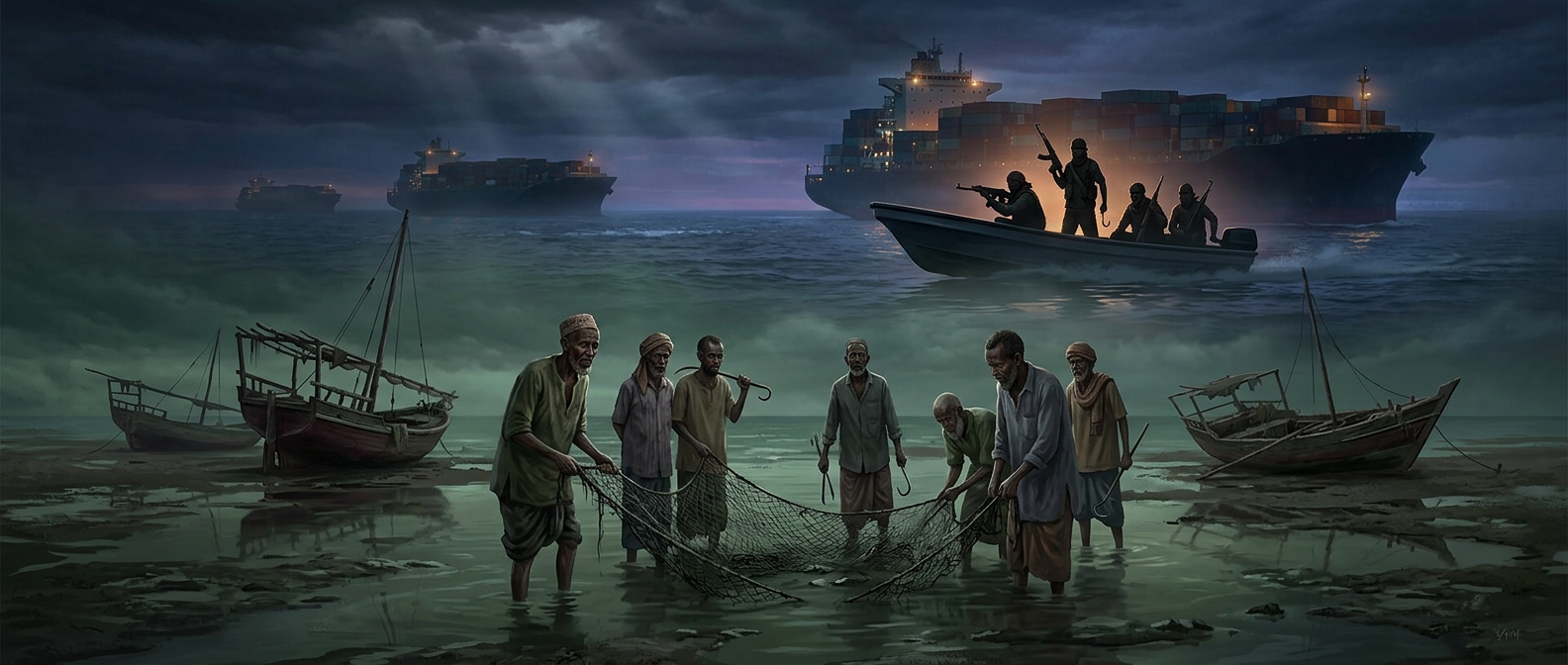
When the catch disappeared, the stakes changed
For a coastal fishing crew, an empty net is not just a bad day: it means less food to sell and fewer ways to pay for fuel, gear, and household needs. Along Somalia’s long coastline, local fishers faced competition from foreign industrial vessels, which could catch far more fish than small boats. With the Somali state weakened and maritime enforcement limited, coastal communities had little practical power to stop incursions or reliably protect their fishing grounds.
That made the sea’s decline both an economic loss and a grievance. Some fishers began intercepting ships, initially presenting armed patrols as a way to defend local waters or demand payment from foreign crews. But the distinction between protection and coercion did not last: armed groups took hostages and demanded ransoms, turning attacks on ships into a business far removed from ordinary fishing.
Why ships became targets
The same waters that had become harder for local crews to earn a living from were busy routes for commercial shipping. A merchant vessel carries valuable cargo, has a small crew, and is difficult to defend far from shore. For attackers operating from small boats, capturing a ship and holding its crew could bring in far more money than a fishing trip. Ransom payments then attracted people who were not fishers and helped sustain organized piracy.
This was not a simple switch from fishing to crime, nor did every pirate come from a fishing community. It was a chain of pressures: depleted or contested fishing grounds weakened livelihoods; weak enforcement left grievances unresolved; and vulnerable shipping offered a lucrative alternative. The result was that a crisis over who could take fish from Somali waters grew into a threat to crews and vessels passing through them.