Why a steel box changed shipping economics
A shipping container is valuable partly because it turns unlike cargo into a predictable unit. Before containerized freight, workers often had to handle individual crates, sacks, and barrels at the port. Loading them took time, and each transfer created another chance for damage, delay, or loss.
A container can instead be lifted as one sealed load. Cranes move it between a ship and the dock, while trucks and trains carry the same box onward. The goods inside usually stay packed throughout the journey, so the expensive work of handling cargo happens fewer times.
The savings come from the whole route
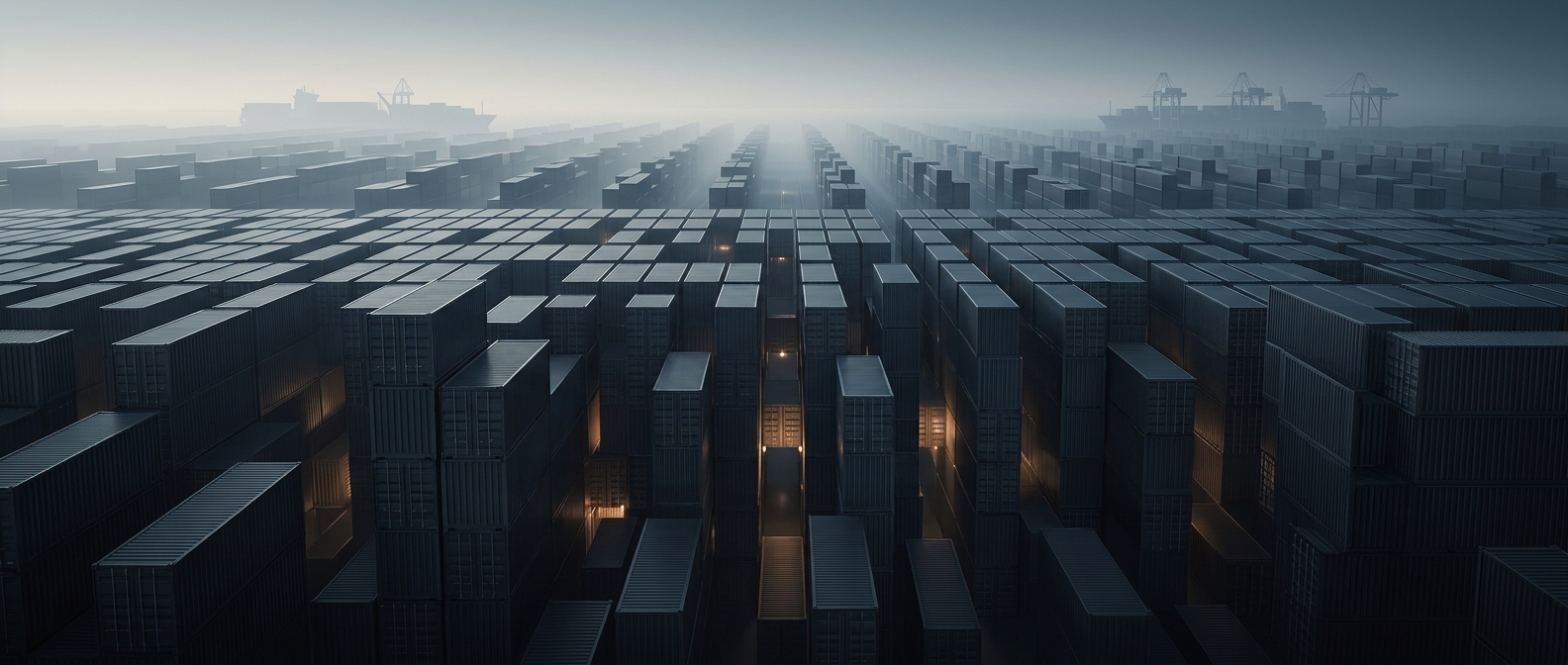
Standard dimensions let carriers plan around the space each box occupies. Ships can be loaded in orderly stacks, ports can use equipment built for those stacks, and rail yards and trucking operations can handle the same units. That coordination keeps ships and terminals moving more efficiently than if every shipment required a different loading method.
The cost of a voyage also does not rise in proportion to the number of boxes aboard. Fuel, crew, and the ship itself are major expenses whether a vessel carries many containers or fewer. When more usable capacity is filled, those shared costs can be divided among more shipments. The same logic applies to port calls and handling equipment.
Cheap transport has a tradeoff
Ocean freight is slow, and containers still have to reach a port and travel from the destination port to their final addresses. Those transfers cost money and time; a box may wait in a terminal or be moved by rail or truck before it reaches a warehouse. For urgent or small shipments, faster transport can be worth the added expense.
The striking part is that the box is not merely packaging. It is a portable piece of infrastructure: the same standardized unit can move through several transport systems without its contents being unpacked at each boundary. That continuity is what lets an ordinary household object share the economics of a vast freight network.