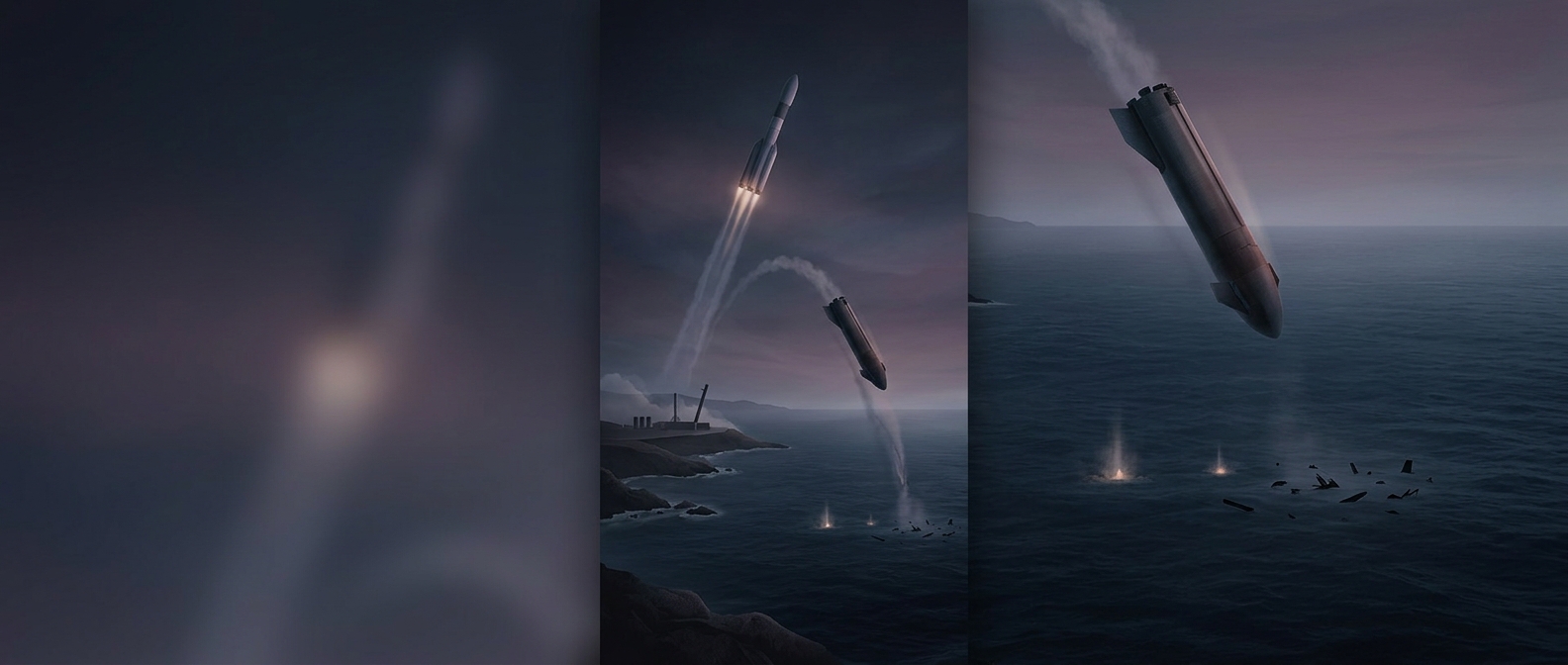
A launch route is also a debris corridor
A rocket does not usually climb straight up and then turn wherever it pleases. Soon after liftoff, it tilts toward its intended orbit. As it gains speed, lower stages run out of fuel and separate; their momentum carries them forward along the rocket’s path. That makes the area downrange—the region ahead of the launch site—part of the launch plan from the start.
If a discarded stage could land near a town, ships, or aircraft, the flight would put people at risk. Over open water, a launch operator can instead define a broad corridor where falling hardware is less likely to strike anyone.
Safety shapes the route
Before launch, operators and range-safety teams assess where stages may fall and keep people and traffic out of hazardous areas. They track the rocket during flight, and some systems can stop a vehicle that strays dangerously off course. The route must therefore work both for the mission and for the safety plan.
Ocean access is not unlimited: coastlines, islands, airspace, shipping lanes, and the destination orbit all constrain which directions are practical. Some rockets shed hardware over land when a suitable, controlled area is available, and not every part of a launch vehicle is discarded. The sea is often a useful buffer, not a universal dumping ground.
The tradeoff continues after splashdown
A planned impact far from people reduces immediate danger, but it does not make hardware disappear. A stage may sink, break apart, or leave material at sea, so operators also have to consider recovery, cleanup, and environmental effects. The route is a compromise: it gives the rocket room to fly while directing its spent parts toward places where the risks are easier to manage.