Why Ports Move Containers This Way
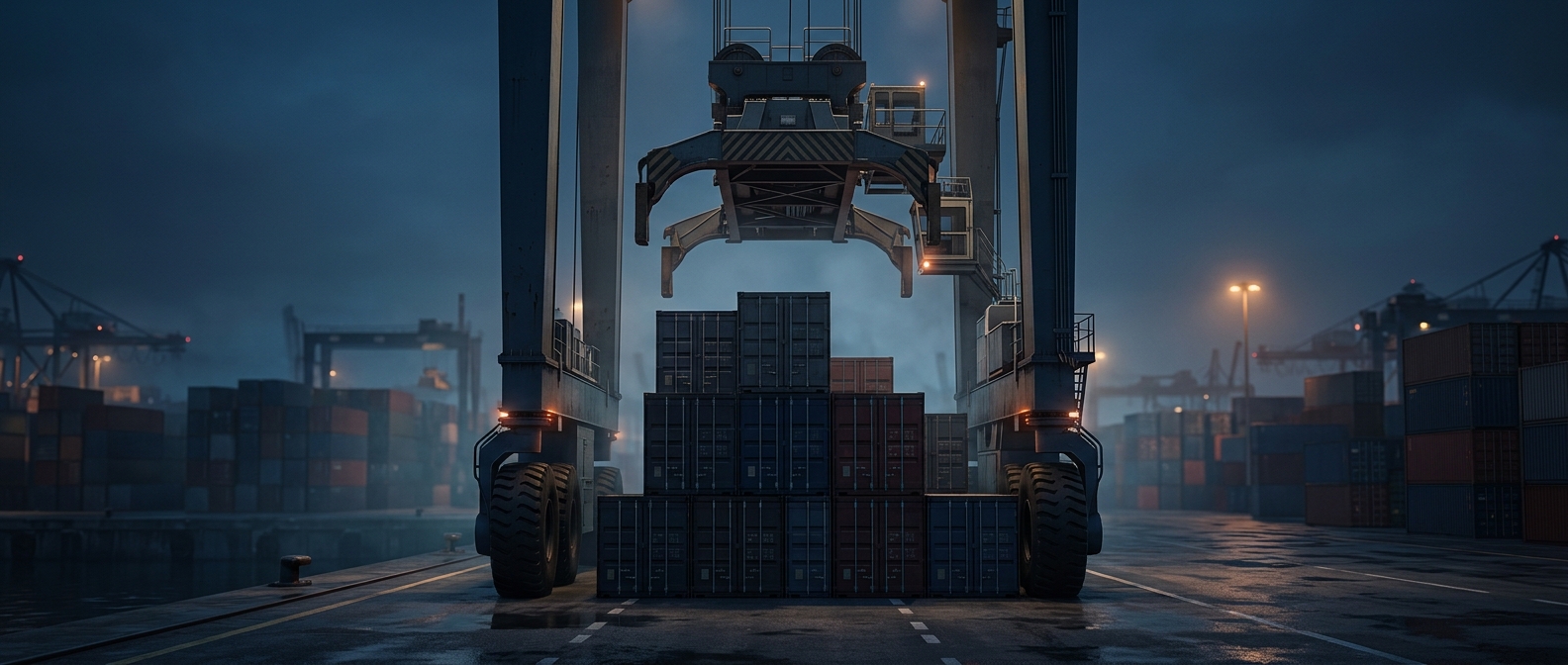
A container does not have to be set down on a trailer before it can travel through a terminal. A straddle carrier can pick it up, carry it across the yard, and place it in a storage row or onto another vehicle. That makes the machine a mobile link between the ship-side unloading area and the places where containers wait for their next move.
The key is the spreader: a lifting frame that locks onto the container’s reinforced corner fittings. Once secured, the load hangs within the carrier’s tall frame rather than being towed behind it. The machine can therefore maneuver through the yard without needing a separate tractor-and-trailer combination for every short transfer.
The Tradeoff Is Space and Control
Carrying a container high off the ground gives the vehicle room to pass over it, but it also puts a large, heavy load above the wheels. The carrier has to move deliberately, especially when turning or crossing uneven pavement: the suspended load can sway, and its weight affects the vehicle’s balance. The operator must also keep the container aligned when placing it in a stack or transferring it to another mode of transport.
That design suits terminals where containers need to be shifted among nearby rows and vehicles. Instead of relying on one fixed crane to reach every location, a carrier can drive to the container and bring it to the next handoff point. The result is a machine that transports cargo and handles it at the same time—a useful combination in a yard where each container may be moved several times before it leaves.