How a Saddle Mount Turns Trucks Into a Stack
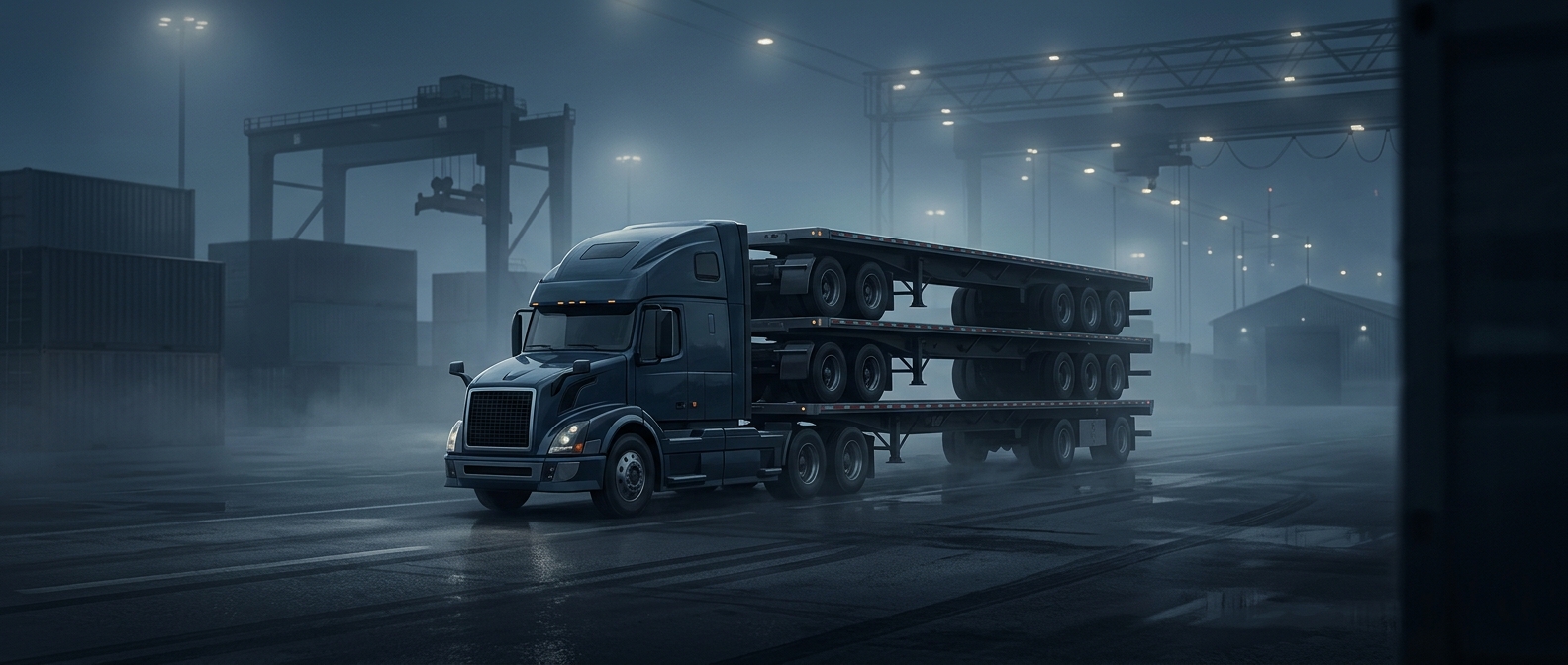
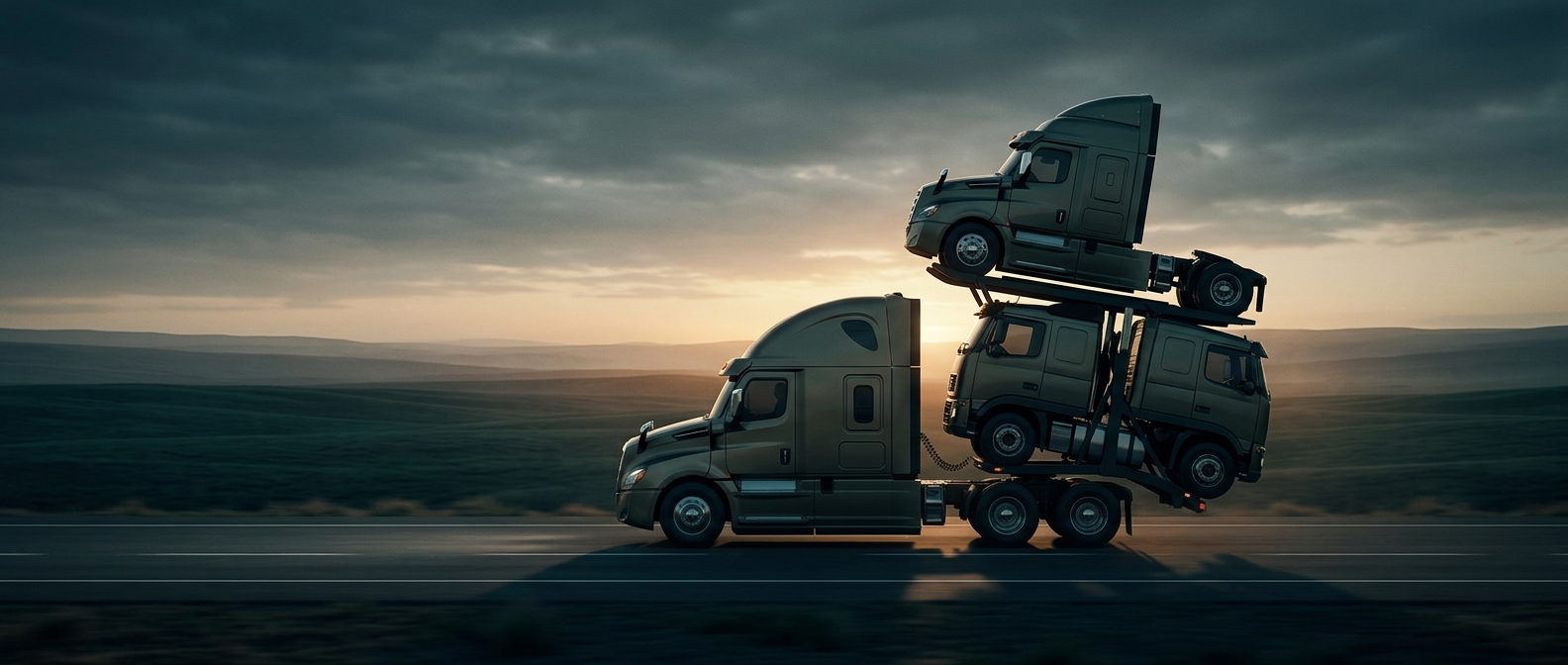
A truck is too long to fit neatly behind another on a conventional carrier deck. A saddle mount solves that problem by letting two vehicles overlap. The mount is a rigid support frame fitted behind the cab of the lower truck; it lifts the front wheels of the truck above it, while that upper truck’s remaining wheels rest farther back on the carrier.
The vehicles are not simply balanced cab-to-cab. The frame holds the upper truck at a defined point, and its other wheels provide another support point. Together, those supports keep the load in position during transport. With one truck tucked partly over another, a carrier can use its length more efficiently and may fit a third truck into the resulting compact stack.
The Space Saving Comes With a Tradeoff
The arrangement works because the trucks are carried as a coordinated load: the mount must match the vehicles and hold them securely, and their positions affect how weight is distributed across the carrier. A saddle mount is therefore not just a perch; it is a structural link that transfers some of the upper truck’s weight to the lower one.
That overlap saves road space, but it also means the trucks cannot be loaded as independent pieces of cargo. Their placement has to leave room for the frame and keep the stack stable. The visual oddity is a practical bit of transport engineering: instead of needing a separate length of trailer for every truck, the carrier uses vertical space and lets the vehicles share it.