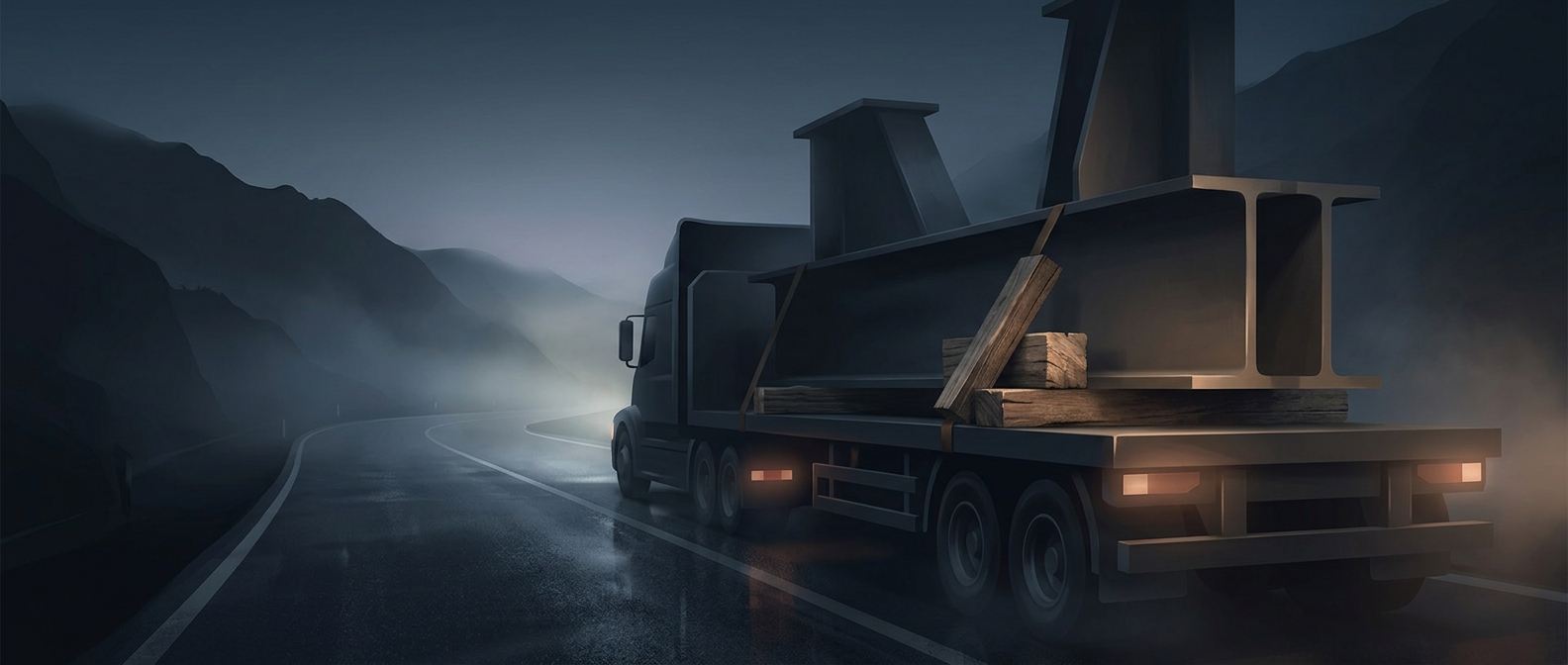
Why a Trailer’s Axles Slide
A loaded semitrailer does not place all its weight on one set of wheels. Some rests on the tractor through the fifth wheel—the coupling plate behind the cab—while the rest is carried by the trailer’s axles. Sliding the tandem axle assembly forward or backward changes the balance between those supports, shifting load from one group of axles to another.
The change can matter even when the cargo itself stays put. Move the trailer tandems toward the rear, and they generally take more of the trailer’s load while less is borne at the coupling. Move them forward, and the balance shifts the other way. The adjustment redistributes weight; it does not make the rig lighter.
The Legal and Practical Balance
Road rules set limits on how much weight each axle or axle group may carry, as well as on the vehicle overall. A truck can be under its total-weight limit and still have too much weight concentrated on one axle group. Sliding the tandems can bring that group into compliance by spreading the load differently across the rig.
That redistribution also affects how the vehicle behaves. Axle placement changes the distances between the truck’s and trailer’s supports, influencing handling and the space needed to turn. Drivers therefore have to balance axle weights against the needs of the route and the trailer’s setup—not simply slide the assembly as far as it will go.
A Small Adjustment With Heavy Consequences
The tandems are held in place by locking pins. To reposition them, a driver releases the pins, moves the trailer relative to the axle assembly, then locks the pins back into position. The usable adjustment is measured in feet, but the load being redistributed can be enormous.
That is why axle sliding is a practical form of “truck Tetris”: a few notches can change which axle group carries the burden, helping a loaded combination meet weight limits without unloading its cargo.