How the Kingpin Joins Tractor and Trailer
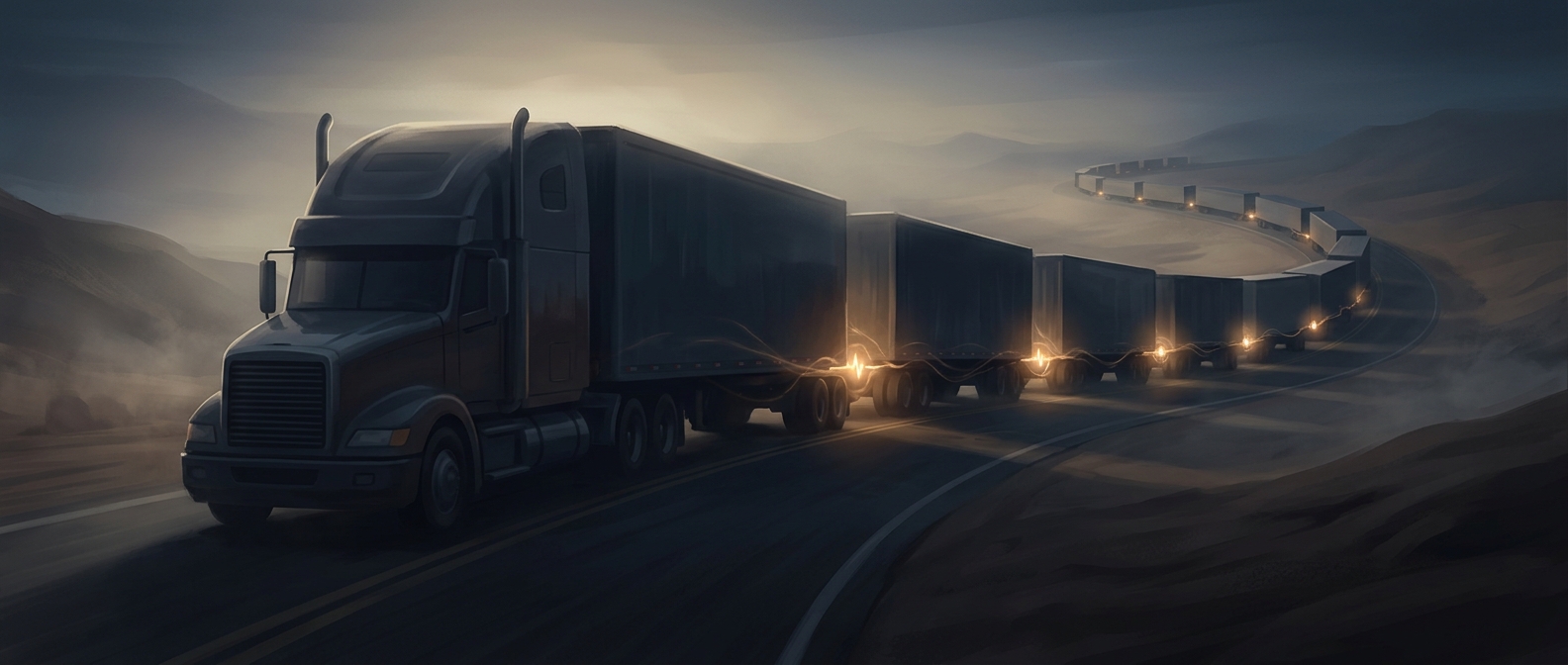
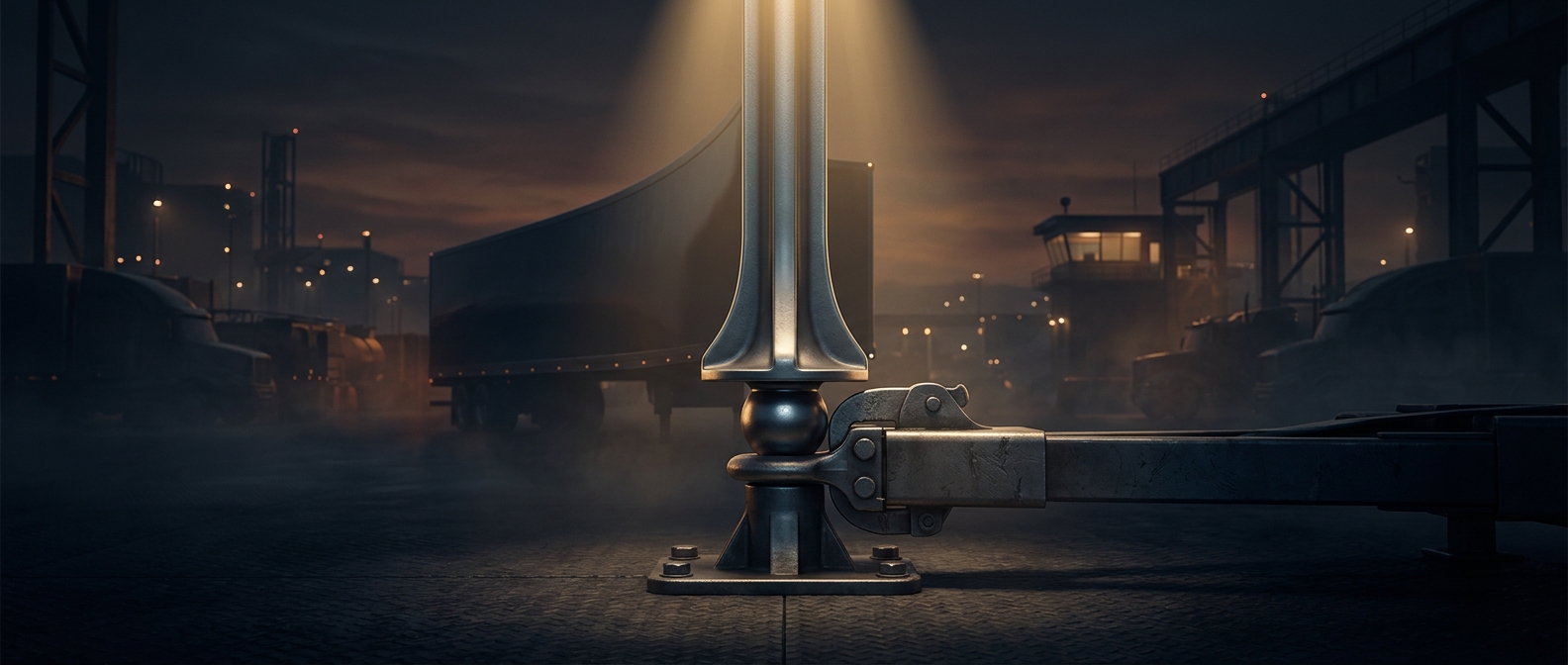
The kingpin is fixed beneath the front of a semi-trailer. To connect it, the tractor backs its fifth-wheel plate—a heavy, slightly tilted platform behind the cab—under the trailer until the pin enters a slot in the plate. Locking jaws close around the pin, and a latch prevents them from opening unintentionally. The connection is mechanical: the trailer cannot simply lift away as the rig moves.
The fifth wheel also supports part of the trailer’s front-end load, transferring it onto the tractor’s rear axles. That makes the connection more than a hinge; it is a load-bearing joint, built to carry substantial forces as the rig accelerates, brakes, and crosses uneven pavement.
Why the Joint Must Move
A rigid connection would make turns difficult and put dangerous strain on the tractor and trailer. The kingpin can rotate within the fifth wheel as the tractor steers, letting the trailer follow a different path around a corner. The joint also allows some movement as the vehicles pitch over dips or crests, while keeping them securely connected.
That flexibility is useful only if the lock is fully engaged. Drivers check the coupling before departure because a pin that has not seated properly can leave the trailer inadequately secured. Once locked, the small steel pin becomes the pivot and load-transfer point for a vehicle combination stretching dozens of feet behind the cab.