How a Gondola Cable Crosses a Tower
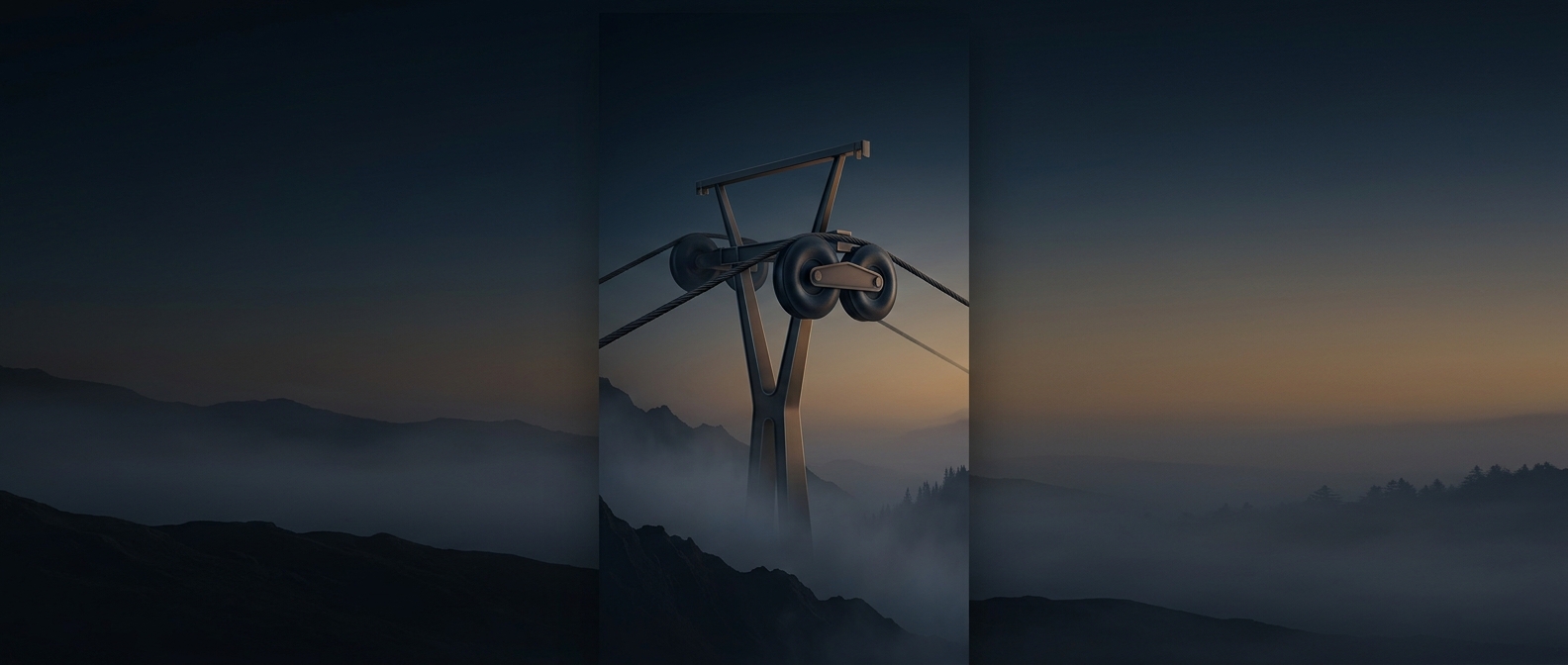
A gondola’s moving cable cannot simply scrape over a steel support. At each tower, it passes across a row of large grooved wheels called sheaves. Their grooves cradle the cable and guide it along the route, while the wheels turn as the cable moves.
Why the Grooves Have Rubber Linings
The cable carries cabins and passengers, so its contact with each tower must be controlled. A rubber lining cushions the point where cable and sheave meet. That softer surface reduces the sharp clatter of metal-on-metal contact and helps limit wear on both the cable and the wheel. It also gives the cable a more forgiving path as it travels over the support.
The sheaves are arranged to keep the rope aligned through the tower rather than letting it drift sideways. Together, the grooved wheels form a guided passage: the cable rolls through instead of dragging across a fixed edge.
A Small Part That Shapes the Ride
Every passing cabin sends the cable over the same tower equipment, again and again. The rubber-lined sheaves make that repeated contact quieter and gentler, while their grooves keep the moving rope on its intended line. What looks like a simple row of wheels is therefore both a guide and a cushion between a loaded cable and the structure holding it aloft.