A Hull Shaped to Balance One Oar
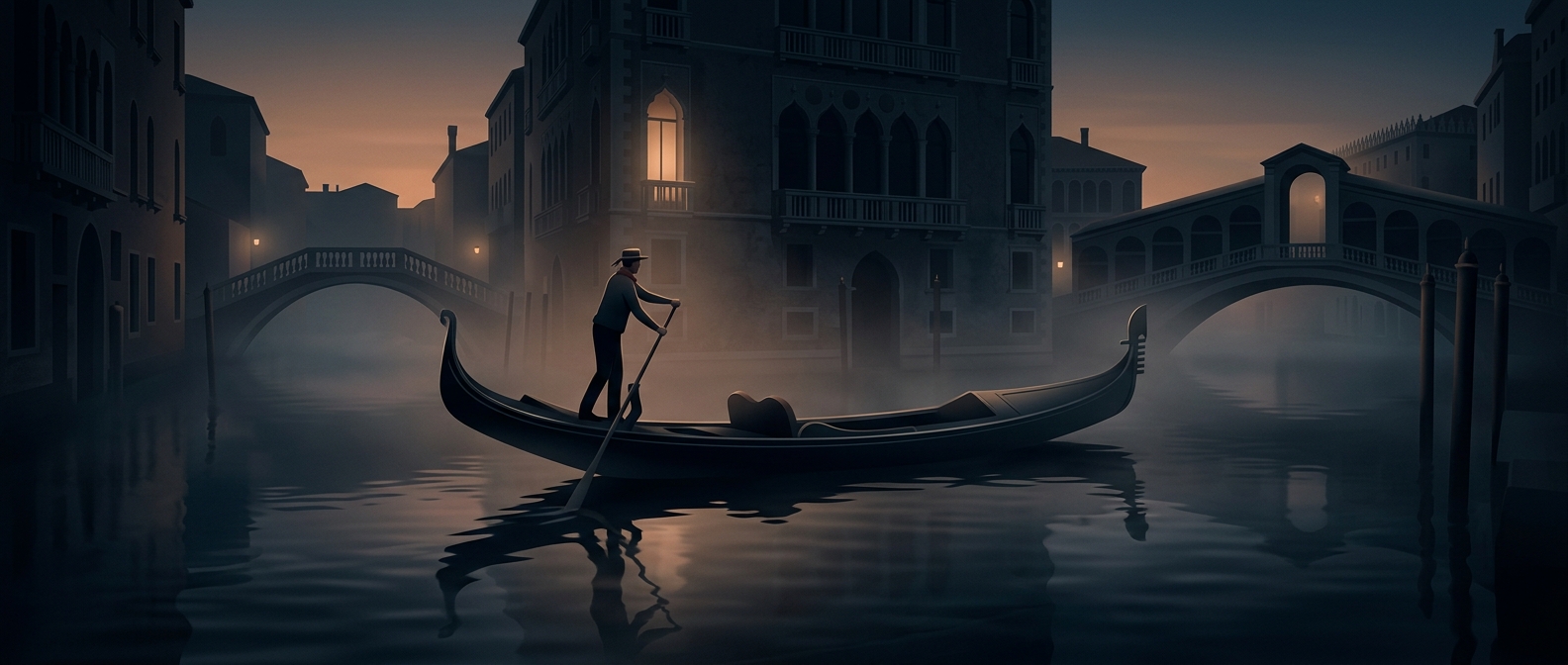
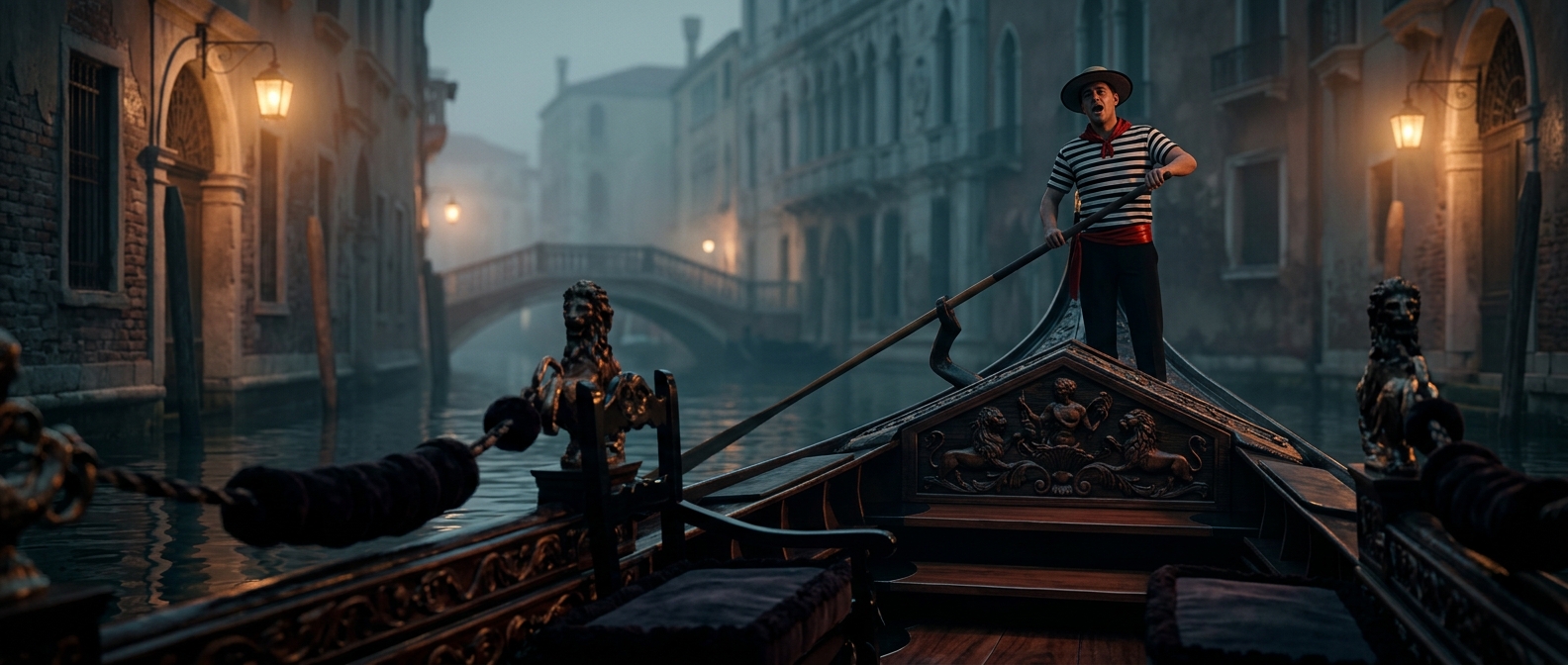
A gondola’s uneven outline is a practical answer to an uneven source of power. The gondolier stands at the stern and works a single oar on one side, pushing water backward to move the boat forward. Because that push comes from off-center, it also tends to yaw the gondola—turn its bow to one side.
The hull’s asymmetry helps counter that tendency. Its shape changes how water supports and resists the boat on each side, creating a balancing effect as it moves. The gondolier can therefore make steady progress without a second rower applying force on the opposite side.
The Oar Is Also the Steering System
The oar rests in a specially shaped support at the stern, allowing the gondolier to vary its angle and leverage during each stroke. A stroke can propel the boat, but small changes in the oar’s position and pressure also help correct its heading or guide it through a turn. The hull reduces the unwanted sideways pull; the gondolier still does the fine steering.
That division of labor matters in Venice’s narrow canals, where a boat may need to hold a line, turn sharply, or pass close to walls and other craft. The gondola’s shape does not make it steer itself. It makes one-person rowing workable, while leaving the gondolier to adjust every stroke to the water and the space ahead.