The hull compensates for a one-sided stroke
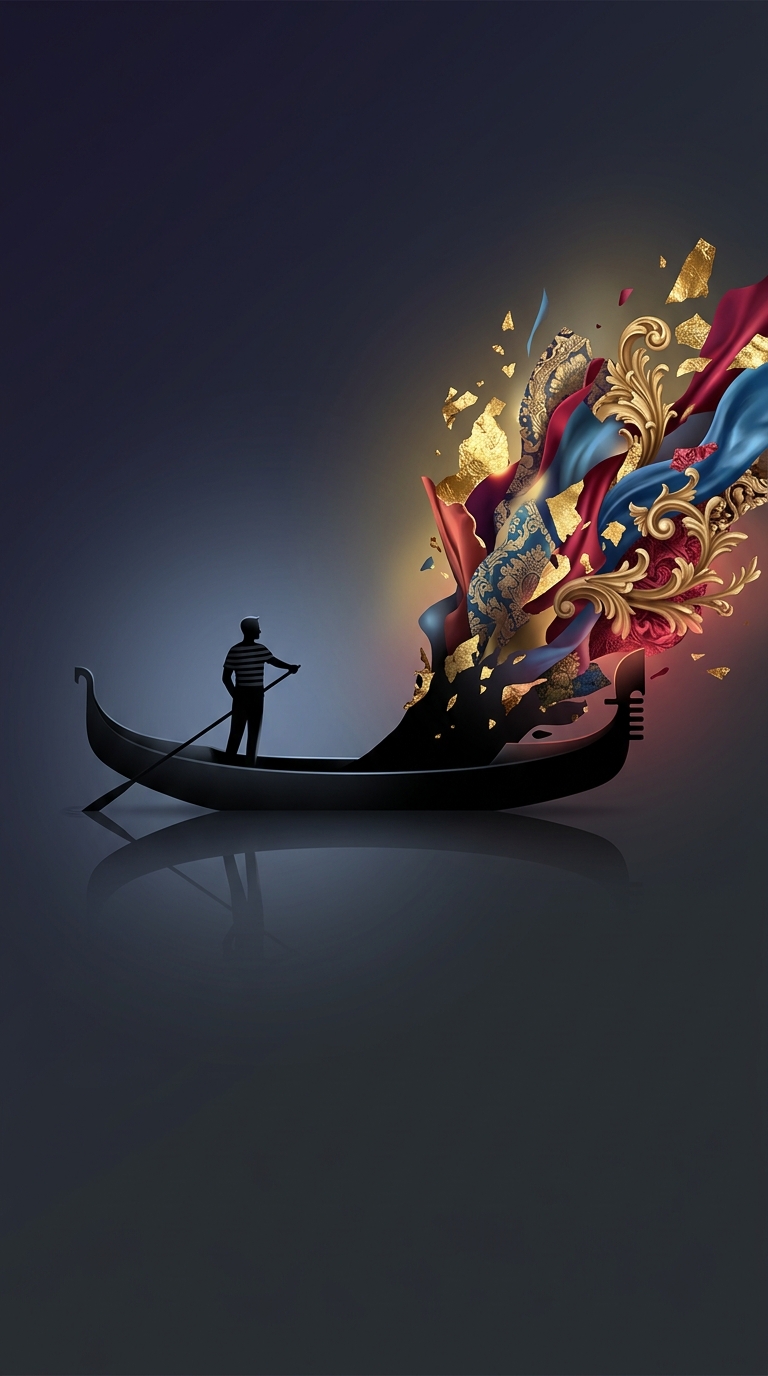
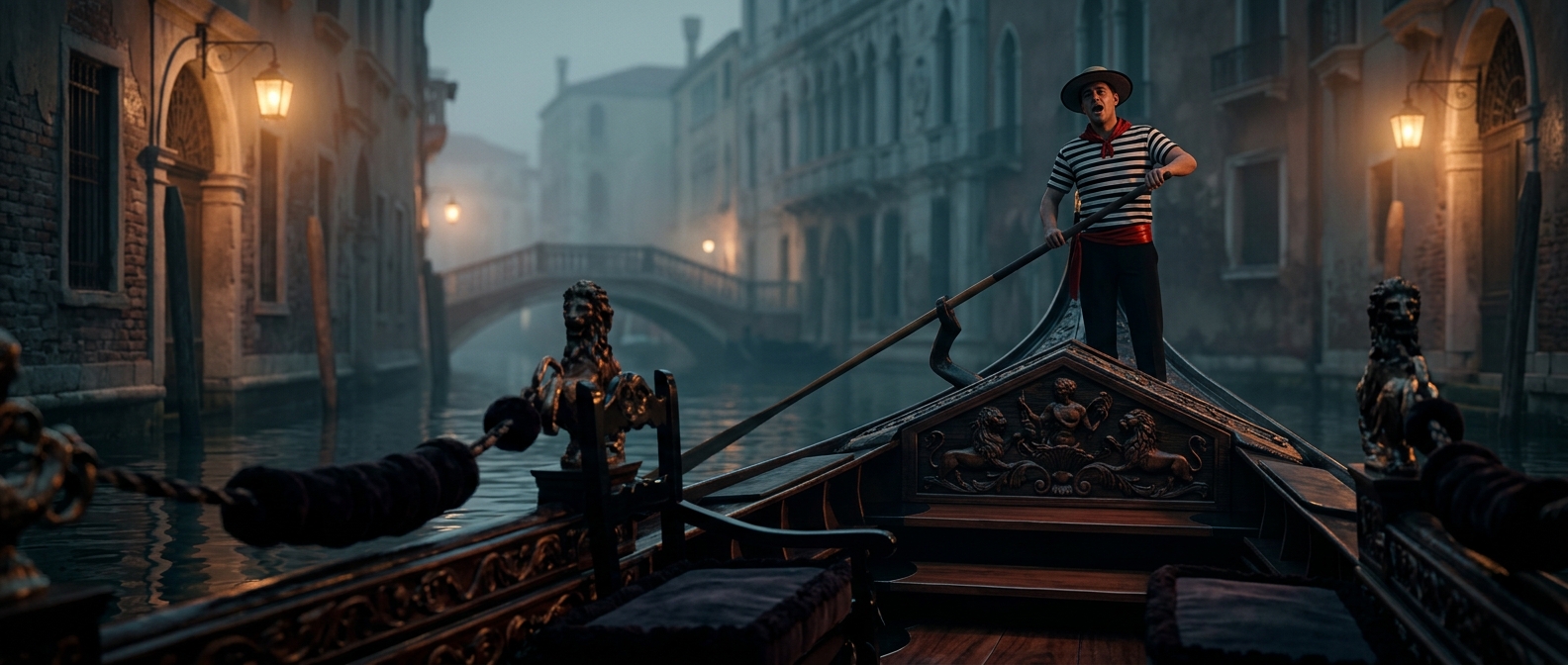
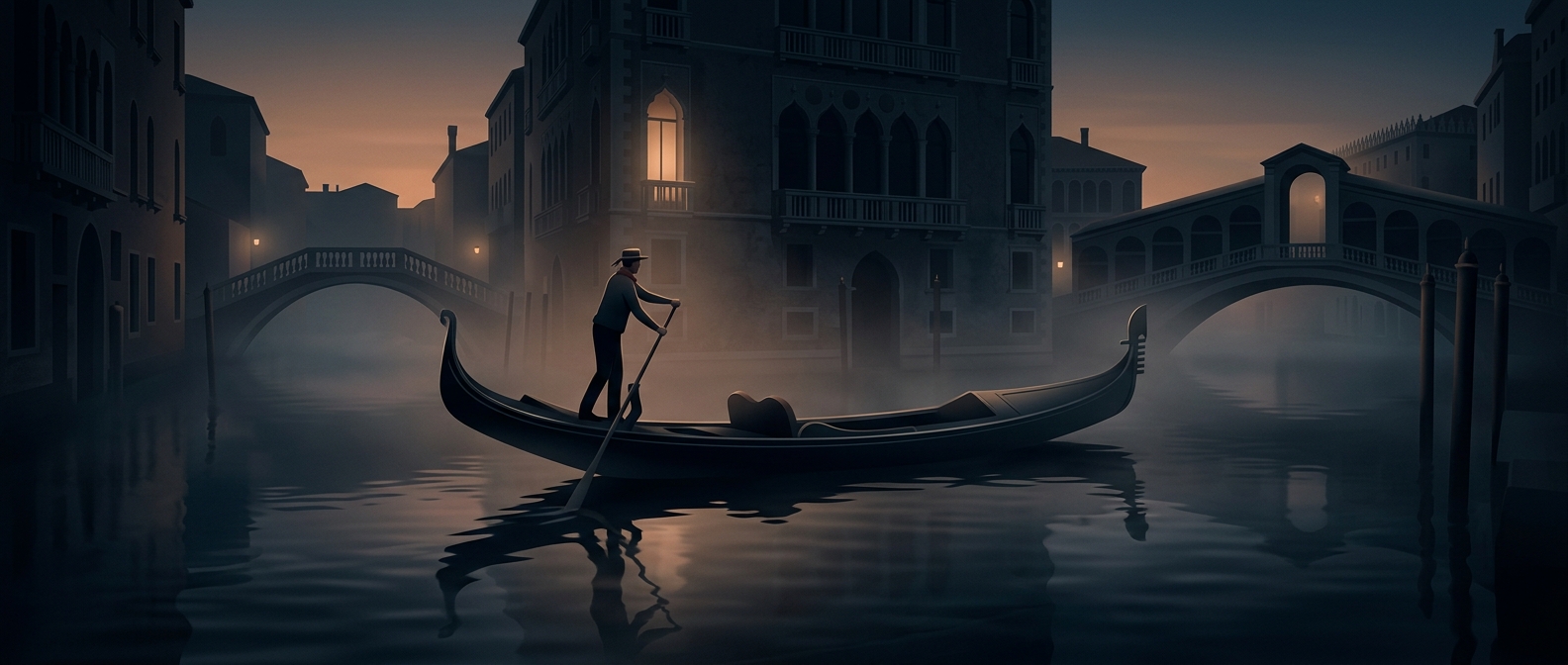
A gondolier stands at the stern and works a single oar from the boat’s right side. Each stroke pushes water backward, moving the gondola forward—but it also pushes the boat sideways and tends to turn its bow away from the oar. With no matching stroke on the other side to cancel that twist, a conventionally balanced boat would be difficult to keep on course.
An off-center shape supplies the counterforce
A gondola’s hull is deliberately uneven: its two sides are not mirror images, and the boat’s centerline is offset relative to its length. That geometry changes how the hull meets the water, creating a counteracting tendency as it moves. The gondolier still guides the boat with the oar, but the hull helps prevent each stroke from veering it sharply off track.
The shape is a practical compromise, not a defect. A gondola must be narrow enough to pass through Venice’s canals, maneuverable at low speed, and workable with one person rowing from one side. Its asymmetry helps those constraints fit together in a boat that can travel forward without a second oar or a central rowing position.
The apparent lean is part of the steering system
The slanted appearance is easiest to notice when the gondola is viewed from the front or rear. It reflects a design that is tuned to the forces of its rowing method rather than to visual symmetry. In other words, the boat looks crooked at rest so that its motion can be straighter in use: the hull is built to work with the one-sided stroke, not against it.