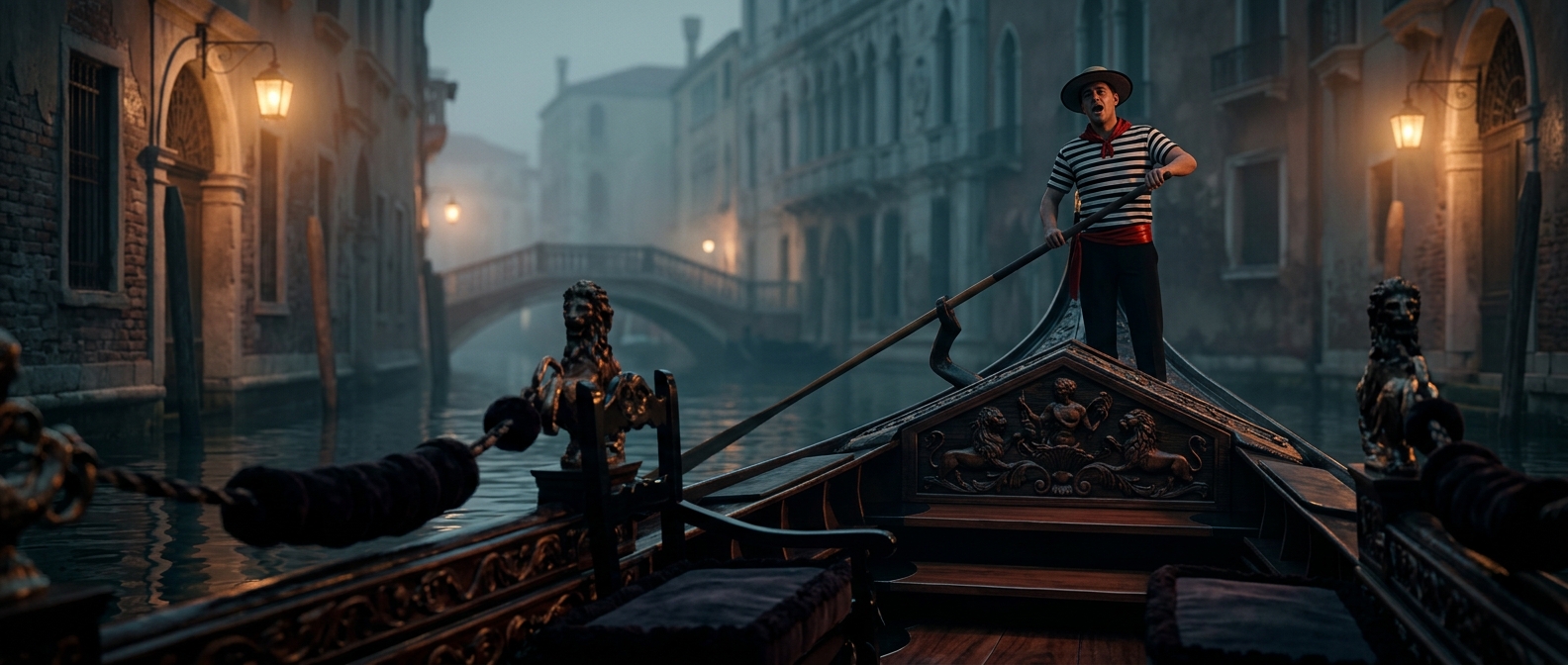
Why a gondola’s wake matters in a narrow canal
A moving boat pushes water aside and leaves a wake behind it. In open water, that wave can spread outward and lose energy. Venice’s canals offer less room: their banks reflect waves back into the channel, where they can meet passing boats and rebound again. The result can be more rocking and splashing than the boat’s modest size might suggest.
Speed turns a small disturbance into a bigger one
As a boat moves faster, it generally creates a stronger wake. In a confined canal, that extra energy has few places to go. Waves can buffet moored boats, make it harder for smaller craft to hold steady, and repeatedly wash against the canal margins.
That repeated water movement matters because the edges are not simply modern concrete walls. Venice’s buildings stand on foundations beside the water, and persistent wave action can wear at masonry and the ground around it. A speed limit therefore addresses both an immediate nuisance—unstable boats and rough crossings—and a slower, cumulative form of wear.
A tradeoff built into the city
Gondolas are propelled by a standing rower using a single oar, so a slower pace also fits the careful maneuvering canals demand. The limit is not just about keeping one boat under control; it helps prevent each crossing from adding avoidable disturbance to a shared, tightly bounded waterway. In Venice, a quiet wake is part of protecting the route itself.