A car outran the speed limit—and not the law
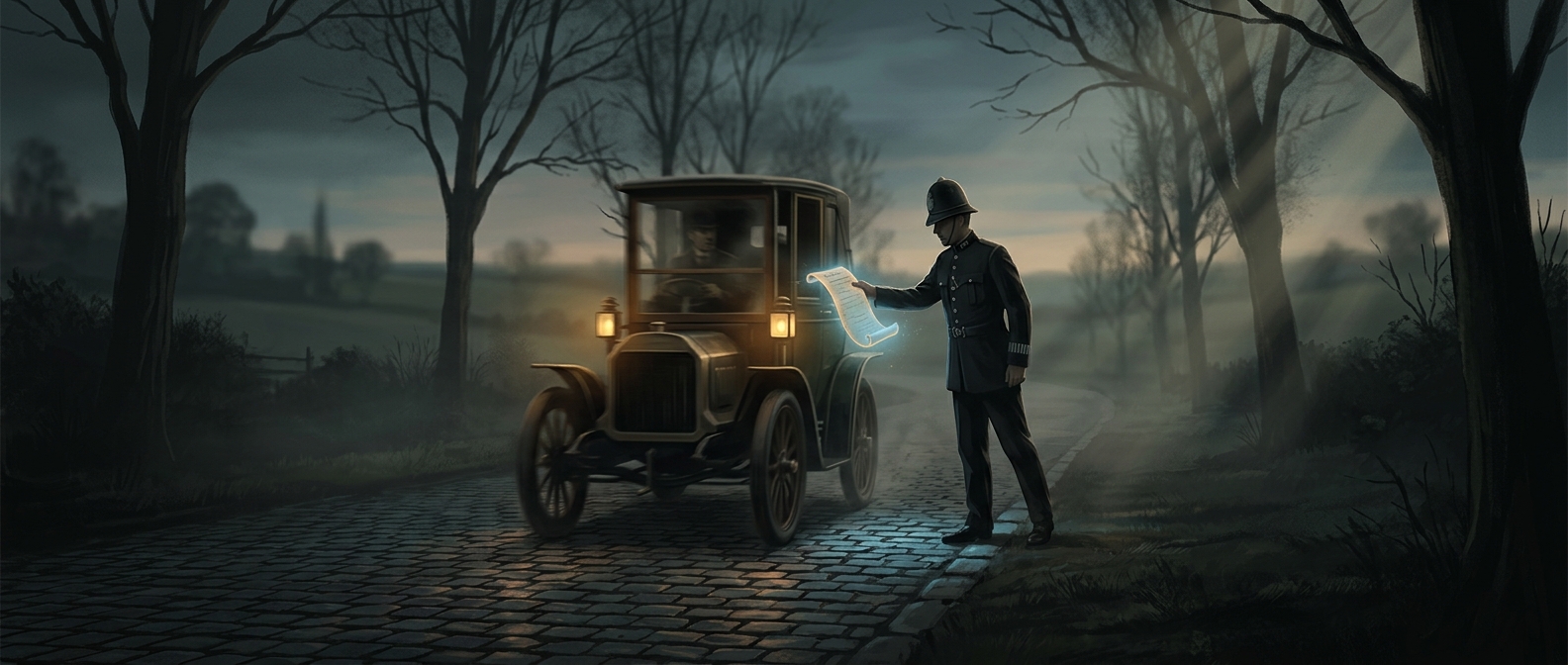
In 1896, a motorist named Walter Arnold was caught driving at 8 mph where the legal limit was 2 mph. That limit looks startlingly low by modern standards, but early British speed rules had been written for heavy, slow-moving road vehicles powered by engines—not for the quick personal cars that were beginning to appear.
The rules were a way to let these unfamiliar machines onto public roads while keeping their speed tightly controlled. As motorcars became more capable, the old limits could turn an ordinary journey into a legal violation. Arnold’s case made that mismatch visible: his car was moving at a pace that sounds modest now, but it was four times the permitted speed.
Why the officer rode a bicycle
There were no roadside radar guns or patrol cars to catch a speeder. The officer had to pursue Arnold on a bicycle and catch up closely enough to stop him. That made enforcement a literal contest between the motor’s power and a person pedaling after it.
The chase captures a moment when road policing had not yet adapted to the technology it was meant to regulate. A bicycle could still serve as a patrol vehicle, but the motorcar was already fast enough to make the old rules—and the methods for enforcing them—feel out of date. The striking detail is not simply that Arnold drove at 8 mph; it is that a bicycle chase helped mark the arrival of a new speed on British roads.