How an emergency motor gets cabins moving
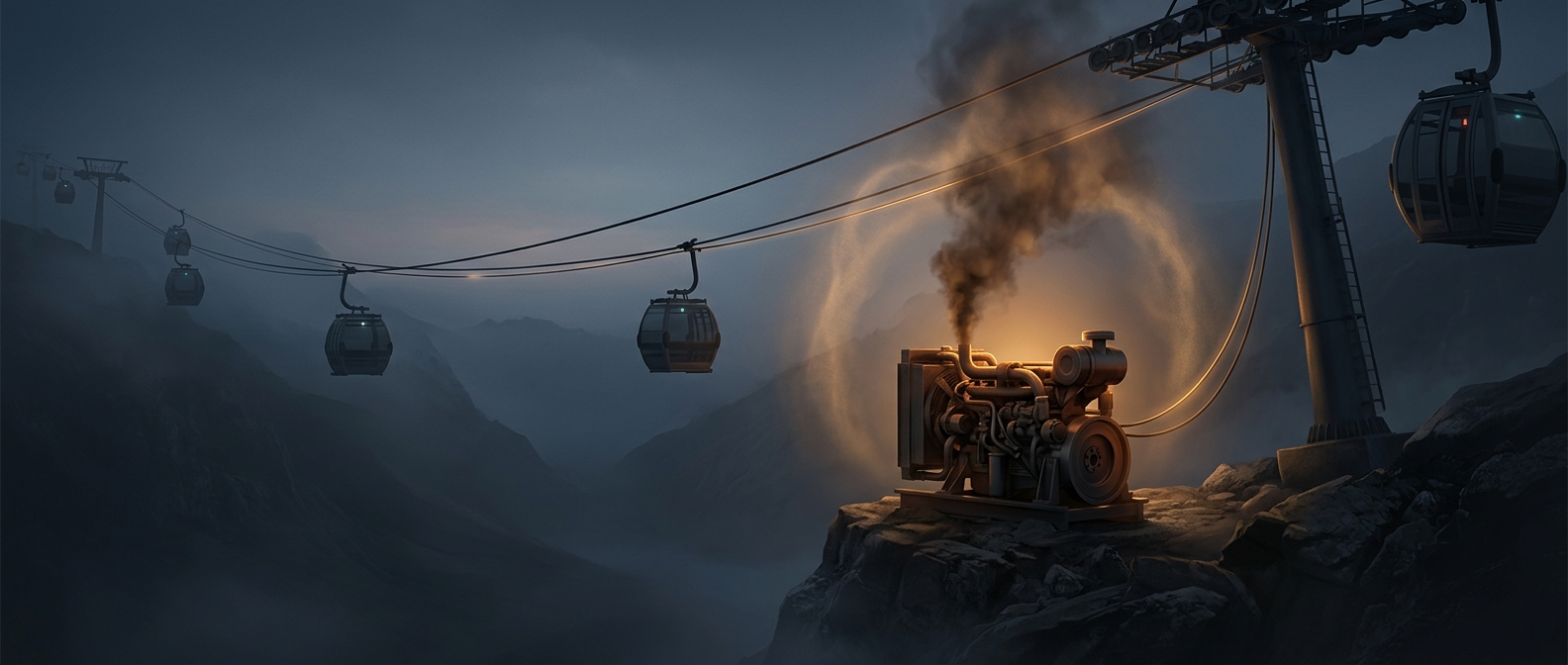
A gondola line is moved by a large powered wheel at a terminal. The wheel grips and pulls the haul rope, the moving cable to which cabins are attached. If the normal electric drive stops, some systems can connect a diesel-powered emergency drive to turn that wheel at a much slower pace.
The backup is not meant to restore ordinary service. Its job is to move the rope in a controlled way, carrying cabins toward a terminal where passengers can get off. Because the cabins remain attached to the same moving rope, operators can advance the line gradually rather than trying to unload everyone in midair.
A slow, coordinated trip to the terminal
Emergency movement takes careful coordination. Staff must monitor the drive and the line, communicate with passengers and prepare the terminal to receive arriving cabins. The slow pace gives the operation control, but it also means a cabin may take time to reach a station—especially if it is far along the route.
This method depends on the cableway being mechanically capable of moving. A backup drive can address a loss of the main power source; it is not a universal fix for every fault. If another problem prevents the rope from turning safely, crews may need a different evacuation procedure.
That is why the diesel motor is best understood as an evacuation drive, not a second ride: it lets the system keep making deliberate progress until passengers can step onto solid ground.