The mistake an all-red interval is meant to contain
The error is entering an intersection too late to clear it before cross traffic gets a green. A driver may misjudge the yellow light, decide there is still time to proceed, and reach the intersection just as the signal turns red. The driver may also be legally in the intersection already—waiting to turn, for example—when the light changes.
A brief pause gives the intersection room to clear
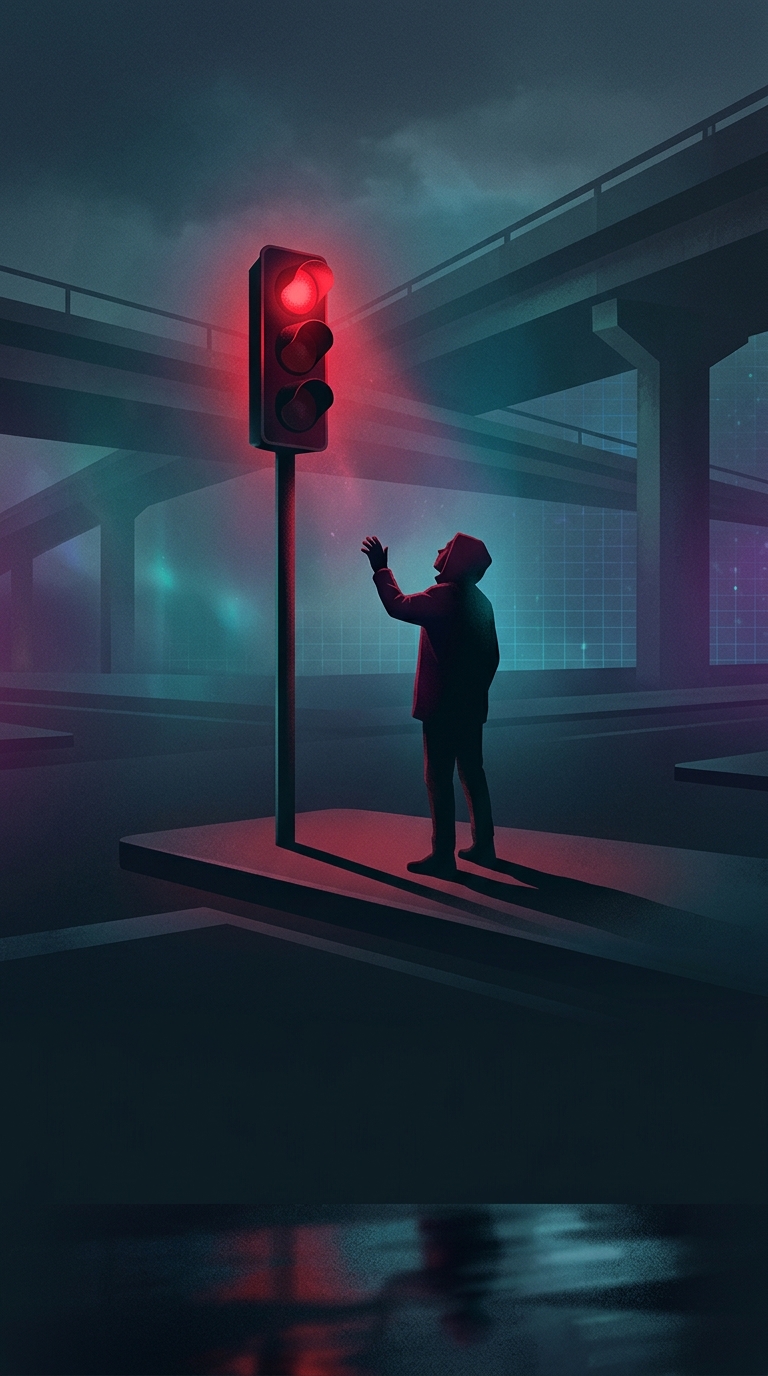
An all-red interval is a short period after one direction’s signal turns red and before the conflicting direction turns green. During that pause, every approach faces a red light. It gives vehicles that have already entered the intersection time to leave, rather than sending cross traffic into their path immediately.
That matters because a signal change is not an instant reset of the roadway: cars have length, need time to travel through the crossing, and may be moving at different speeds. The pause creates a buffer between one stream of traffic and the next.
A buffer, not permission to run the light
The interval is designed to reduce conflicts caused by late entries and slow clearance. It cannot prevent a driver from deliberately entering well after the light turns red, and it does not make that behavior safe. Its practical effect is to keep the next stream from starting at the very moment a vehicle from the previous stream may still be crossing.
So the two-second pause is not extra green time. It is clearance time—insurance against the human tendency to misjudge the transition or underestimate how long it takes to get out of the way.