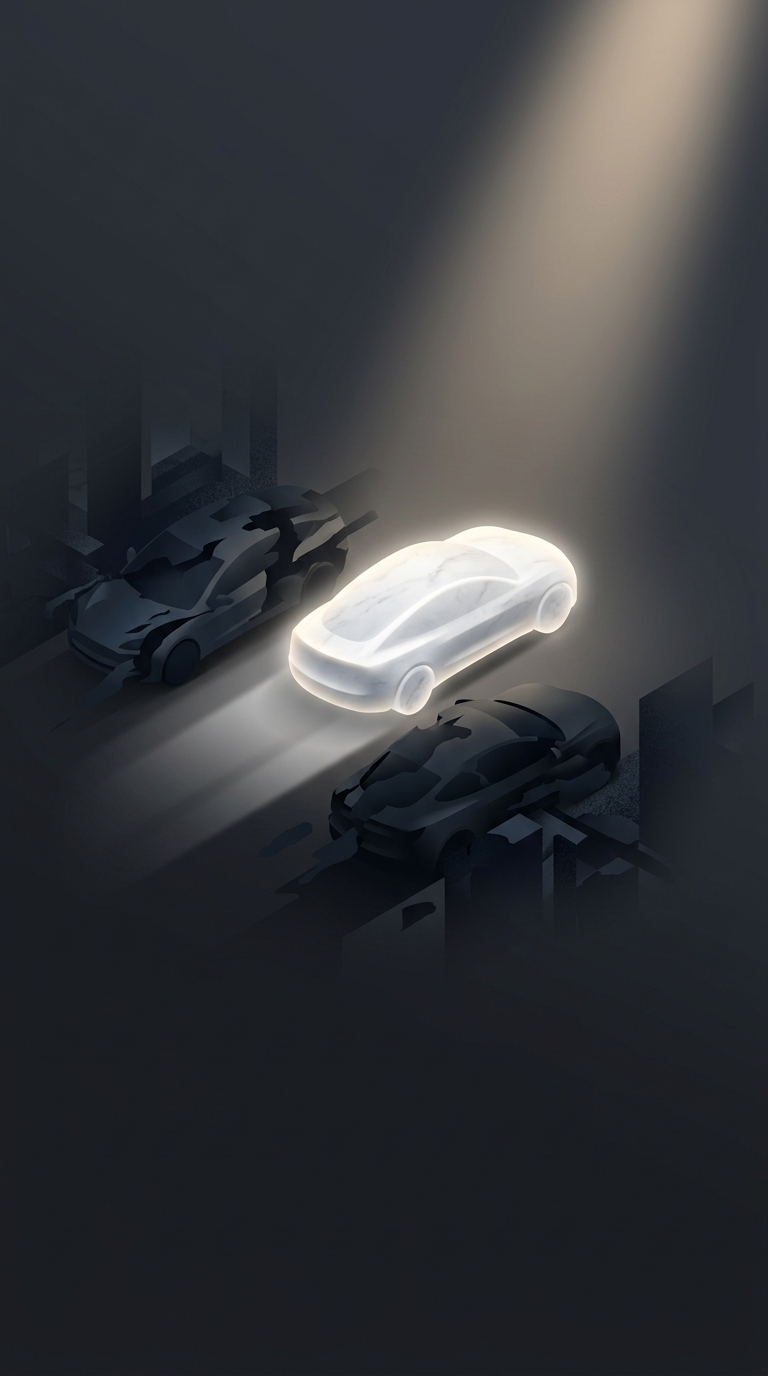
Why a White Car Can Be Easier to Spot
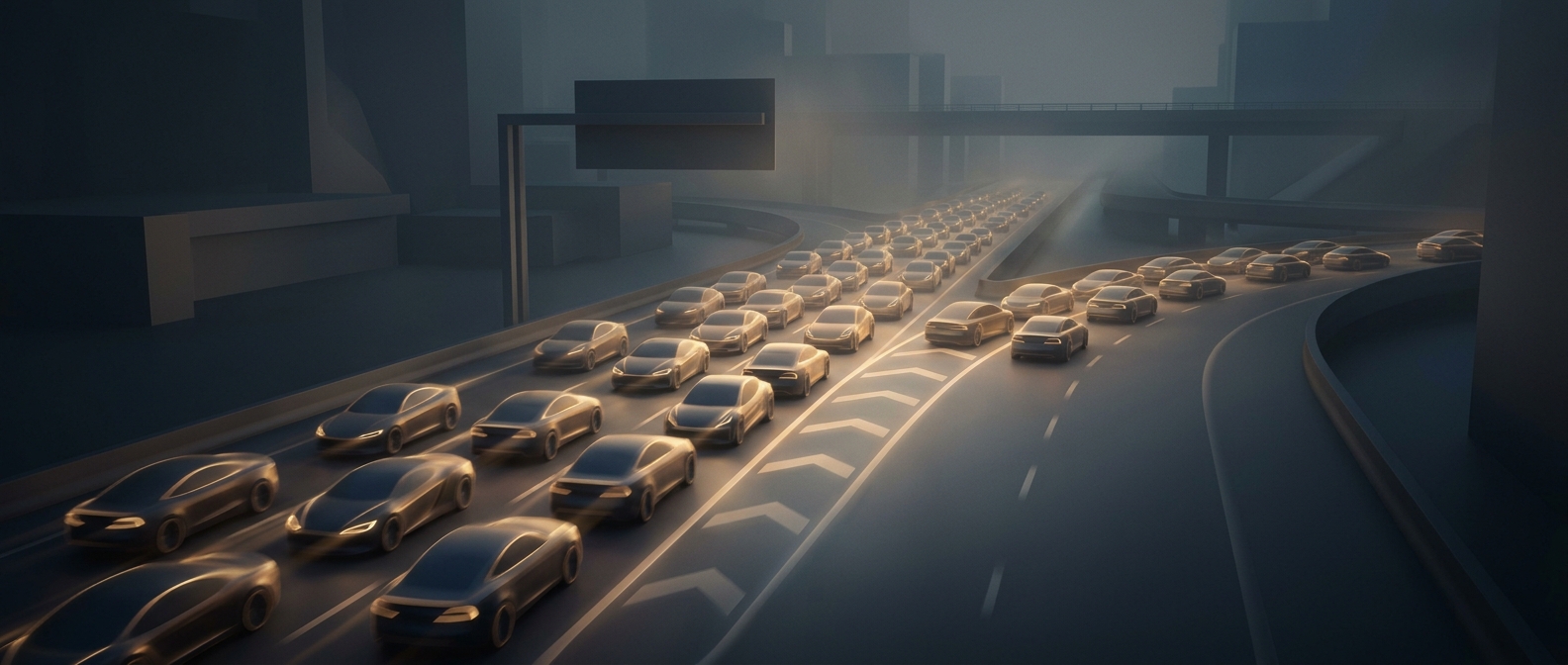
A driver does not respond to a hazard until it registers as something worth noticing. A car that contrasts with its surroundings is more likely to catch the eye sooner: its outline and movement are easier to distinguish from the road, nearby vehicles, and roadside scenery. White paint can provide that contrast in many common settings, particularly against dark pavement or shadowed backgrounds.
The advantage is about detection time, not braking ability. If another driver notices a white car a moment earlier, that extra moment can be used to ease off the accelerator, steer away, or begin braking. The car itself has not become more maneuverable, and its stopping distance is unchanged.
Visibility Depends on the Scene
Color is only one part of what makes a vehicle visible. Headlights, street lighting, weather, distance, and the angle from which a car is seen all affect how clearly it stands out. A white car may blend into snow or a bright, washed-out background; a dark car can still be conspicuous when its lights and reflective surfaces are visible. At night, headlights and lamps often matter more than the paint color alone.
That helps explain why a general association between car color and crash involvement should not be treated as a guarantee for any individual trip. Paint can influence whether a vehicle is noticed, but it cannot prevent a collision when a driver is distracted, a car is hidden behind another vehicle, or conditions leave too little time to react.
The practical takeaway is modest but useful: a light-colored car can make itself easier to pick out in many everyday road scenes. It is a passive visibility advantage—one that may help another driver notice the vehicle, without replacing lights, attention, or safe following distance.