Why the Merge Gets Slower When Drivers Move Over Early
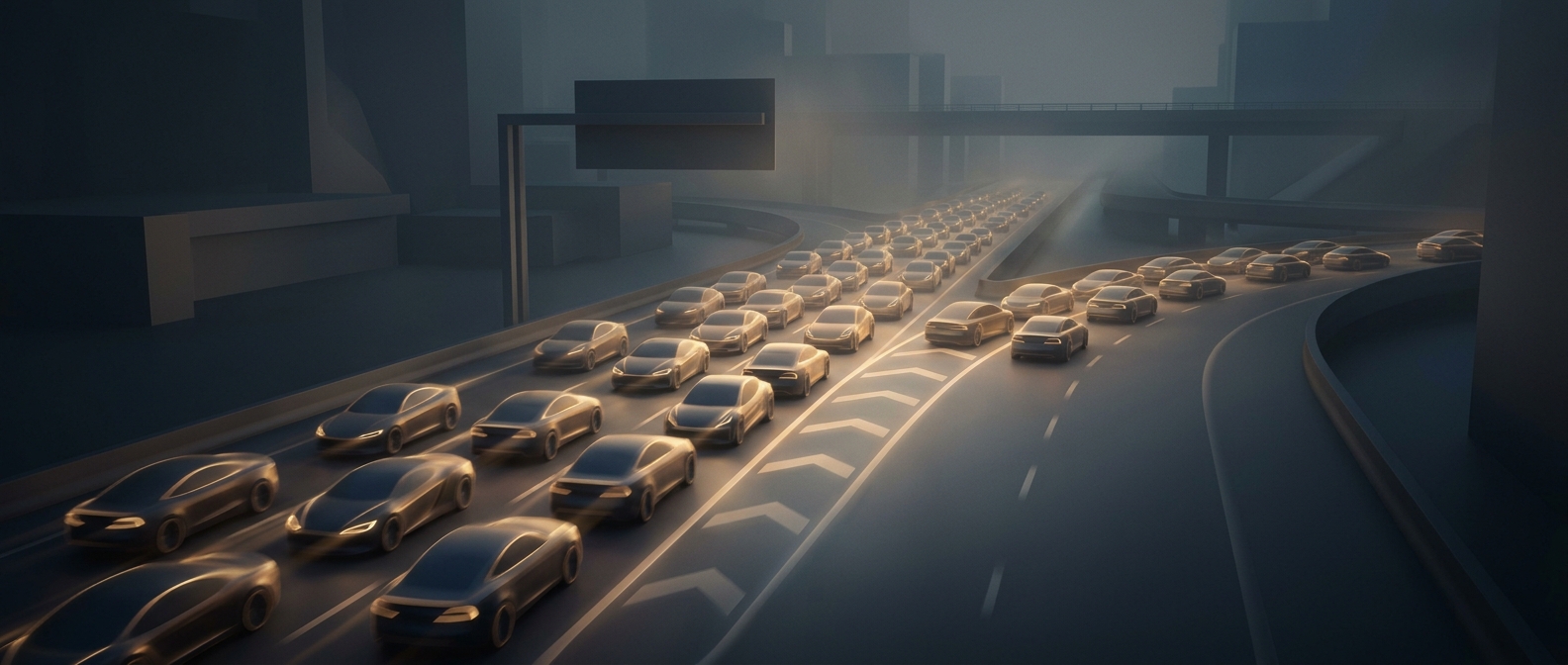
When a lane closes, many drivers try to get into the remaining lane as soon as they see warning signs. That can leave the closing lane mostly empty while the open lane fills far upstream. The queue then occupies more road, and traffic in the crowded lane may slow or stop even though there is usable pavement beside it.
The Bottleneck Is the Constraint
Near the closure, every vehicle must pass through the same narrower stretch. Moving over early does not create more room there; it simply shifts the point where cars line up. If drivers use both lanes until they reach the merge, the queue can be spread across the available roadway rather than concentrated in one lane.
At the merge, drivers in the two lanes can take turns entering the open lane—a pattern often called a zipper merge. It works best when vehicles approach at similar, reduced speeds and leave space for one another. Abruptly forcing a gap or racing to the front can disrupt the flow and create sudden braking.
Why Blocking Can Backfire
A driver who straddles lanes or refuses to let a car merge may seem to be preventing someone from “cutting in.” But that move can trigger braking behind them, while the unused lane remains underused. The result may be a longer, less orderly backup, not a shorter wait.
The practical goal is not to reward late arrivals; it is to keep both lanes moving toward the point where the road narrows. When drivers take turns there, the queue can use the pavement more efficiently—and may leave less of the road blocked behind it.