The geometry changes the kind of collision
At a conventional intersection, a driver may cross another vehicle’s path at nearly a right angle. If either driver misses a signal or misjudges a gap, the vehicles can collide broadside, where the side of a car offers less protection than its front or rear. The crossing paths also leave room for high-speed impacts.
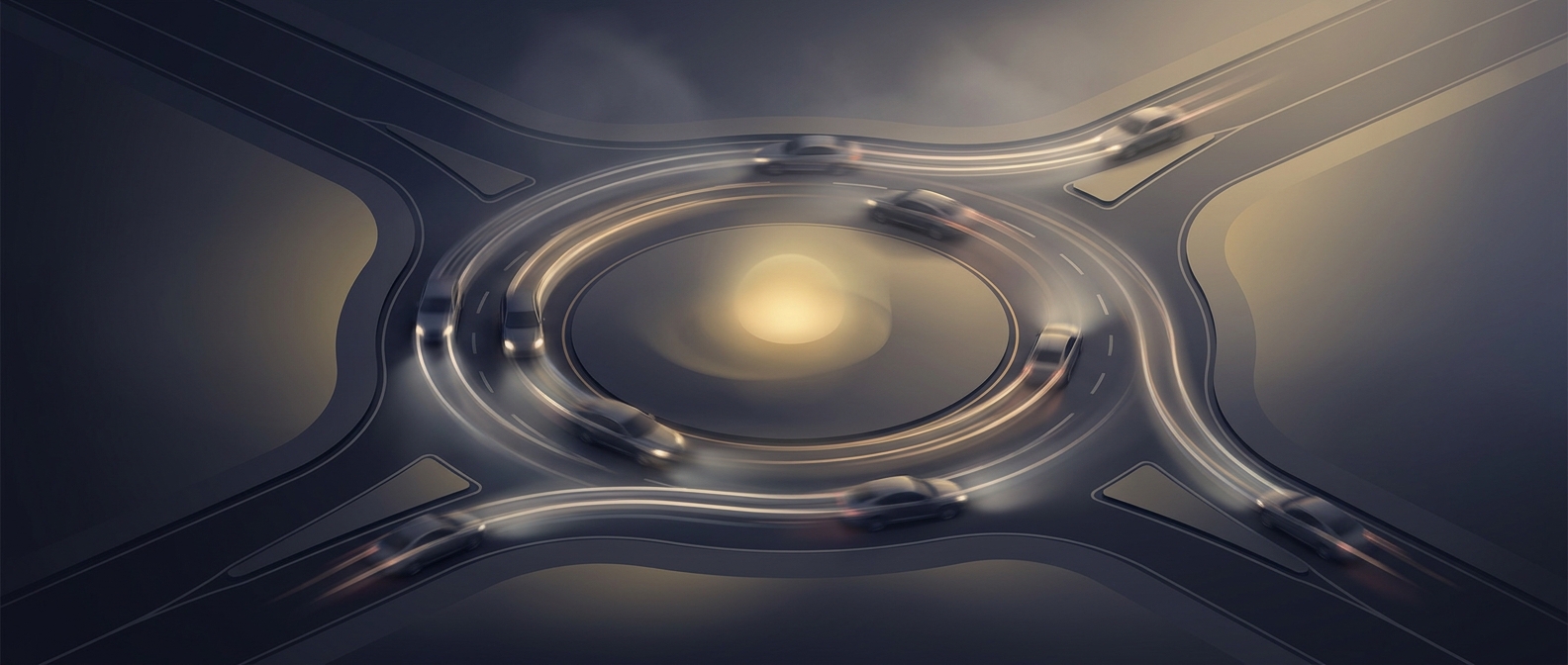
A roundabout rearranges those paths. Drivers steer around a central island, so entering traffic must bend into the circle rather than continue straight across it. That curve forces vehicles to slow, and traffic moves around the circle in the same direction. Instead of a high-speed crossing, the main conflicts are vehicles entering the flow or leaving it.
Slower impacts, fewer severe outcomes
Drivers approaching a roundabout yield to traffic already circulating. Because an entering driver must look for a usable gap—and because the roadway bends—vehicles generally approach and travel through at lower speeds than traffic passing straight through a conventional intersection. If drivers collide, the impact is therefore less likely to involve the force and broadside angle associated with the most dangerous intersection crashes.
Roundabouts do not prevent every crash: drivers can still misjudge a gap, fail to yield, or collide while entering or exiting. Their safety advantage comes from changing the setup before a mistake happens. A driver who misses a cue is more likely to meet another car at an angle and speed that leave people a better chance of surviving.