Why a Yield Can Use Less Fuel Than a Stoplight
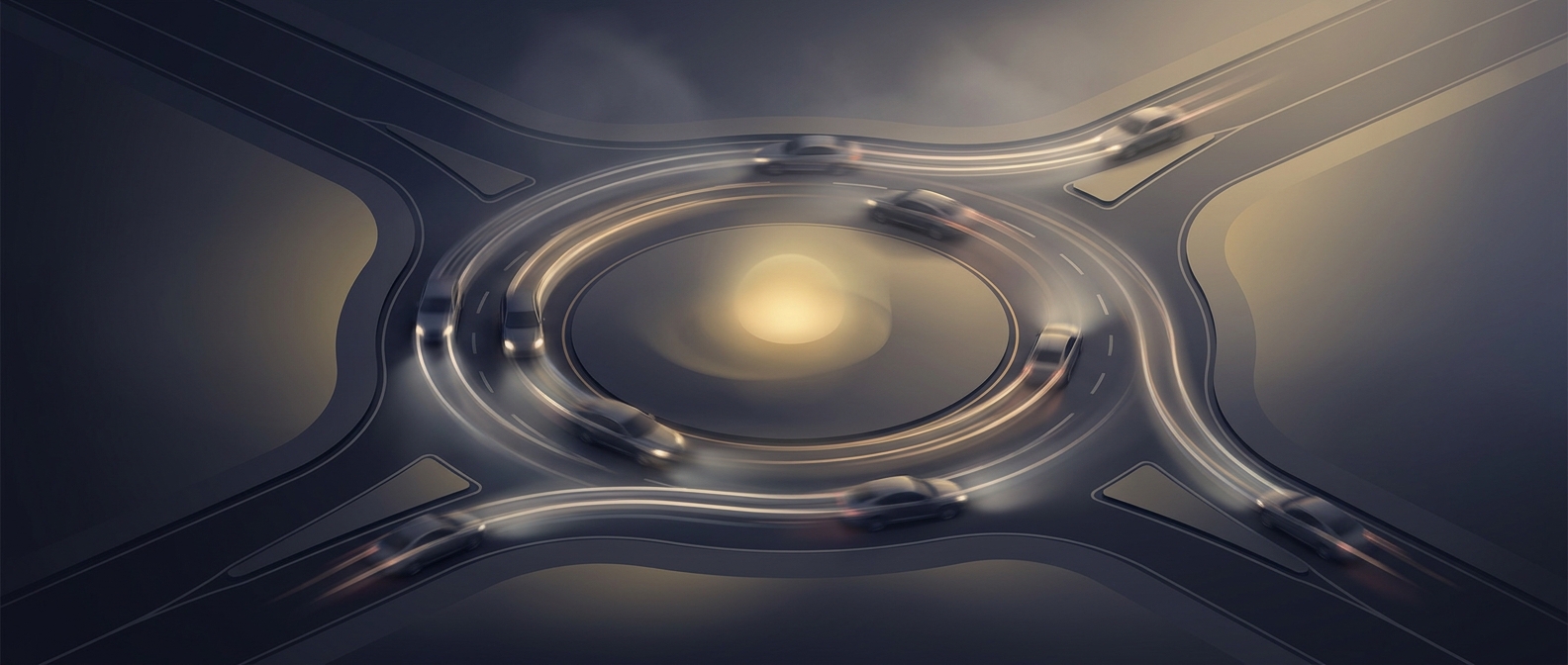
At a signalized intersection, a driver may have to brake to a full stop, wait with the engine running, then use extra fuel to get the car moving again. A roundabout changes that pattern: drivers slow as they approach, yield to traffic already circulating, and enter when a gap appears. If traffic is flowing, they can pass through without stopping.
The fuel benefit comes from avoiding repeated acceleration, not from eliminating slowing altogether. Accelerating a car requires energy, and some of that energy is lost as heat when the brakes are used to shed speed. A steady, moderate pace generally wastes less fuel than a cycle of hard braking and acceleration.
The Design Makes the Difference
A roundabout’s curved path encourages lower speeds and gives drivers a chance to merge rather than race through a crossing. Its central island also redirects vehicles, so conflicting traffic streams pass around one another instead of meeting at right angles. That layout supports continuous movement while still requiring drivers to yield.
The advantage depends on conditions. Heavy traffic can make vehicles wait at the entrance, and a poorly matched design may not keep traffic moving smoothly. But when the layout and traffic volumes suit one another, fewer full stops can mean less idling and less fuel burned during acceleration. The small design choice—letting drivers merge through a curve instead of queue for a green light—can change how often every car has to start from zero.