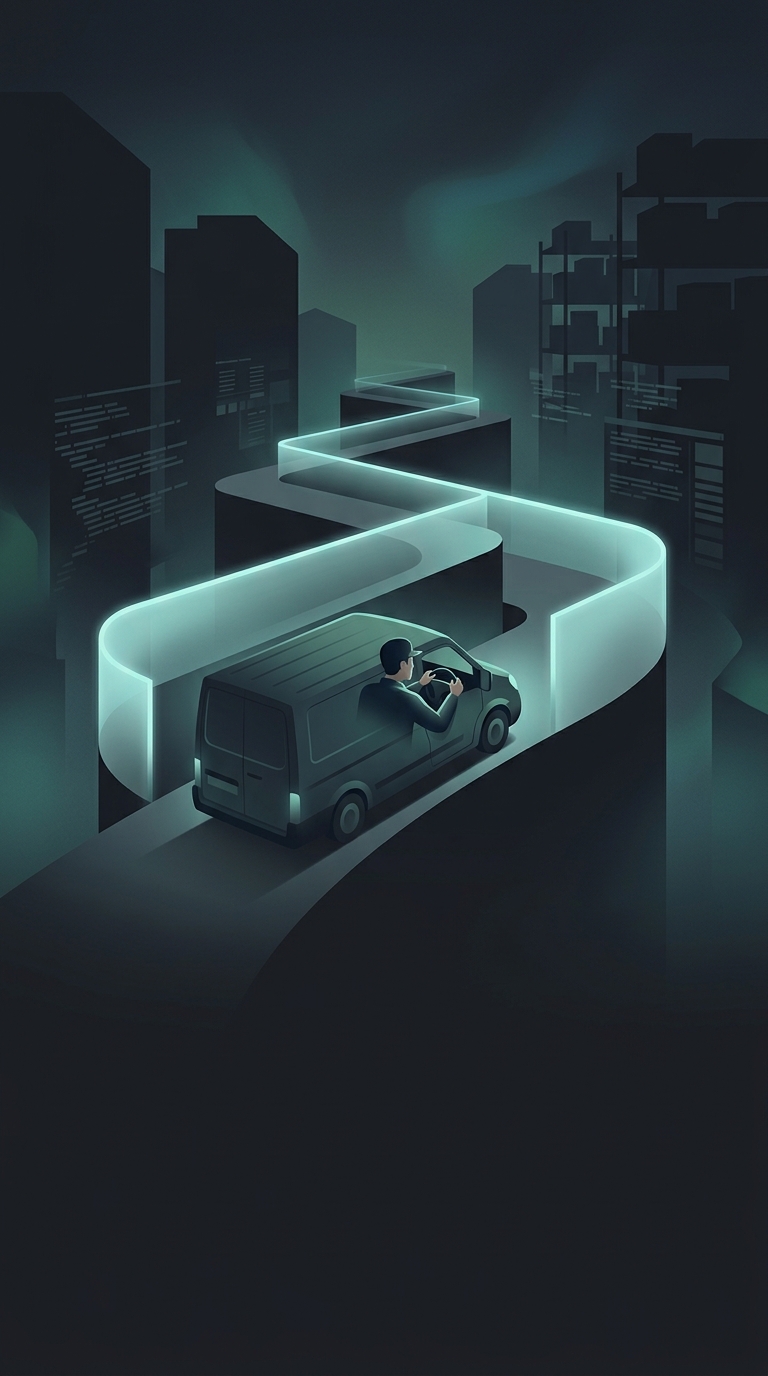
Why delivery routes favor right turns
A left turn across oncoming traffic often means waiting for a gap. In a large delivery vehicle, that can add more than a few seconds: the driver may idle at the intersection, block a lane, or need extra room to complete the turn. On a route with many stops, small delays can accumulate.
UPS’s routing software is designed to reduce those costly turns where it can. It weighs the road network and the order of deliveries to find a practical path that often approaches stops from the right-hand side. That can keep a truck moving and reduce time spent waiting in intersections.
A preference, not a hard ban
The software does not make every left turn forbidden. A route is still shaped by realities such as street layout, traffic, and where each package must go. Sometimes a left turn is the sensible or unavoidable choice; avoiding it at all costs could create a longer, less efficient trip.
The useful idea is optimization rather than prohibition: a routing system can treat a difficult maneuver as a cost and search for another route when the tradeoff makes sense. Across a fleet making many stops, avoiding even some waits can save time and fuel while making routes easier to drive. A seemingly small instruction—turn right when the route allows—becomes meaningful when repeated all day.