Why the air becomes the main obstacle
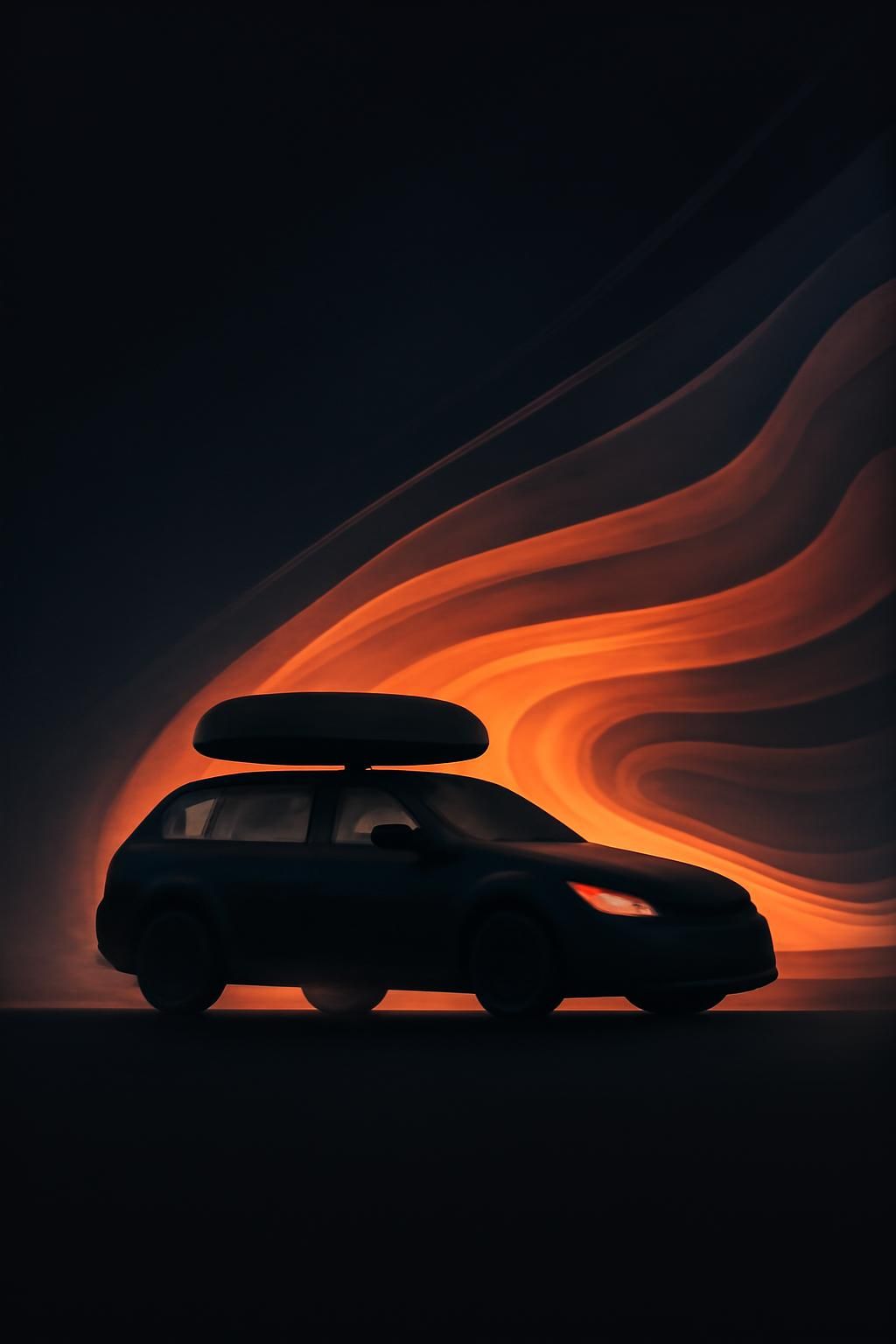
At low speeds, a car uses much of its energy overcoming rolling resistance: the tires deform as they turn, and parts of the drivetrain rub against one another. As speed rises, aerodynamic drag—the force of air pushing against a moving vehicle—grows rapidly. The car must keep accelerating air out of its path and replacing it with more air, continuously.
Drag depends on the car’s shape and frontal area, as well as its speed. In ordinary conditions, doubling speed makes aerodynamic drag roughly four times stronger. Because the car is also covering twice as much road each second, the power needed to overcome that drag rises roughly eightfold. That steep increase is why cruising faster can cost disproportionately more fuel.
Where the engine’s effort goes
An engine’s power is divided among several jobs: overcoming air resistance and tire resistance, driving accessories, and accelerating the car when speed changes. On a steady highway, the engine is not spending much energy lifting or “hauling” the car’s weight; that weight matters most when accelerating, climbing hills, and pressing the tires into the road. Once the car is moving steadily on level ground, air resistance can become the dominant load.
The exact balance varies. A tall, blunt vehicle generally pushes more air aside than a low, streamlined one, while wind, road surface, tires, and speed also matter. So the claim is not a fixed rule for every car at every highway speed. It describes a common shift in the main source of resistance as speed increases.
Why a small speed change matters
A driver can feel this tradeoff at the fuel pump: the last few miles per hour on a fast cruise may require much more engine power than the first few. Lowering speed slightly reduces the air the car must shove aside every second, which can improve fuel economy without changing the vehicle at all. The invisible wall is not a single barrier; it is a stream of air the car has to keep moving, moment after moment.