Why a Short Route Can Burn So Much Fuel
A garbage truck’s fuel use is shaped less by distance than by the work packed into each block. It repeatedly accelerates a heavy vehicle, stops at the next collection point, and starts again. Each restart takes energy, and braking turns some of the truck’s motion into heat instead of saving it for the next stretch. The collected waste adds weight as the route progresses, making acceleration harder still.
The Truck Works While It Waits
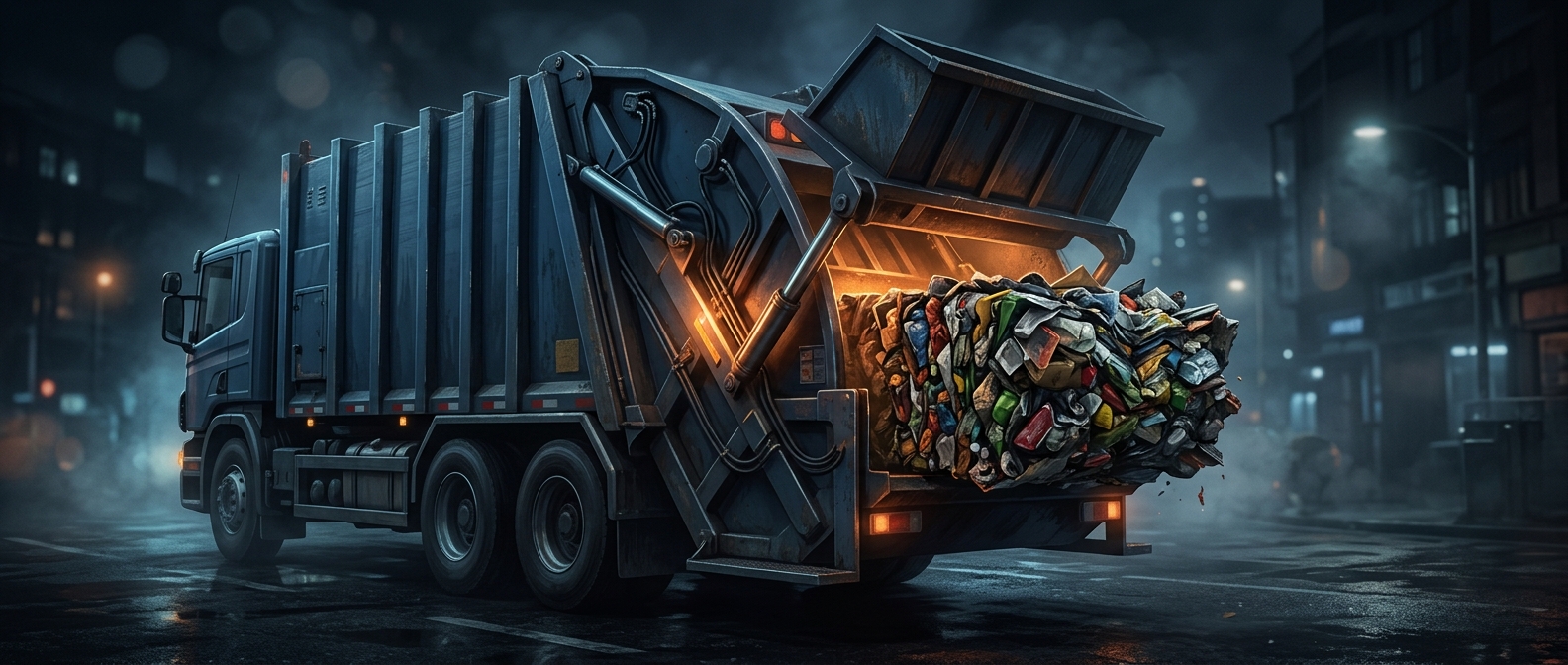
At many stops, the engine stays on so it can drive a hydraulic pump. Hydraulics use pressurized fluid to move the lifting arms and the packer plate that compresses refuse inside the body. That machinery can demand substantial power even when the truck is moving little or not at all. So the engine may consume fuel during the very parts of the route that add almost no miles to the odometer.
This makes miles per gallon a particularly unforgiving measure: a truck can spend much of its shift collecting and compacting rather than traveling. Its fuel bill reflects both transportation and the energy needed to handle the load.
Why the Design Is a Tradeoff
The compactor lets a truck carry more refuse before returning to unload, reducing the number of trips to a disposal site. But compressing trash takes energy, and carrying a larger load raises the effort required to move the vehicle. The same equipment that makes collection practical therefore contributes to poor fuel efficiency. A refuse truck is not simply a vehicle on a route; it is a mobile machine whose engine has to keep doing useful work even when the wheels barely turn.