How hydraulic pressure moves a refuse load
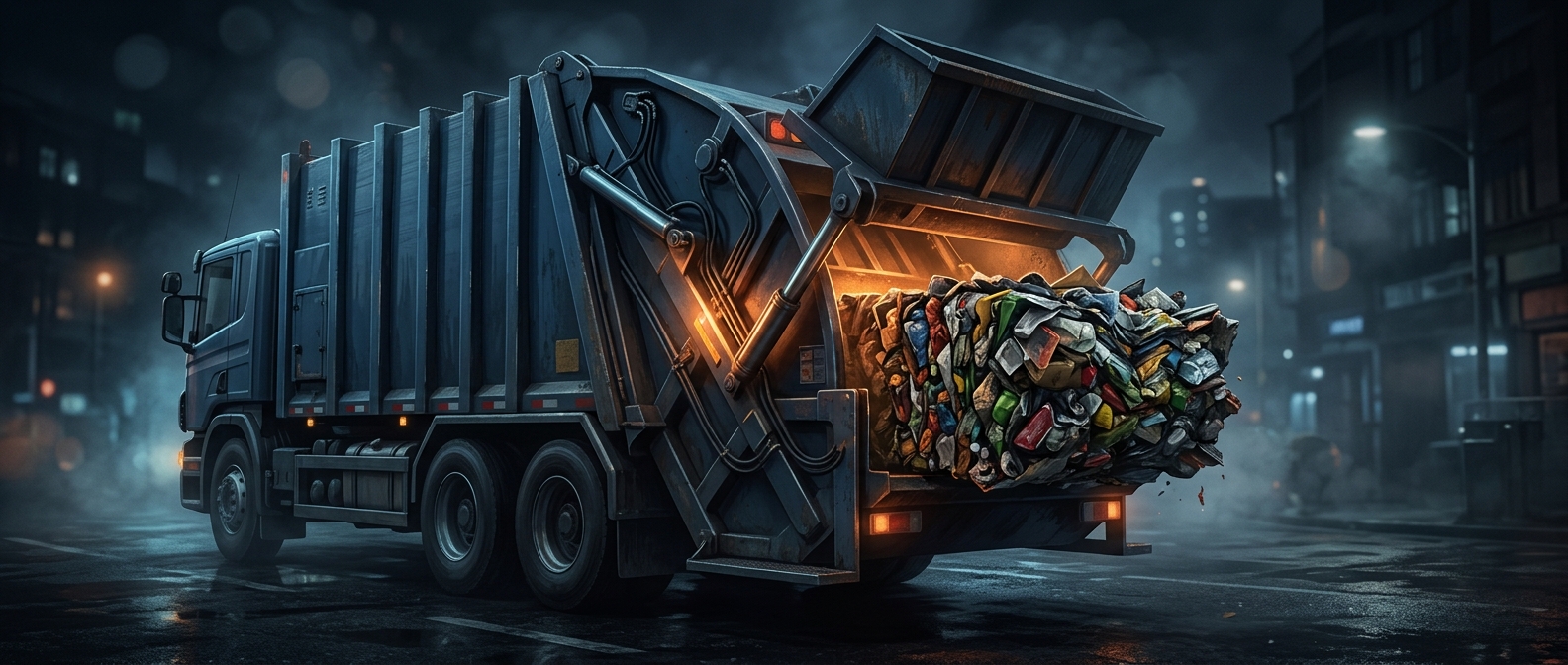
A refuse truck’s compactor is powered by hydraulics: pressurized fluid carries force from a pump to cylinders, whose pistons push the packer plate. The plate sweeps through the hopper—the loading area at the back—and drives loose waste into the truck’s body. Valves control the movement, letting the mechanism advance and return in a repeating cycle.
The key advantage is not that the truck makes waste lighter. It reduces the space the waste occupies. Air gaps between bags, boxes, and other items shrink as the load is squeezed together, so more material can fit within the body’s available volume.
The tradeoff between space and weight
Compaction helps a collection route carry more before returning to unload, but it cannot eliminate the truck’s weight limit. A load may fill the body by volume before reaching that limit, or become heavy enough to require unloading while space remains. The mix of refuse matters: light packaging takes up room quickly, while dense material adds weight with less volume.
The packer also has to work against resistance from the material already in the body. Its force comes from hydraulic pressure acting on the cylinder pistons; the system must be designed to move a substantial load without treating the entire truck as an unlimited press. That is why compaction is a practical balance of available space, vehicle capacity, and the effort needed to keep the mechanism cycling.
Why the mechanism matters on a route
Without compaction, a truck would carry more empty space between discarded items and could need to unload sooner. The packer plate turns each collection stop into part of a repeated loading process: waste enters the hopper, the plate pushes it inward, and the body gains room for more. The result is a truck that can gather a denser load before the next trip to its disposal site.