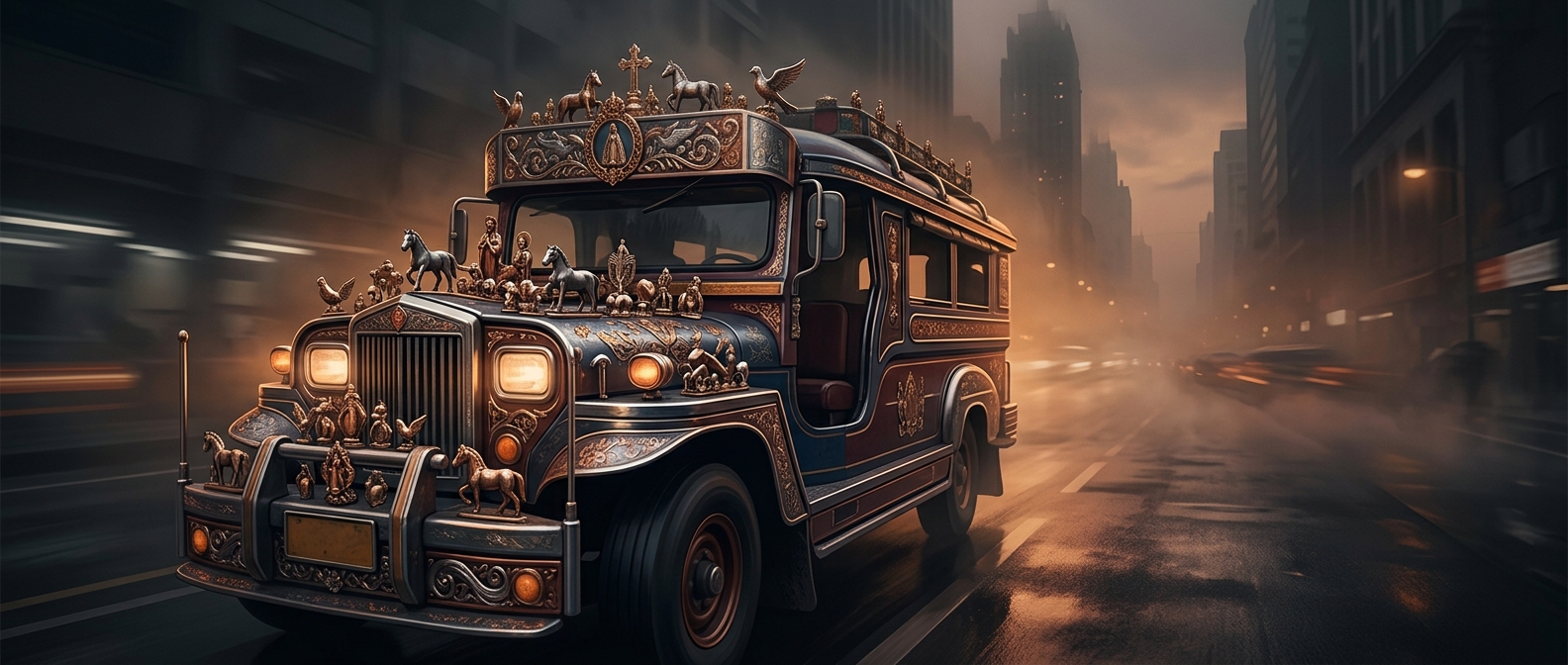
A work vehicle becomes recognizable
A jeepney’s hood is a small, highly visible place to make a practical vehicle feel individual. The body may be built for carrying passengers along a route, but its front is also what other drivers, pedestrians, and waiting riders see first. A cluster of metal figures, mirrors, or other ornaments gives that surface a distinct look without changing the vehicle’s basic job.
That distinction matters in a form of transport where many vehicles share the same broad shape. Decoration helps turn a utilitarian machine into something with a recognizable presence on the street. The hood becomes a kind of moving display: its details travel through neighborhoods rather than remaining fixed on a shopfront or sign.
Personalization with practical limits
Hood ornaments are additions to a working vehicle, so appearance has to coexist with ordinary use. They must be attached to a surface exposed to weather, road vibration, and routine cleaning. Small pieces can make a visual statement without requiring a full redesign of the vehicle, while mirrors add reflective surfaces to the arrangement. The exact choices vary from one jeepney to another, making the overall effect less like a standard factory package and more like an owner’s individual composition.
The result is a useful contrast: the jeepney is public transport, but its decoration can express private taste. Passengers encounter the vehicle as part of a shared journey; its front also signals that this particular machine has its own character. That is why a handful of ornaments can do more than embellish a hood—they make a working vehicle easier to remember.