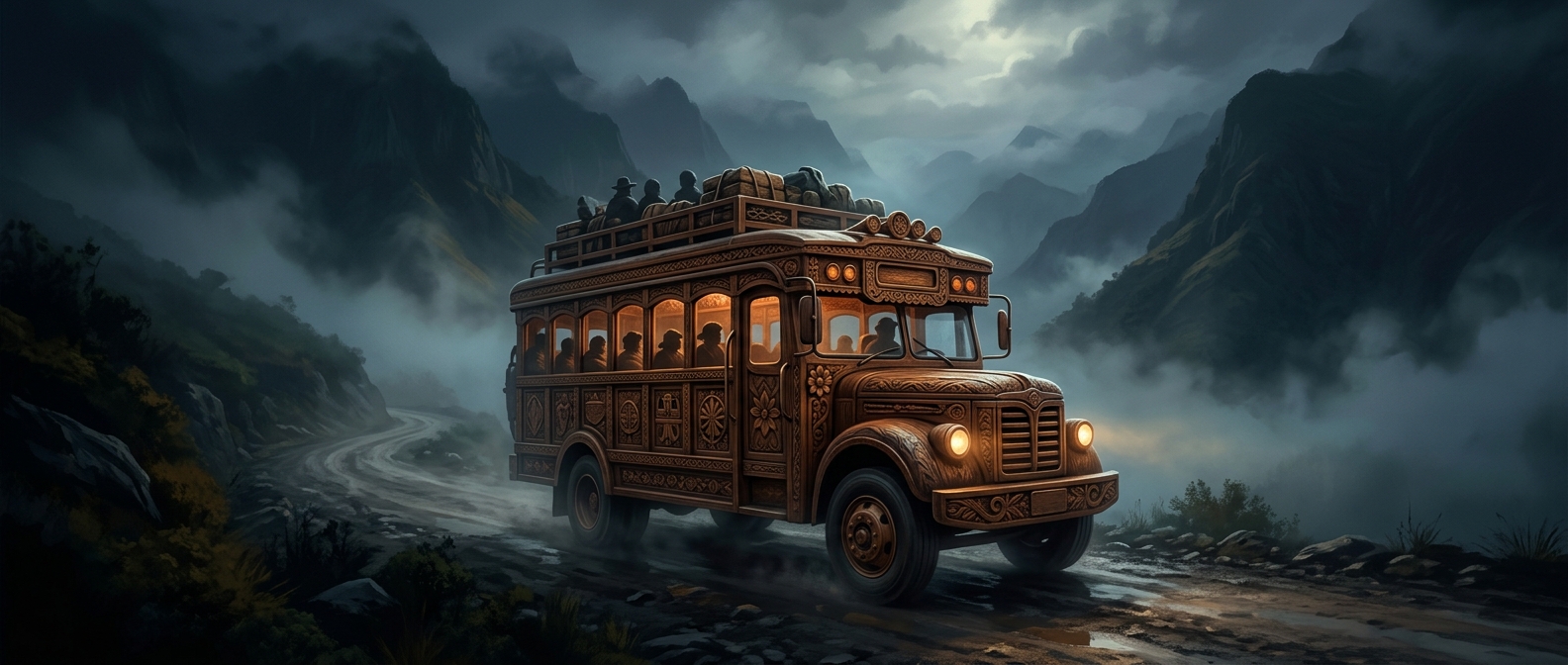
How a School Bus Became a Regional Workhorse
A retired school bus already had several qualities that made it useful for public transport: a sturdy frame, a high roof, and room for many passengers. In Central America, operators could give these vehicles a second life without building a bus fleet from scratch. The familiar yellow exterior was only the starting point; each bus could be adapted to the routes and passengers it would serve.
Retrofitting for a Different Kind of Route
Owners commonly remove the original school-bus seating and reconfigure the interior to make more room for passengers. That can mean a different balance between seats, standing space, and luggage, depending on the vehicle and the service. The result is not a uniform factory model but a working bus shaped by local operators’ needs.
This conversion is also an economic choice: a used vehicle can be less costly to put into service than a new bus. Its earlier design still matters, though. School buses were built to carry a large group in one robust vehicle, so their basic capacity and construction suit frequent passenger use.
Paint That Marks a New Identity
The vivid paint and decorations do more than replace the old yellow. They make a bus visually distinctive and give it a local identity after its original school-run role has ended. Together, the practical refit and personal styling turn a mass-produced North American vehicle into a familiar part of Central American intercity travel.
The striking transformation is also a practical one: a retired school bus can keep carrying large groups, but now along the routes and in the style of its new home.