A school bus gets a second working life
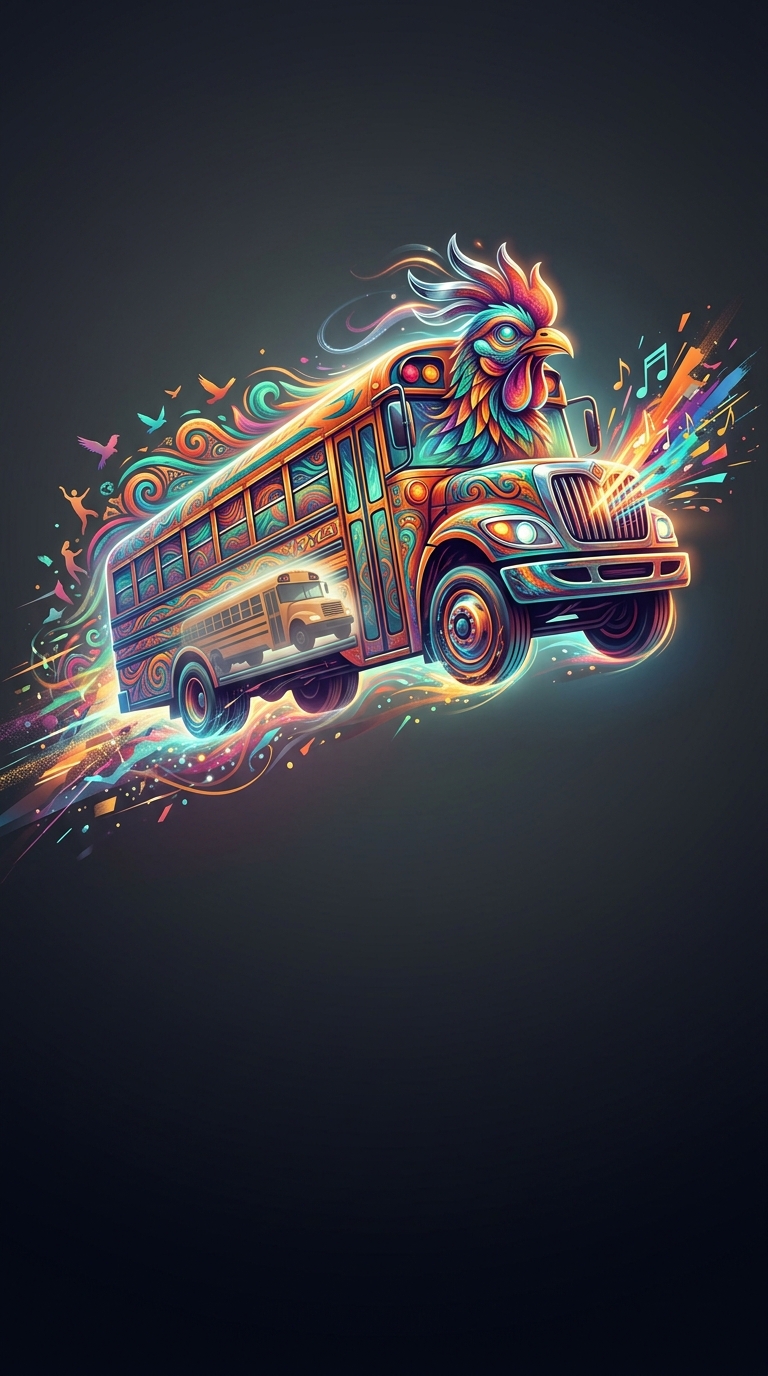
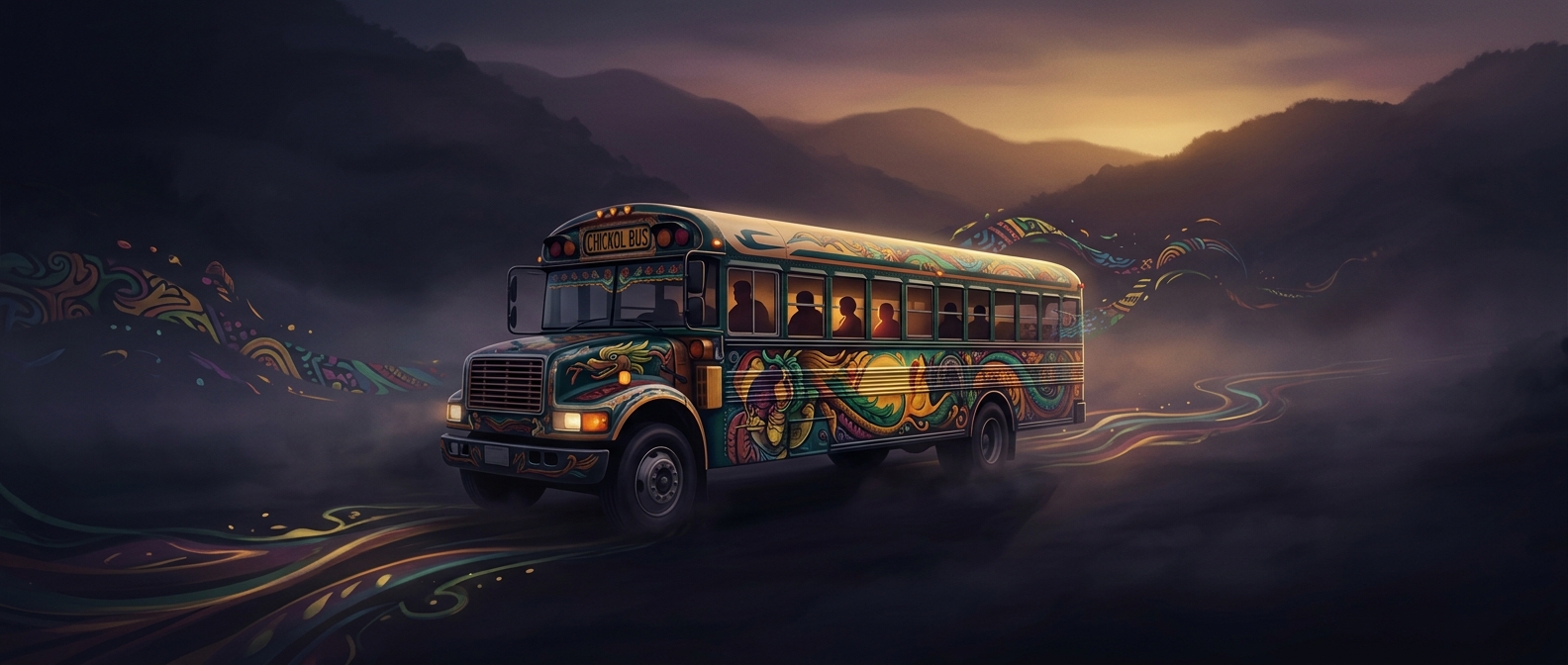
In parts of Central America, a “chicken bus” is a locally operated passenger bus, often built from a retired North American school bus. Retirement from school service does not necessarily mean the vehicle is finished: an operator can refurbish it, adapt its interior for local routes, and put it back to work. The makeover is practical as well as visual. A familiar, mass-produced vehicle becomes part of a transport system shaped by local operators rather than a factory’s original design.
Paint turns a vehicle into a calling card
The bright paint and murals are applied after the bus changes hands, giving its new working life a visible identity. That matters in busy terminals, where passengers need to recognize the bus they want among many vehicles, and where an operator’s bus has to stand out. Artwork can make each vehicle distinctive even when the underlying buses began as similar school models.
The result is a useful contrast: the body still carries traces of a standardized vehicle built for one job, while its colors announce a different role and a local hand in its transformation. A former school bus does not simply disappear when its first service ends; it can return to the road as a recognizable part of everyday transport.