How a truck becomes a wooden bus
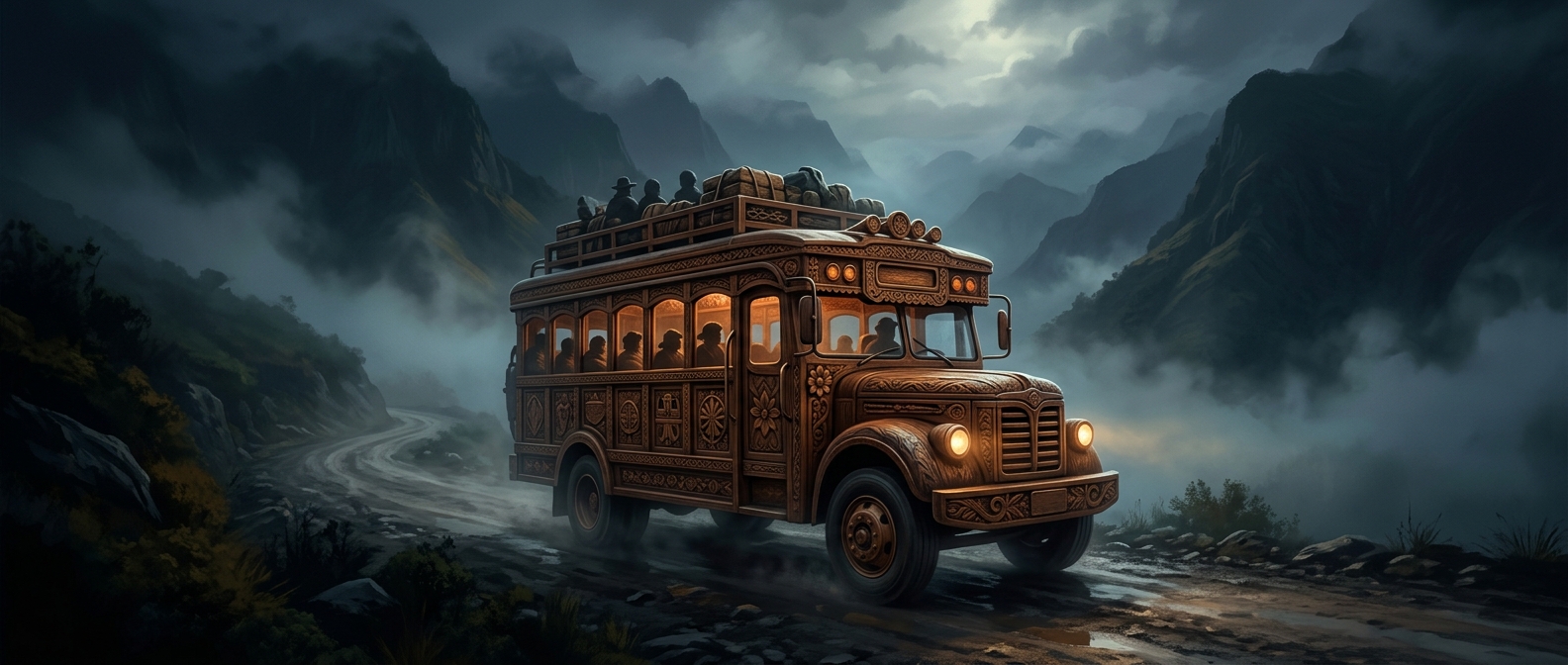
A truck chassis—the frame, axles, engine, and other running gear—provides the mechanical foundation. Builders can then shape a passenger body around it rather than rely on a factory-made metal shell. The carved wood is both enclosure and decoration: its panels give the vehicle a distinctive exterior while making the bodywork possible with local tools and skills.
That division also makes the bus a compromise. The chassis is designed to carry a load, but wood adds weight, and every extra passenger adds more. More mass asks more of the engine, brakes, tires, and suspension, so the practical limit is not simply how many people can squeeze inside.
What the open body changes
A body assembled from carved panels does not automatically have the engineered strength of a modern passenger compartment. Doors, reinforced pillars, and other structural features help keep people protected and the body intact in a crash; a vehicle without them offers less of that protection. The open layout may make boarding straightforward, but it also leaves passengers more exposed.
The result reflects a choice about what the vehicle is built to do: carry people on a truck-based platform using a body that can be made and repaired by hand. Its carved surface is not just ornament laid over a standard bus. It is part of a different way of constructing the vehicle—and one that trades some modern protections and efficiency for a practical, locally crafted body.