A drink became an interior-design problem
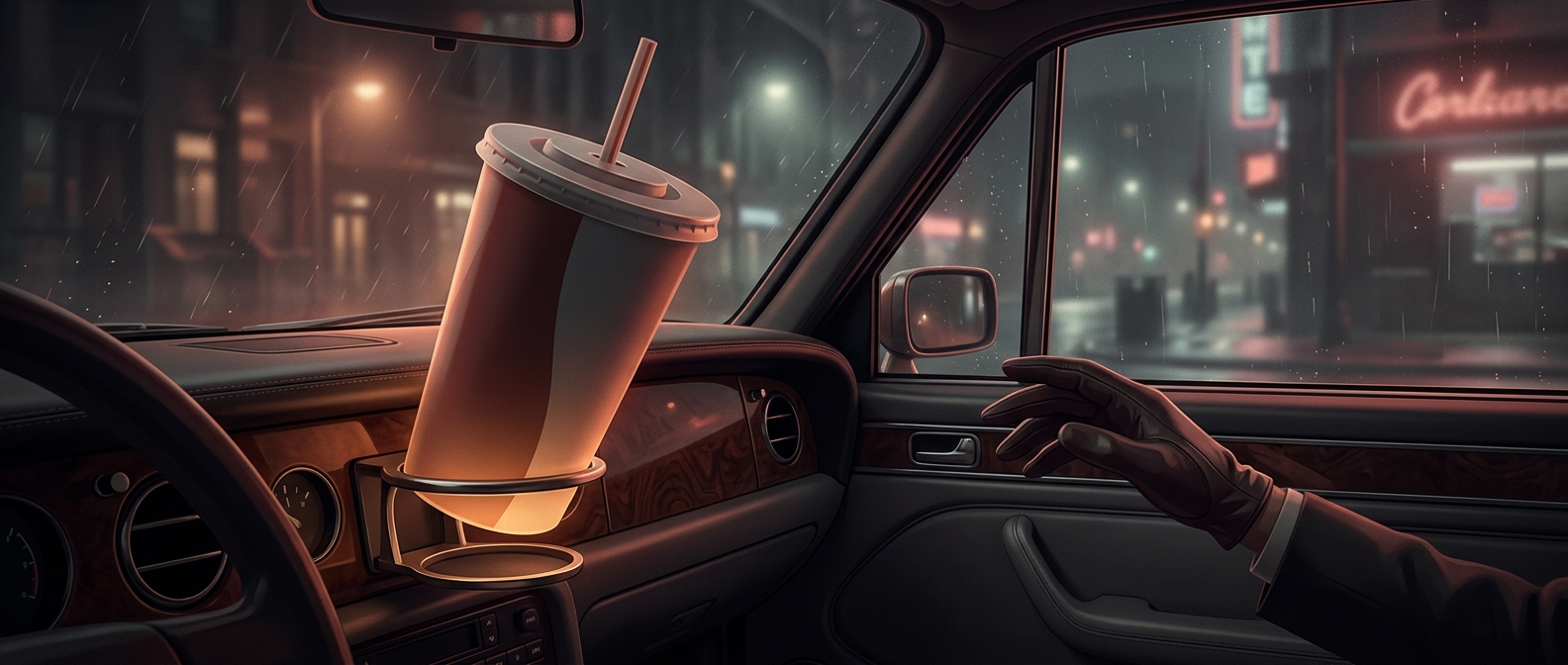
A cup in a moving car is not just cargo. Braking sends it sliding forward; a turn pushes it sideways; bumps can make liquid surge over the rim. A passenger can steady a drink by hand, but a driver needs a place that holds it without requiring constant attention.
That made the cup holder a small but consequential piece of cabin engineering. A useful holder has to fit common drink containers, keep them upright through ordinary motion, and sit where a driver can reach it without leaning far or searching. A molded recess in the center console can do this while keeping the cup from rolling around the cabin.
Fast-food cups changed what “fits” meant
The challenge was not simply to make a hole in the console. Drink cups vary in width and shape, and a holder that is too loose lets a cup tip; one that is too tight may not accept larger containers. As takeout drinks became part of the driving routine, automakers had reason to design console space around the cups people actually carried, rather than treating a drink as an occasional passenger-held item.
The change also reflects a broader shift in what a car interior was expected to support. Space between the seats had to serve controls and storage, but it could also be shaped to make everyday driving more convenient. A cup holder seems minor until a driver has to manage a drink without one: its real achievement is turning an unstable object into something the cabin can hold in place.