A landing site was only partly the pilot’s choice
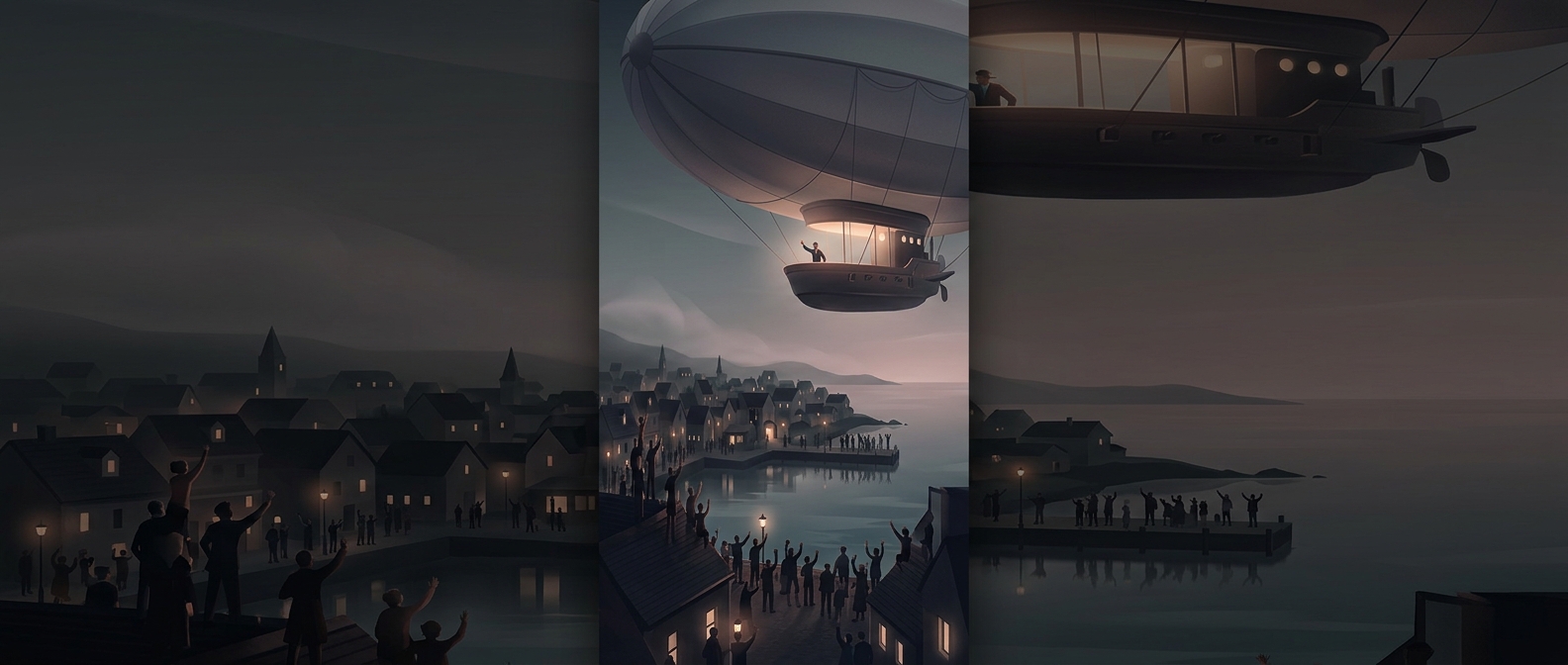
A hot-air balloon can rise or descend, but it cannot steer directly toward a chosen spot. Early pilots could influence their route by changing altitude, where winds might be moving in different directions, yet they still had limited control over where the balloon would come down. A field that looked open from above might be someone’s working land below.
That made arrival a social problem as well as a flying one. A balloon settling among crops or livestock could startle people and raise concerns about damage. Its passengers might also appear without warning, accompanied by the noise and commotion of a landing party.
A bottle could smooth the encounter
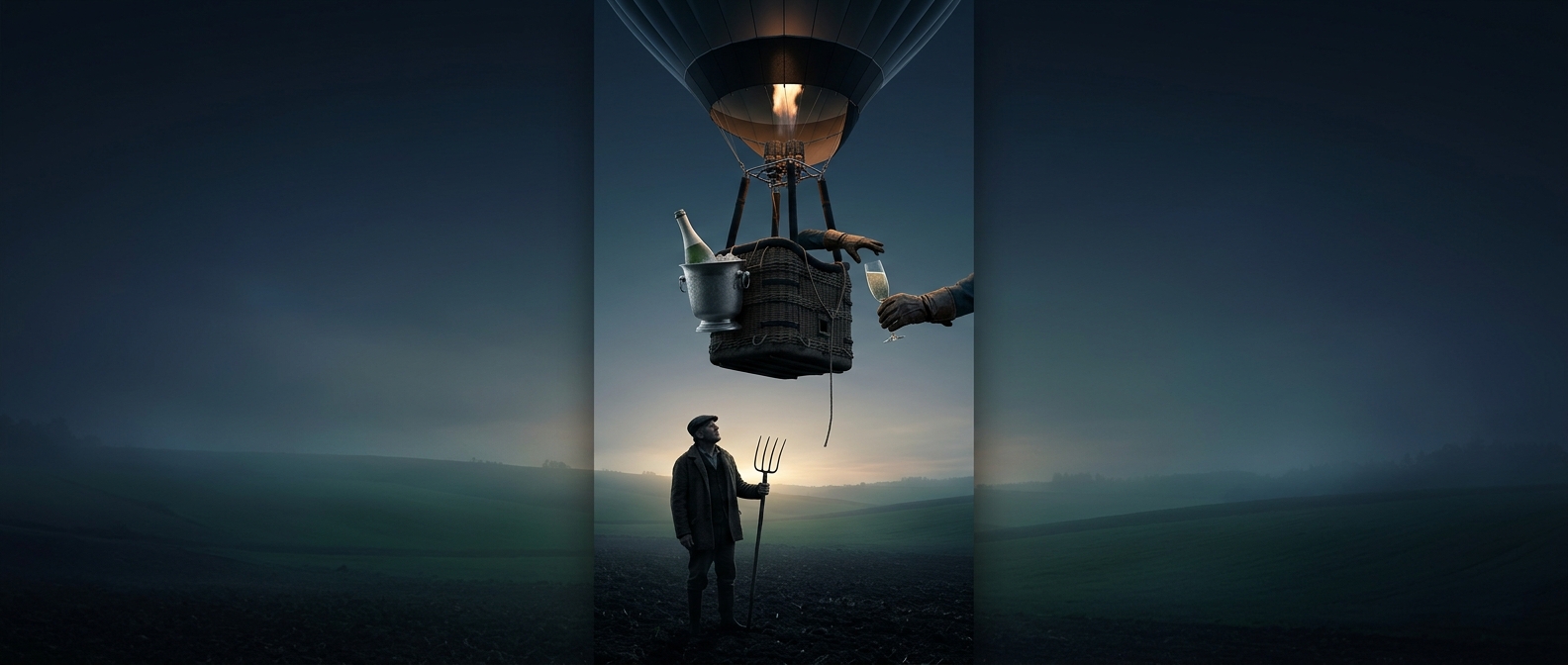
Carrying champagne offered a quick way to change the tone. Instead of treating the landing as an intrusion, the balloonists could present a bottle and invite the landowner to share in the occasion. The gift recognized that the visitors had arrived on somebody else’s property—and turned an unfamiliar spectacle into a small celebration.
The custom was a practical answer to a transport problem: balloonists could travel through the sky, but they depended on goodwill once they reached the ground. Champagne could not repair a damaged field or guarantee a welcome, but it made an unexpected arrival easier to receive. For a vehicle with so little control over its destination, courtesy traveled as essential equipment.