Buoyancy let airships take their time
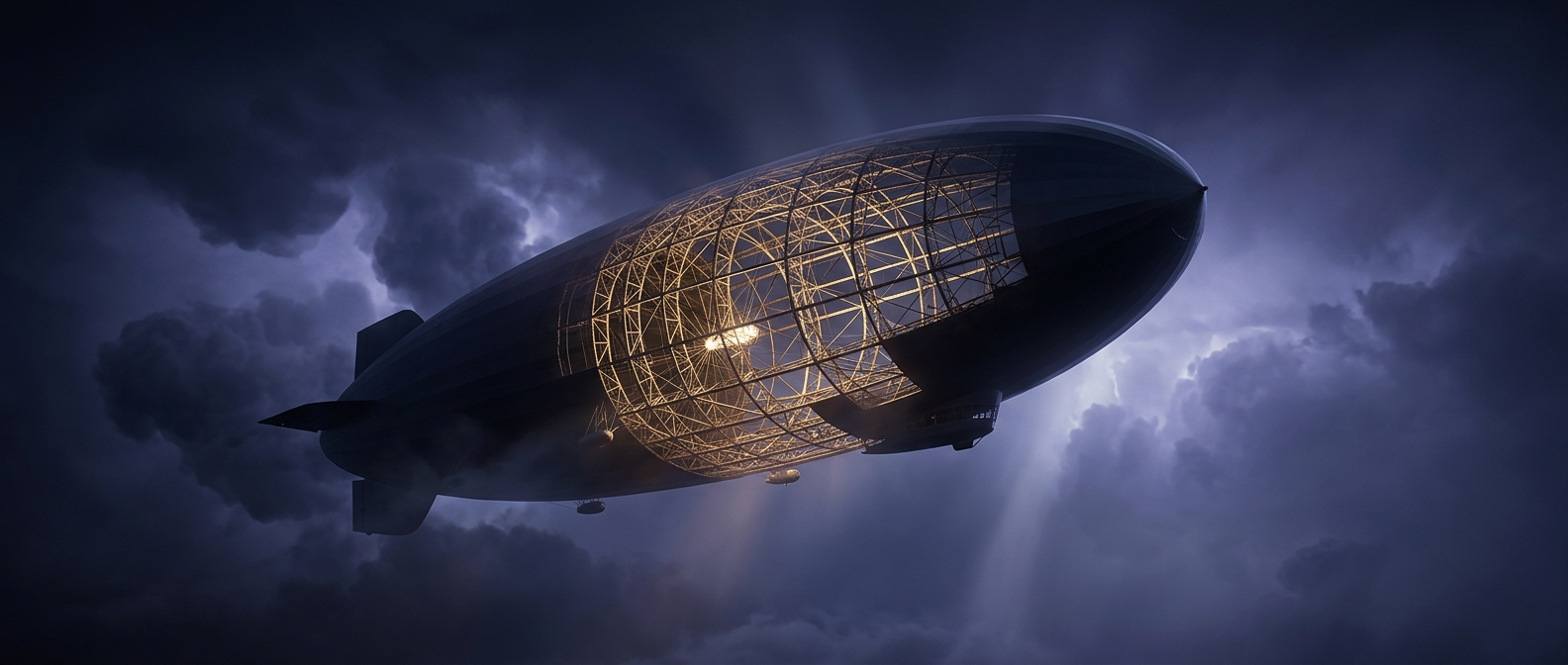
An airship did not need to rush forward to stay aloft. Its large envelope—the gas-filled fabric body above the passenger cabin—contained gas lighter than the surrounding air. That difference created buoyant lift, much as a boat displaces water to float. Engines moved the craft and helped steer it, but they did not have to generate all the lift by forcing air over wings.
That changed the pace of travel. An airplane generally needs forward speed to produce lift, while a buoyant airship could remain airborne at a leisurely cruising speed. It could also slow down to take in a view without immediately losing the support that kept it aloft.
Low flight made the landscape part of the trip
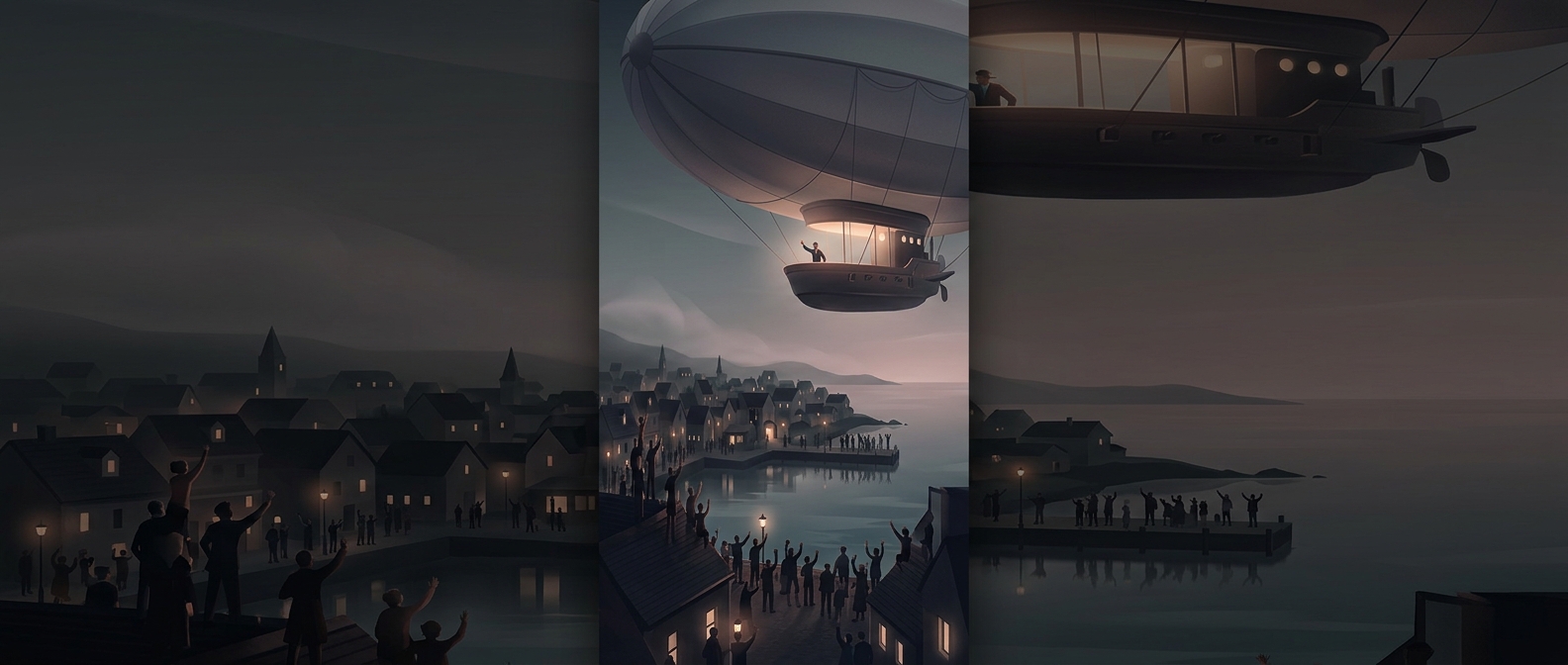
Flying lower brought towns, roads, and fields into view at a scale passengers could recognize. From a cabin beneath the envelope, travelers could watch the ground pass below rather than look down on a distant patchwork. The airship’s size made it conspicuous to people on the ground, too: its slow progress gave crowds time to notice it and wave.
Low cruising was not simply a matter of sightseeing preference. Airships were pushed by engines and steered through the air, so their route and pace depended on conditions and operating choices; buoyancy did not mean they could stop anywhere or ignore the weather. But compared with a fast airplane, they offered a different bargain: slower travel and an enormous visible envelope in exchange for a more leisurely, ground-level view.
The result was a form of travel in which the journey itself could be watched from both sides—by passengers looking out at the town, and by townspeople watching the airship drift past.