How a seatbelt manages a sudden stop
In a collision, the car can stop almost instantly, but the person inside keeps moving until something restrains them. A seatbelt has to slow that motion while keeping the body in a safer position. If it stopped the wearer too abruptly, the force on the chest and shoulders could be severe.
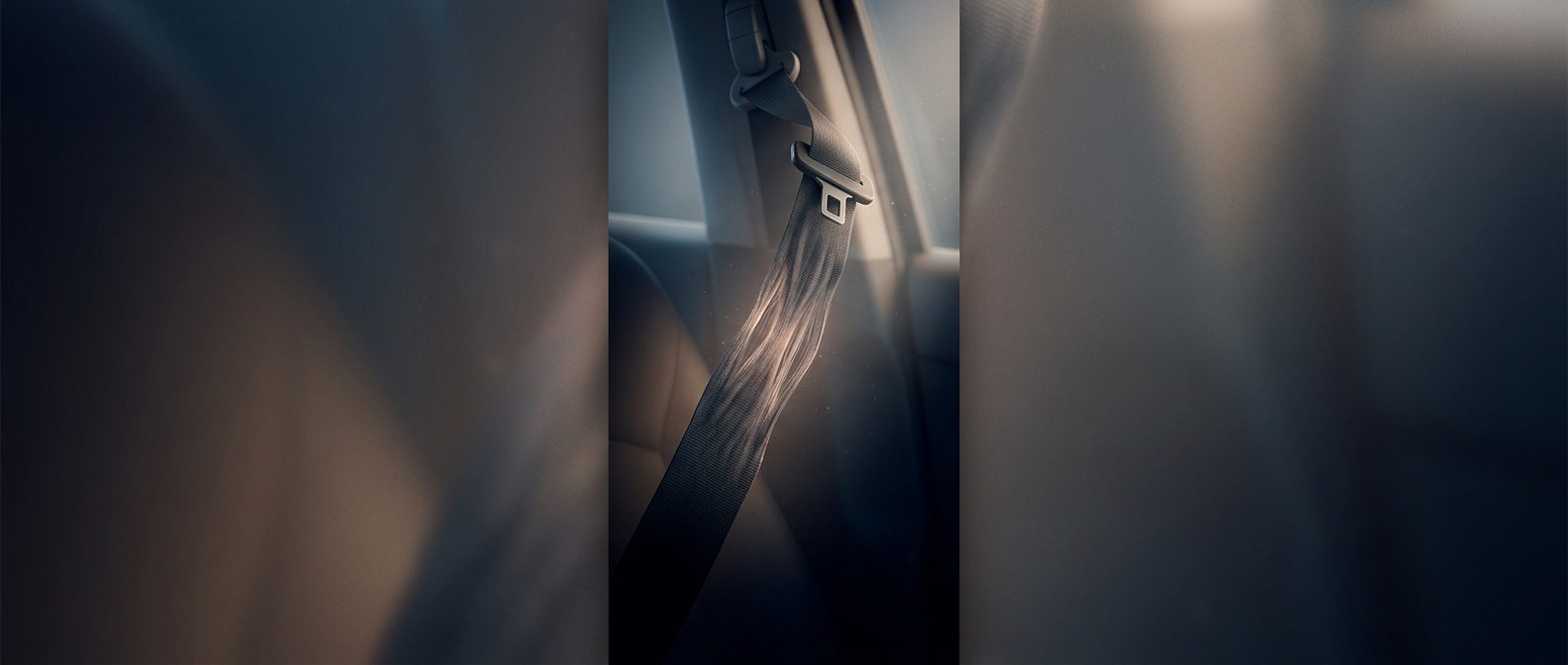
The belt’s webbing is made to lengthen slightly under a heavy load. That extra movement spreads the change in speed over a little more time and distance. In physics terms, the wearer’s momentum still has to be reduced, but a longer stopping interval generally means a lower peak force on the body.
The restraint has to give—and still hold
In many modern seatbelts, the controlled movement comes not only from the webbing but also from a load limiter inside the retractor, the mechanism that winds the belt. Under crash-level force, a component such as a twisting metal bar can deform, allowing a limited amount of belt to feed out. The restraint yields in a managed way rather than locking the person in place with no give.
That movement is carefully bounded. Too little give can produce high forces on the wearer; too much can let the body travel dangerously far, increasing the risk of striking the steering wheel, dashboard, or other interior parts. Other belt features can help remove slack or keep the occupant positioned, while the load limiter controls how much the belt yields under force.
The result is a coordinated restraint, not a loose one: the belt stays engaged, but its small, engineered allowance for movement helps turn an abrupt stop into a more gradual one.