Why a little sag changes the forces
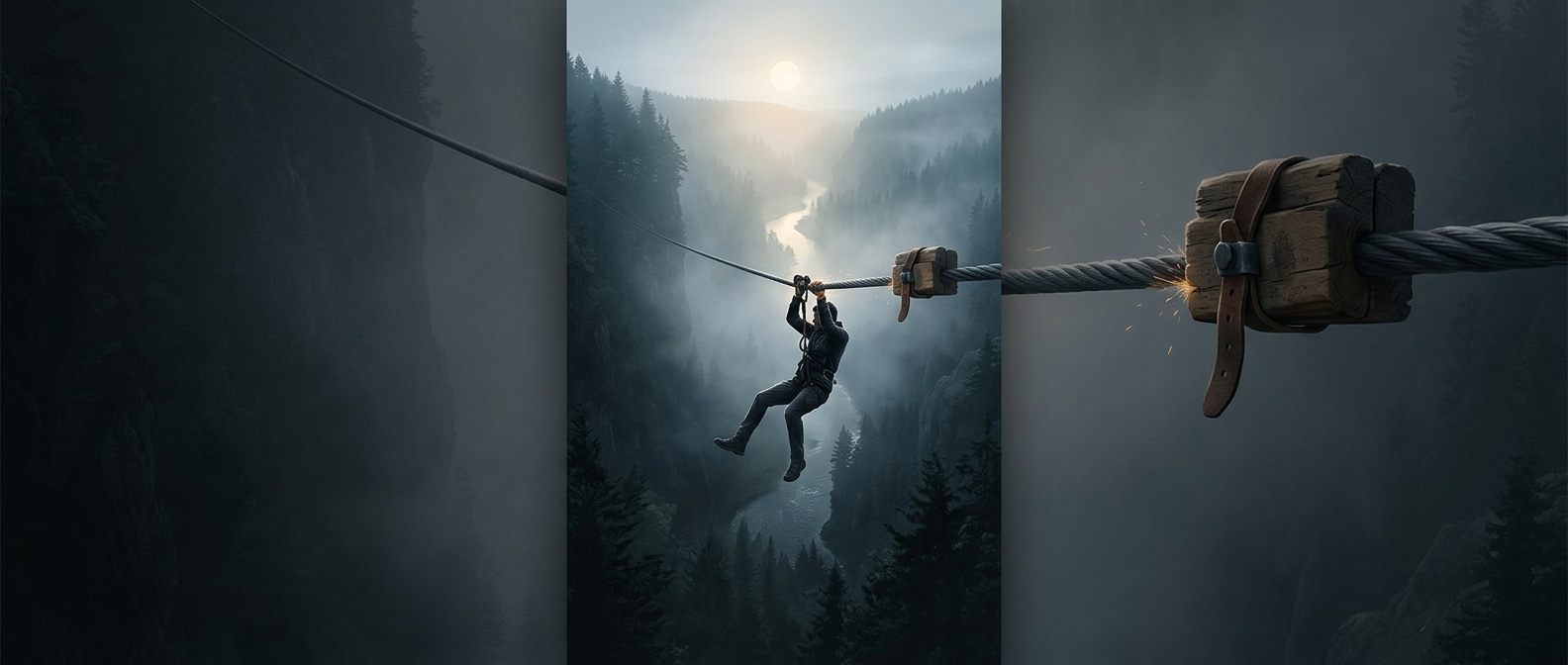
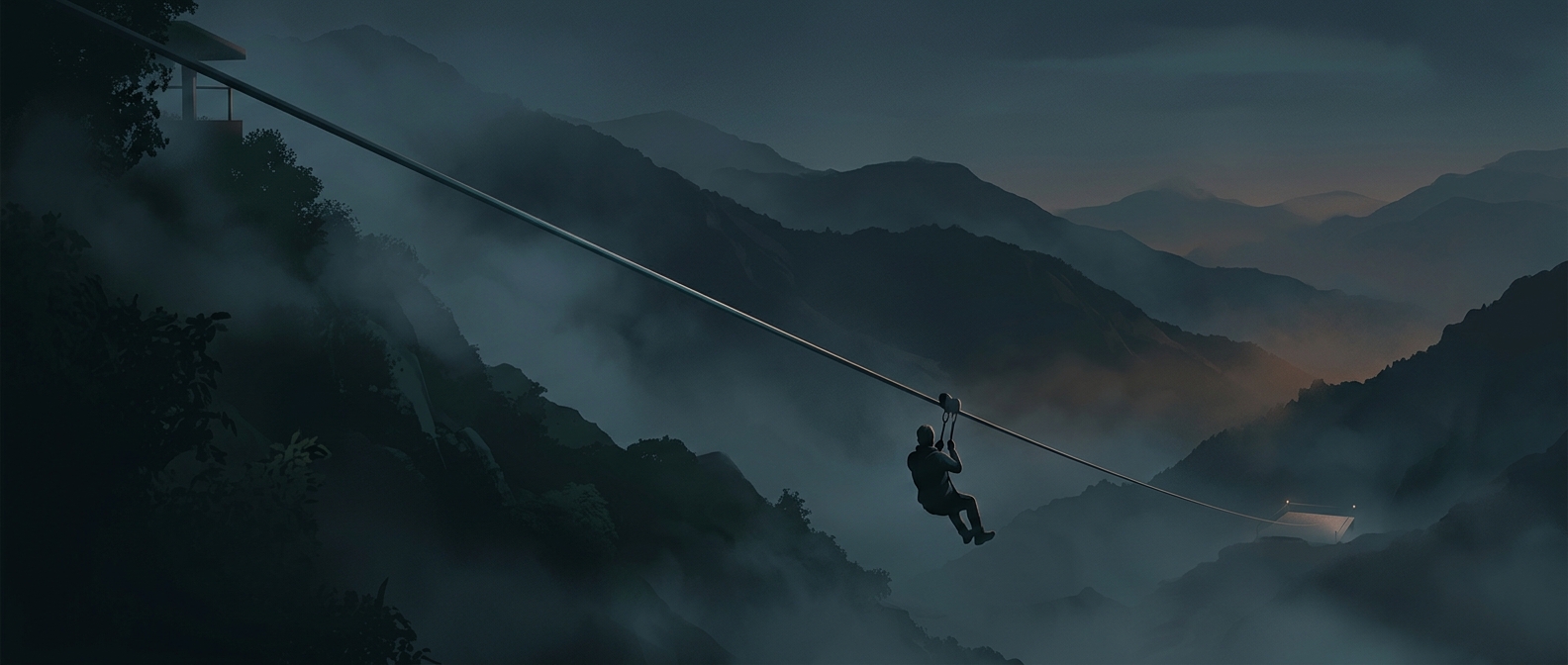
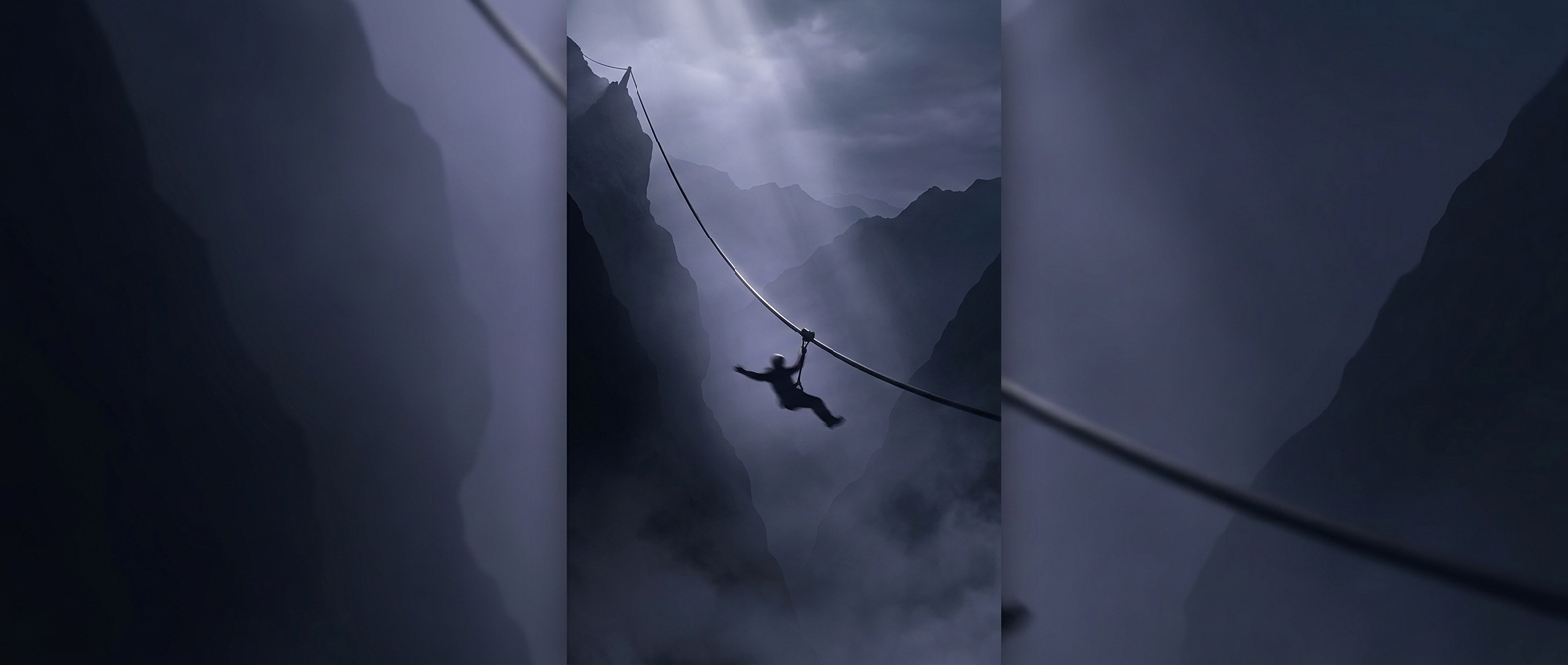
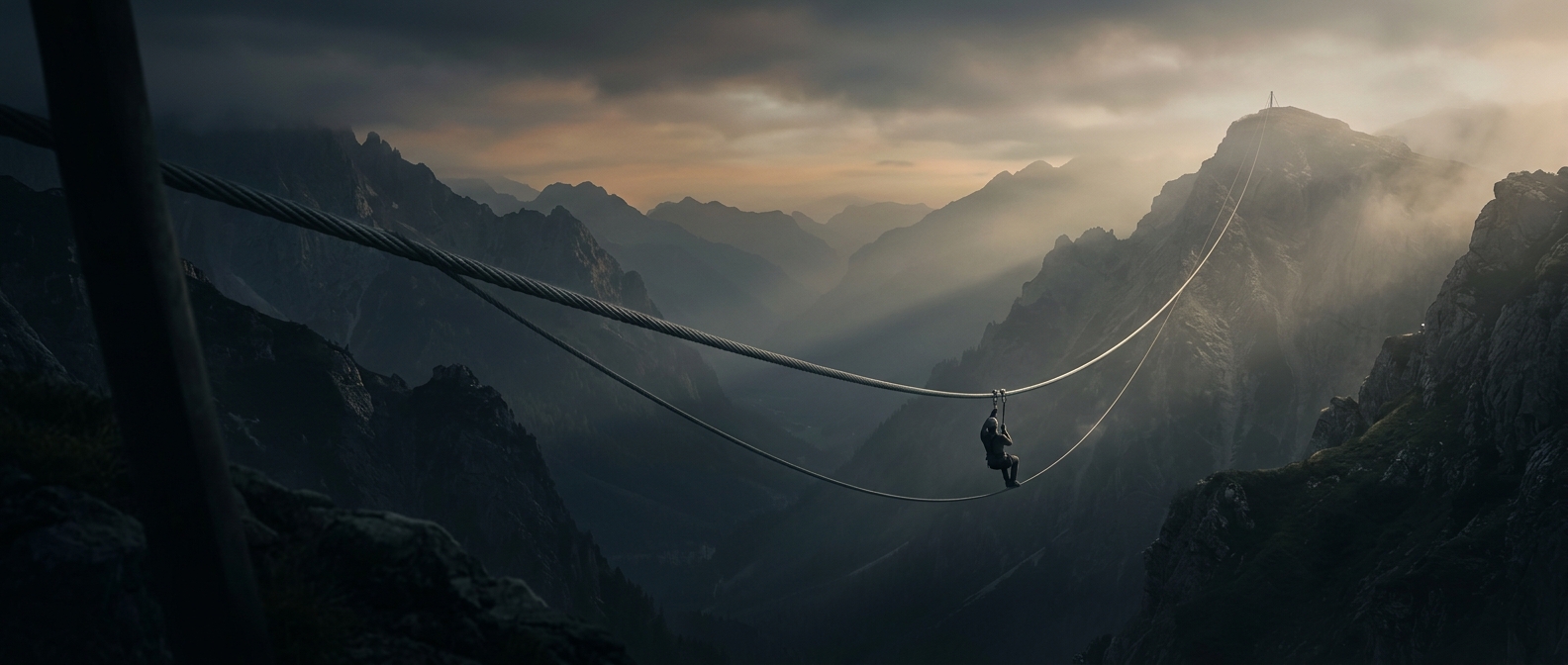
A zipline cable can support a rider because it hangs in a curve, not because it stays straight. Under load, the cable’s shape redirects some of the rider’s downward pull into forces running along the cable toward its anchors. The anchors still carry substantial force, but the curve prevents the line from behaving like a rigid, perfectly straight bar under tension.
The key tradeoff is geometry: the shallower the sag, the harder the cable and anchors must pull sideways to hold the rider up. Imagine supporting a weight with two ropes. If they rise steeply toward their supports, each rope needs less tension; if they are nearly horizontal, each must pull much harder. A zipline is the same arrangement stretched over a long distance.
Sag is designed, not guessed
Designers choose the line’s slope and sag together with the span, expected rider weight, cable properties, and the forces created as a rider moves. The cable’s own weight also affects its curve. A rider adds a concentrated load, changing the shape and tension as they travel, so the line must be assessed under more than one condition—not just when it is empty.
More sag is not automatically safer. The rider needs enough clearance above the ground and obstacles, and the line must still carry the rider to the landing area at a workable speed. Designers balance those practical limits against the force savings from a deeper curve, while accounting for the loads that the cable, connections, and anchors must withstand.
The visible curve is part of the safety system
That dip in the line is therefore not evidence that the cable is loose or poorly installed. It is a deliberate feature of how the load is carried. Making the line look perfectly straight could sharply increase the pull at its ends, even though the rider’s weight has not changed. On a zipline, the curve is not wasted motion: it is one of the ways the structure makes a long, flexible span possible.