Why a Zipline Needs a Drop
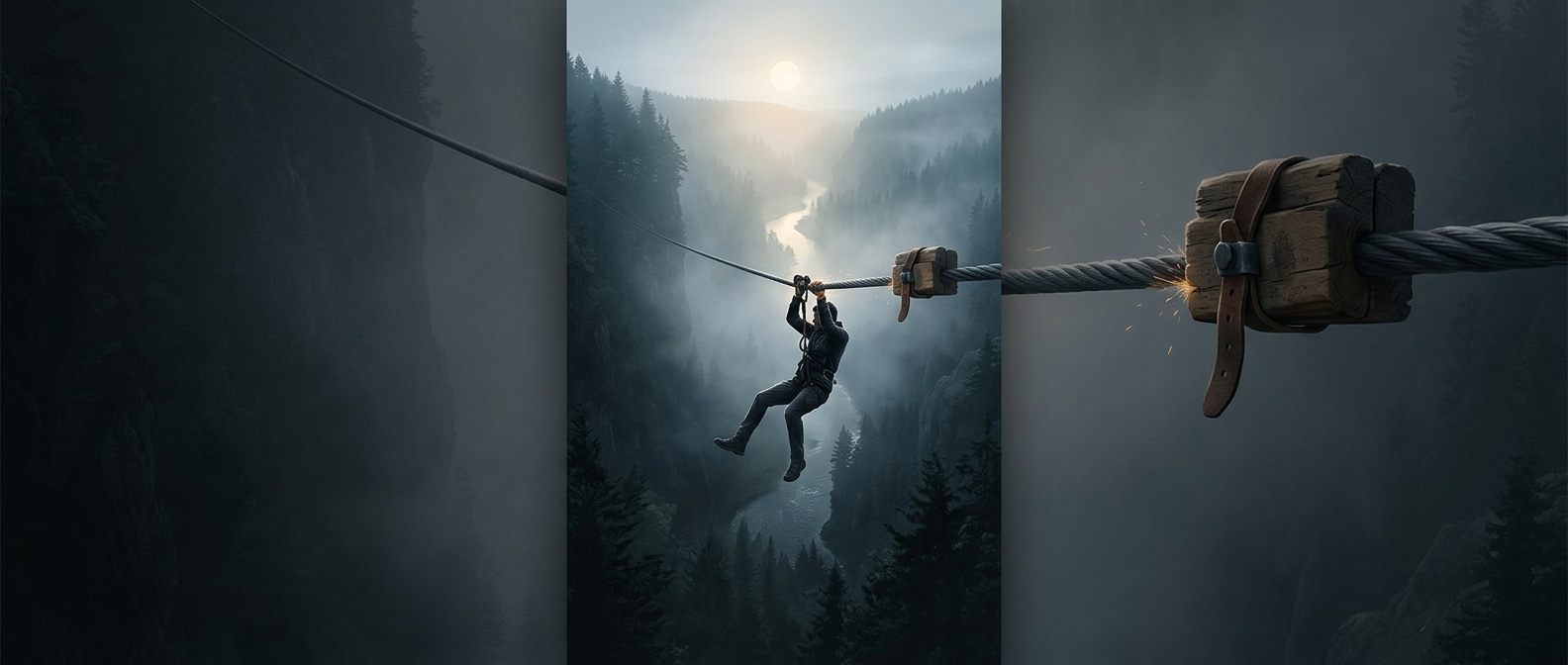
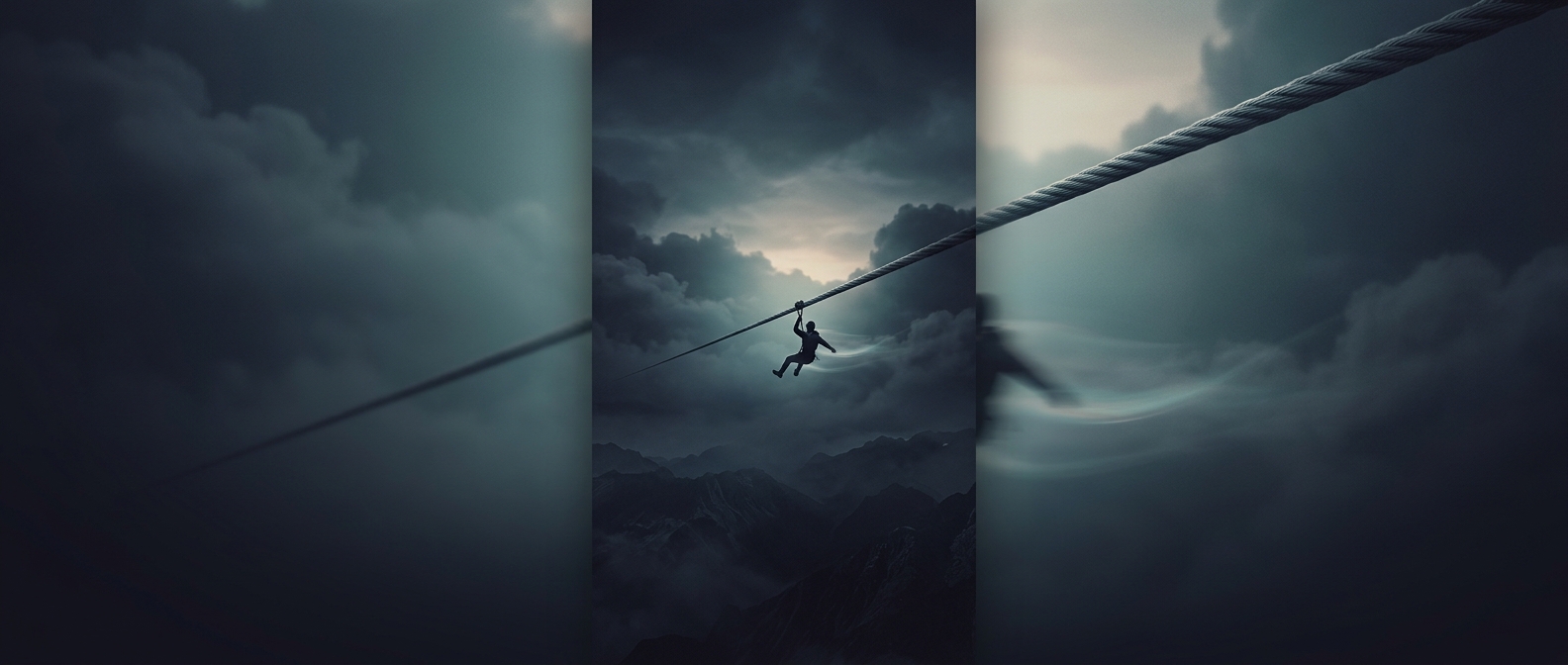
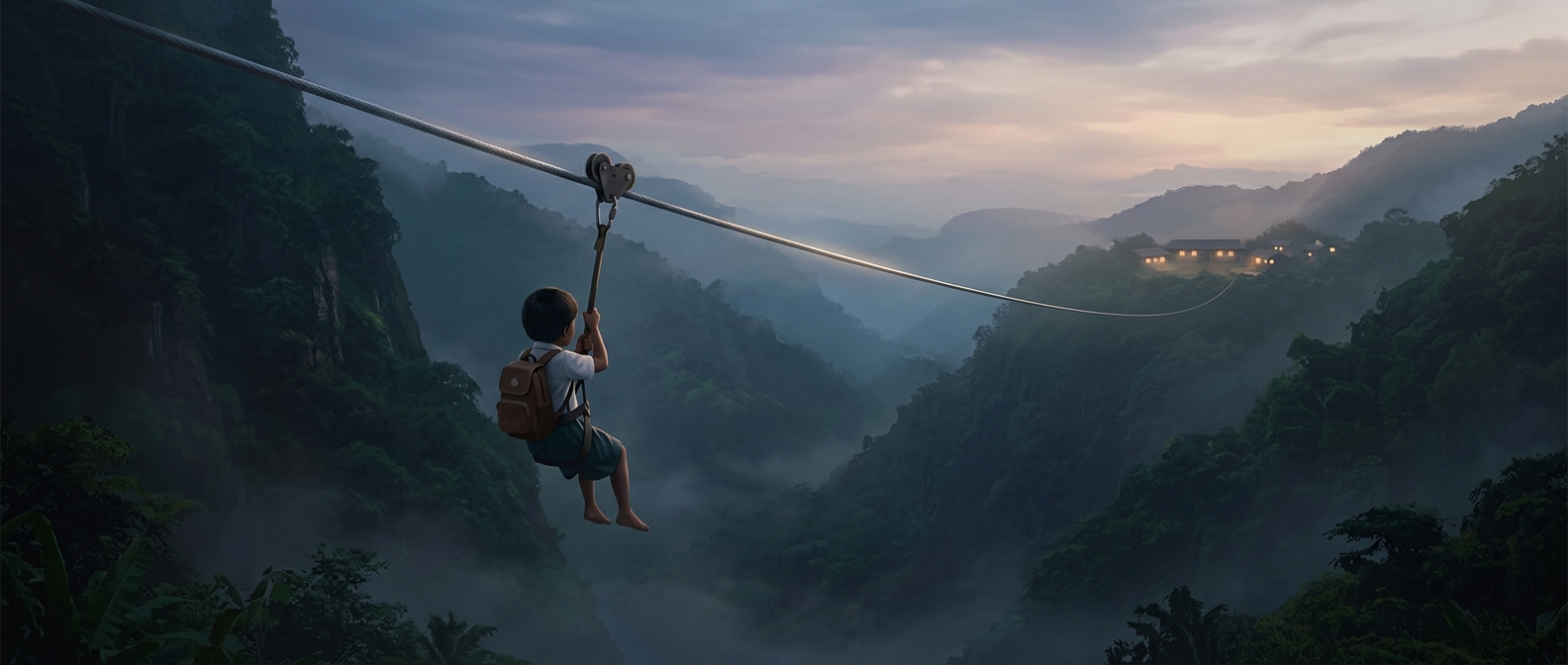
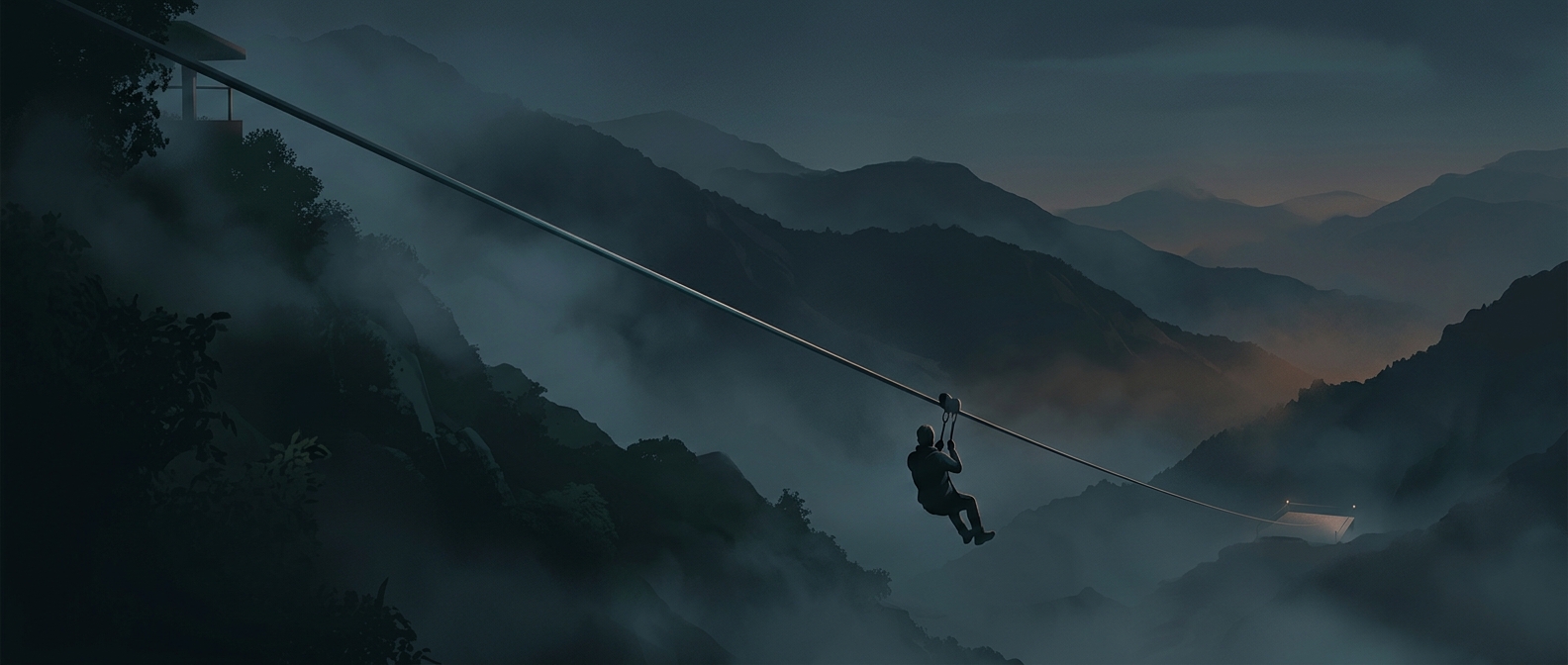
A zipline turns a change in height into forward motion. At the launch end, the rider has stored gravitational energy simply by being higher than the landing end. As the trolley rolls down the sloping cable, some of that energy becomes speed; the rest is lost to air resistance, wheel friction, and vibration.
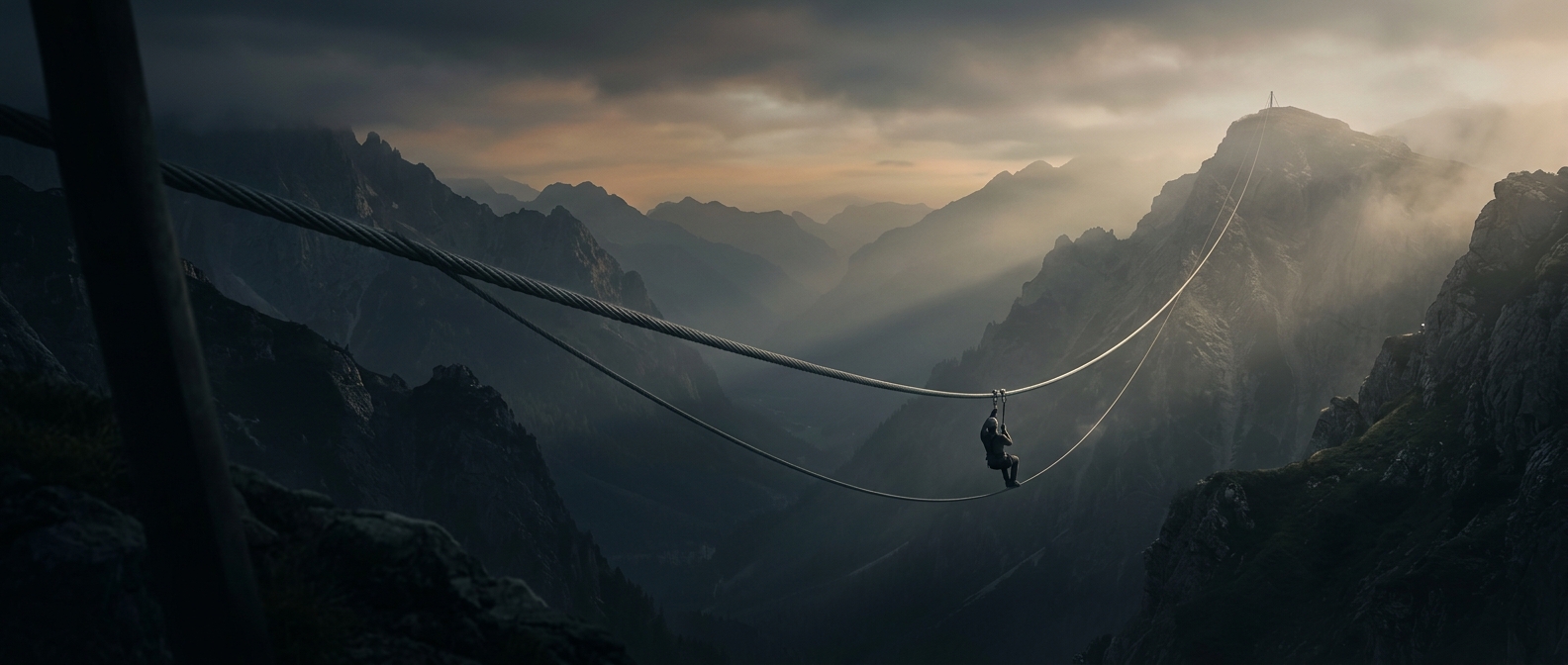
That makes the route a balancing act. A steeper or longer descent can produce a faster ride, but the designer must also account for the rider’s weight, the cable’s shape under load, and how much clearance is needed above the ground. A cable that looks straight when empty may sag noticeably once someone is on it. That curve affects both the ride’s lowest point and its speed.
The End of the Ride Is Part of the Design
Because gravity keeps pulling the trolley downhill, reaching the platform safely takes more than choosing a stopping place. Zipline courses use braking arrangements—such as a spring, a friction device, or a trained attendant’s braking system—to absorb the rider’s remaining motion. The brake must work even when a rider arrives faster than expected, while the landing area gives them room to slow down and dismount.
The basic tradeoff is simple: the height difference supplies the ride, but it also sets the challenge of controlling it. A zipline’s course is therefore designed not just to send a rider across a gap, but to turn a downhill path into a predictable arrival.