A shortcut across a canyon
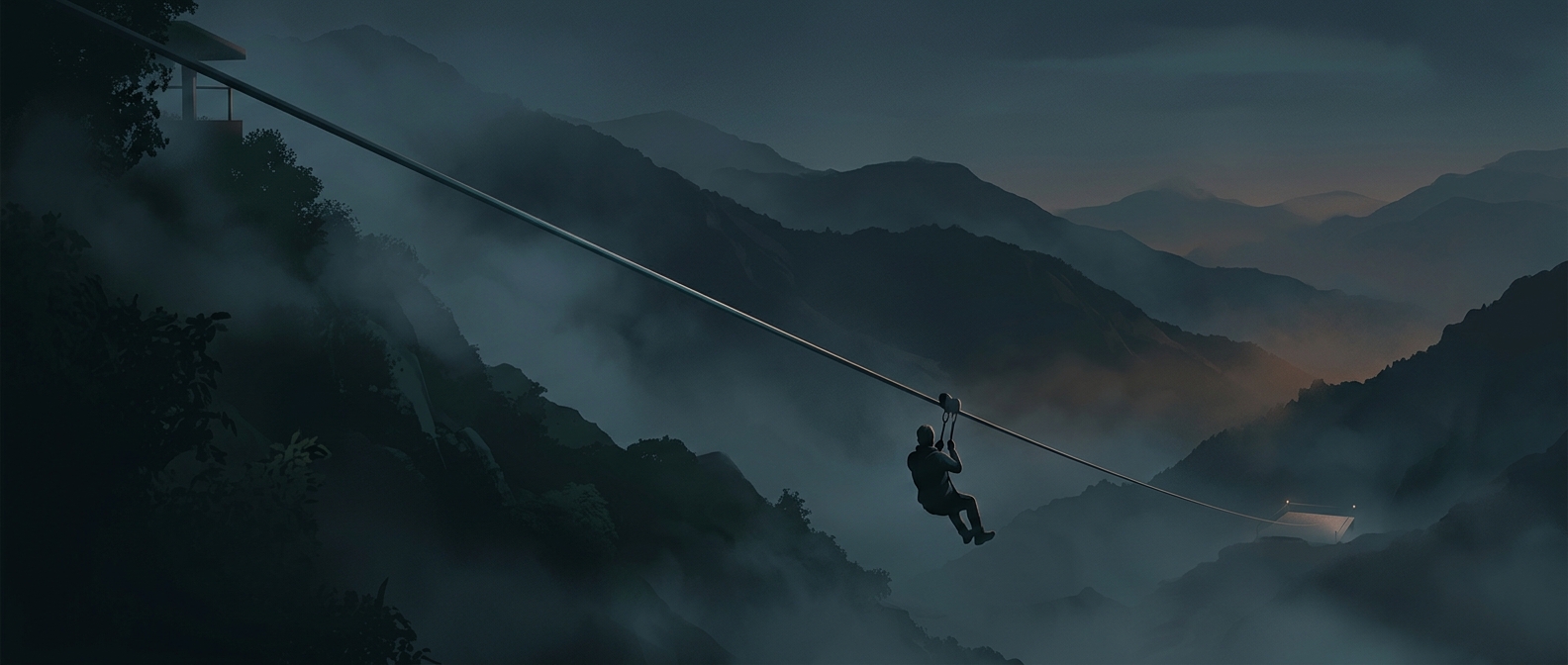
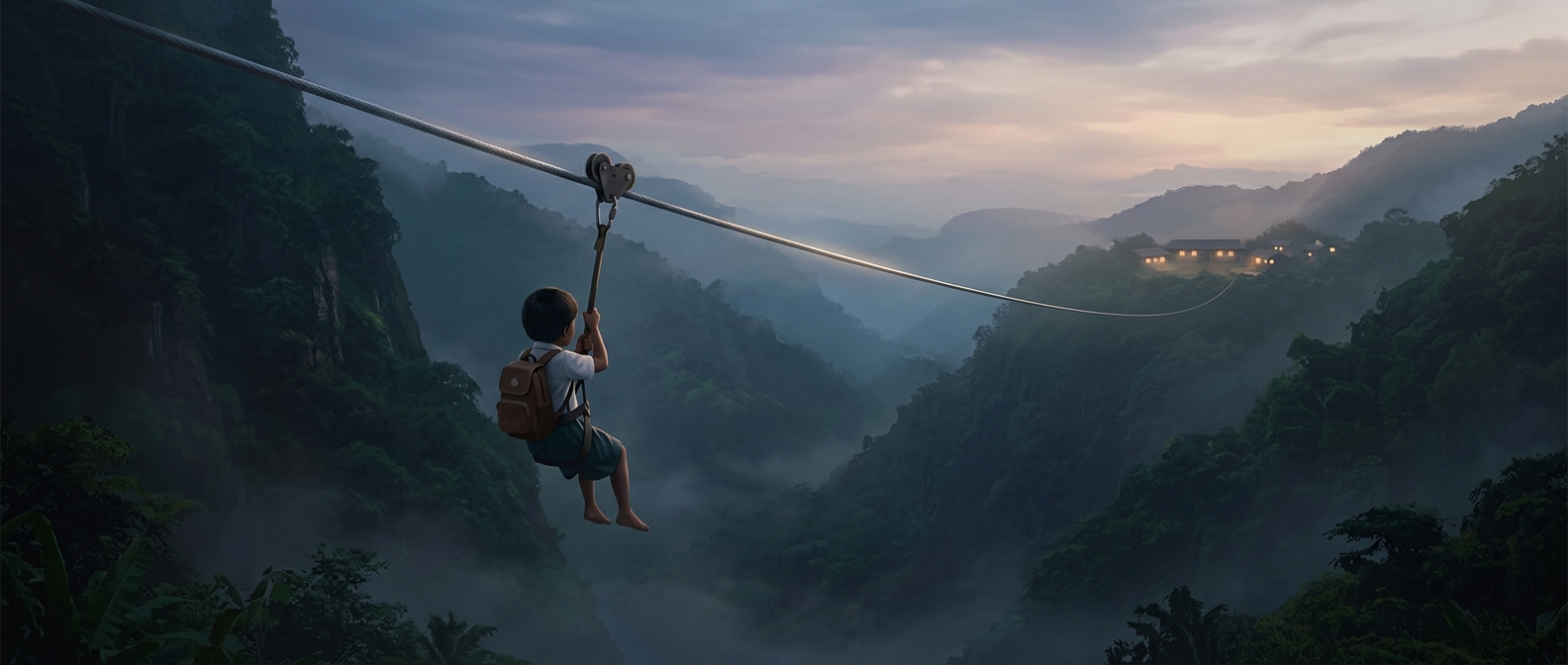
For some students, the route to school is not a road down into a canyon and back up the other side. It is a ride along a cable stretched across the gap. A pulley rolls along the cable, carrying a rider from one bank to the other; gravity supplies the motion when the route slopes downward.
The canyon’s 1,200-foot depth describes how far the land drops below its rim—not how far a student travels vertically. The crossing is from side to side, above the canyon floor.
The tradeoff behind the ride
A zipline can connect places that are difficult to reach by road or footpath, turning a steep detour into a direct crossing. But the shortcut depends on a cable and its supports being able to carry people safely. The line must be securely anchored, and riders need a way to control or stop their movement at the far end.
That makes the trip a striking example of transport shaped by terrain: instead of building a route around the canyon, the crossing goes over it. For the children who use it, a school journey can begin with a pulley rolling out over a drop more than a thousand feet deep.