Why a Steeper Slide Builds Speed Faster
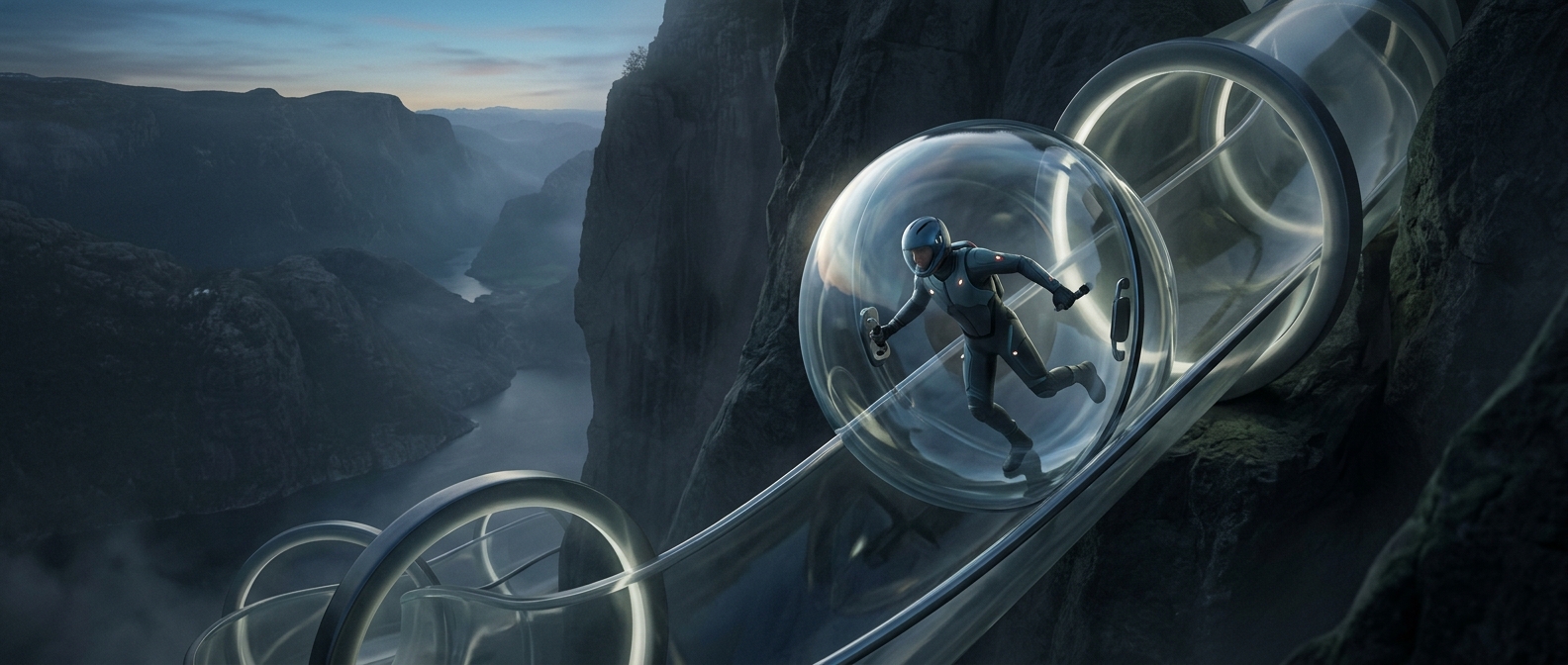
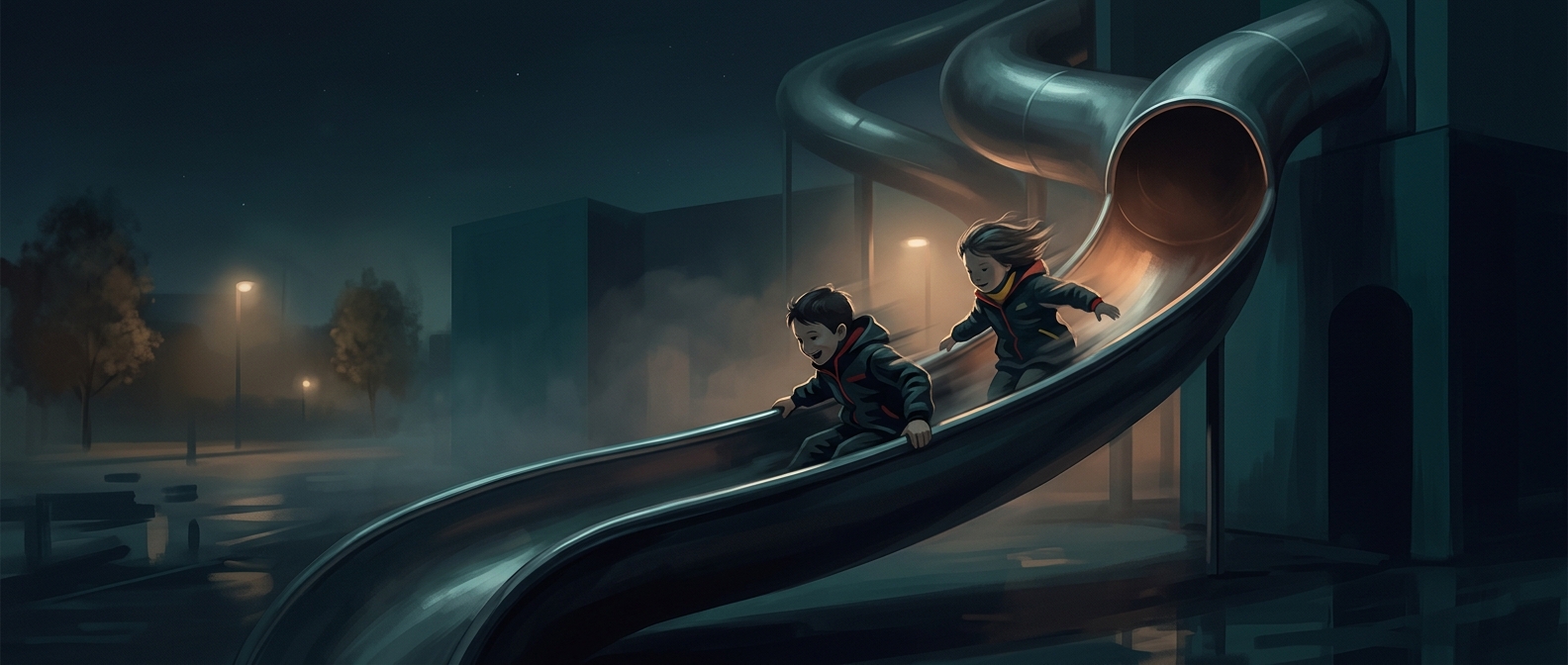
A rider on a slide is being pulled downward by gravity, but only part of that pull points along the chute. The rest presses the rider against the surface. As the chute tilts more sharply, a larger share of gravity acts downhill, so the rider accelerates more strongly along the slide.
That downhill pull turns stored height into motion. At the top, the rider has gravitational potential energy—the energy of being raised above the ground. As the rider descends, that energy becomes kinetic energy, the energy of movement. A steeper route delivers the drop over a shorter distance, making the acceleration feel more sudden.
The Surface and Shape Still Matter
Plastic does not let a rider move without loss. Friction—the resistance between two surfaces in contact—converts some movement energy into heat. Clothing, moisture, and the condition of the slide can change how much resistance there is. Air also pushes back, especially as speed rises.
The chute’s shape matters alongside its steepness. A sudden change in slope can make a rider’s direction shift abruptly; a curved transition spreads that change over more distance. Designers therefore balance a quick descent against a path that manages speed and keeps the rider supported. The practical result is that two slides with equally steep sections can feel quite different: one may build speed smoothly, while another makes the acceleration feel like a jolt.