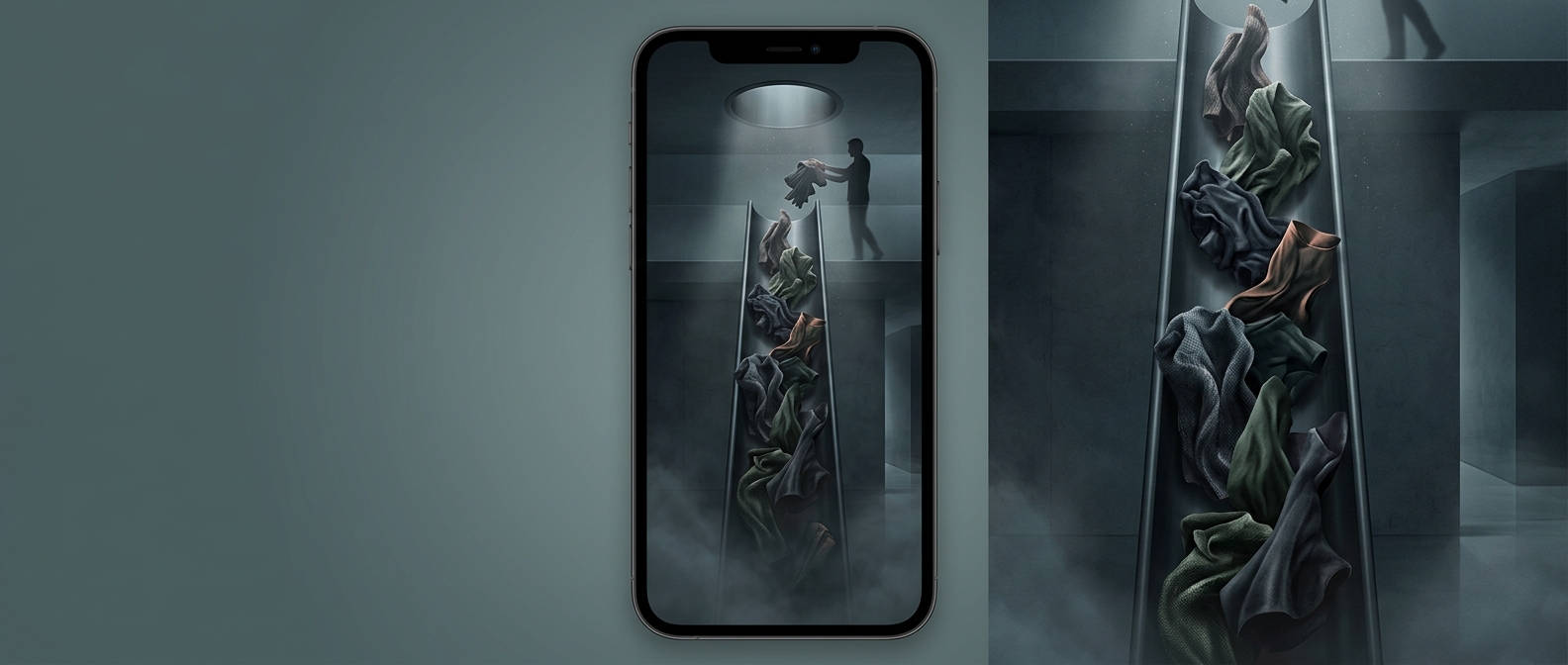
The chute turns height into a delivery system
A laundry chute works because a garment needs only a downward path, not a powered conveyor. Once released, it accelerates under gravity; the shaft keeps it from wandering sideways, guiding it toward a hamper or laundry room on a lower floor. The building itself supplies the energy that a motor would provide.
The ride is not a clean, frictionless slide. Fabric rubs against the chute walls, bunches up, and may catch on seams or projecting hardware. A smooth interior and a fairly direct route reduce those snags. The opening also has to be large enough for ordinary clothing without inviting people to push in bulky objects that could jam the passage.
A simple shaft still needs careful placement
The chute’s path is planned around the structure of the house: it must connect usable drop-off points to a collection area without cutting through beams, plumbing, or other obstacles. A straight run is easiest for clothes to travel through; bends make the route harder to clear if a load stops partway down.
The lower end matters, too. Clothes need somewhere contained to land, and someone needs room to retrieve them. The shaft also links floors acoustically and can carry drafts or odors, so its openings and enclosure are part of the building’s design—not just a convenient hole in a wall.
Convenience comes from moving the work, not removing it
A chute saves repeated trips with a basket, especially when bedrooms and laundry facilities are on different floors. But it does not sort, wash, or fold anything; it simply shifts the transport step into the building. The useful tradeoff is that a small, planned passage can replace many separate trips up and down the stairs.