How a Rolling Bubble Carries a Rider
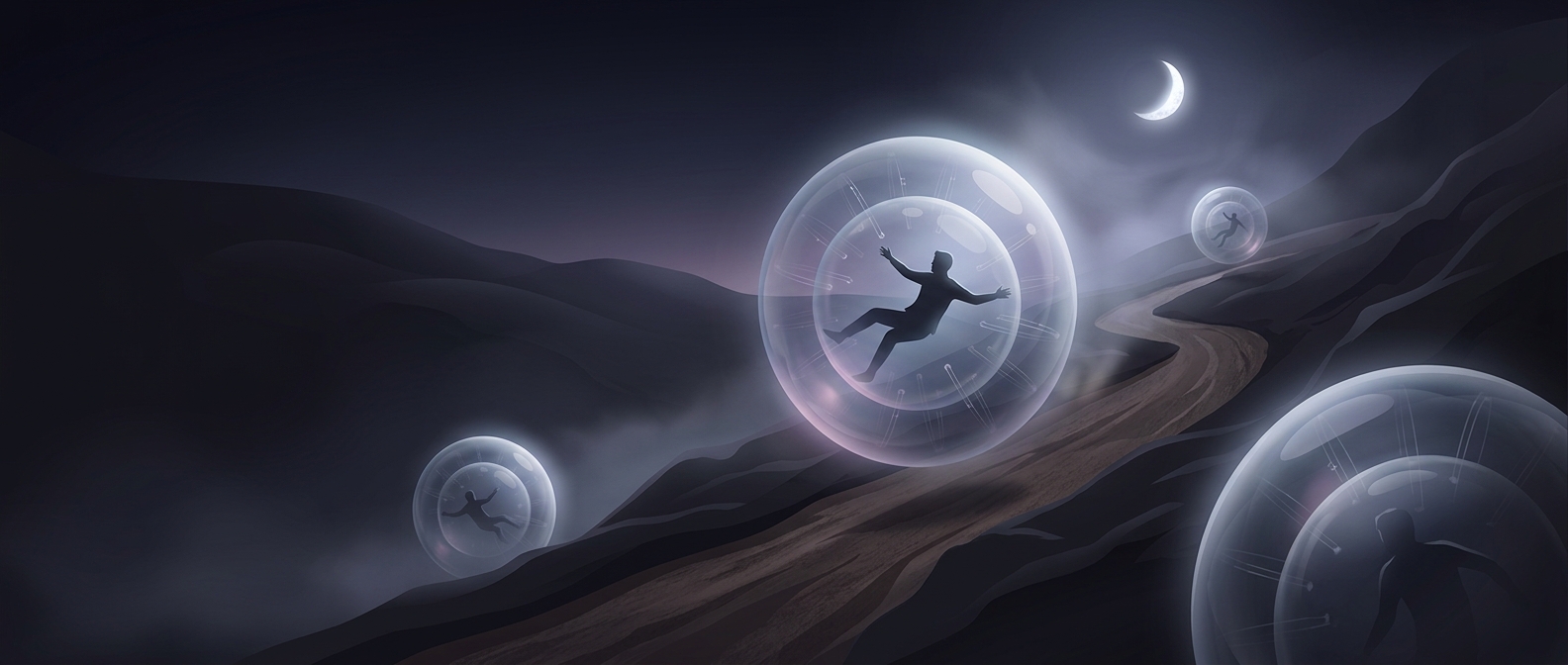
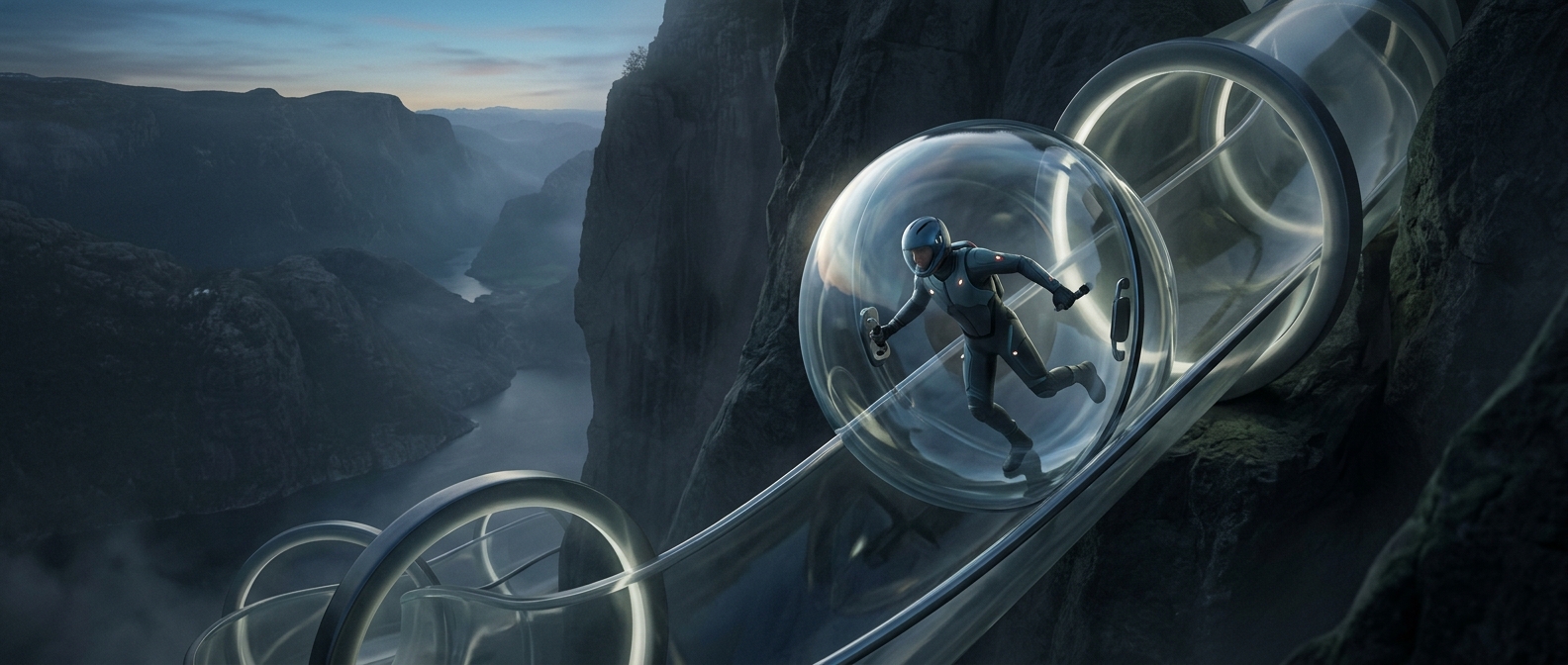
A transparent inflatable ride ball turns a downhill slope into the driving force. Gravity pulls the ball downhill; as its outer surface meets the ground, friction makes the shell rotate. The passenger is carried along inside, where the changing orientation can make “down” seem to shift from one side to another.
The ball’s air-filled wall acts as a deformable cushion. At each bump, the material compresses slightly and the trapped air shifts, spreading the impact over more time and space than a hard shell would. That softening helps make the ride possible, but it does not cancel the motion: the passenger still feels the ball accelerate, tilt, and tumble.
The Tradeoff Between Cushion and Control
The same flexible surface that cushions impacts also gives the ball its rounded shape and lets it roll over uneven ground. But a rolling sphere is difficult to steer like a wheeled vehicle. Its path depends on the slope and ground contact, so the course has to provide a suitable route rather than relying on the rider to make sharp turns.
The unusual sensation comes from that mismatch: the landscape moves steadily past while the passenger’s viewpoint keeps rotating. The air wall softens the ride, but the ball’s motion—not the scenery—is what makes the trip feel like a tumble.