How a descent became a glide
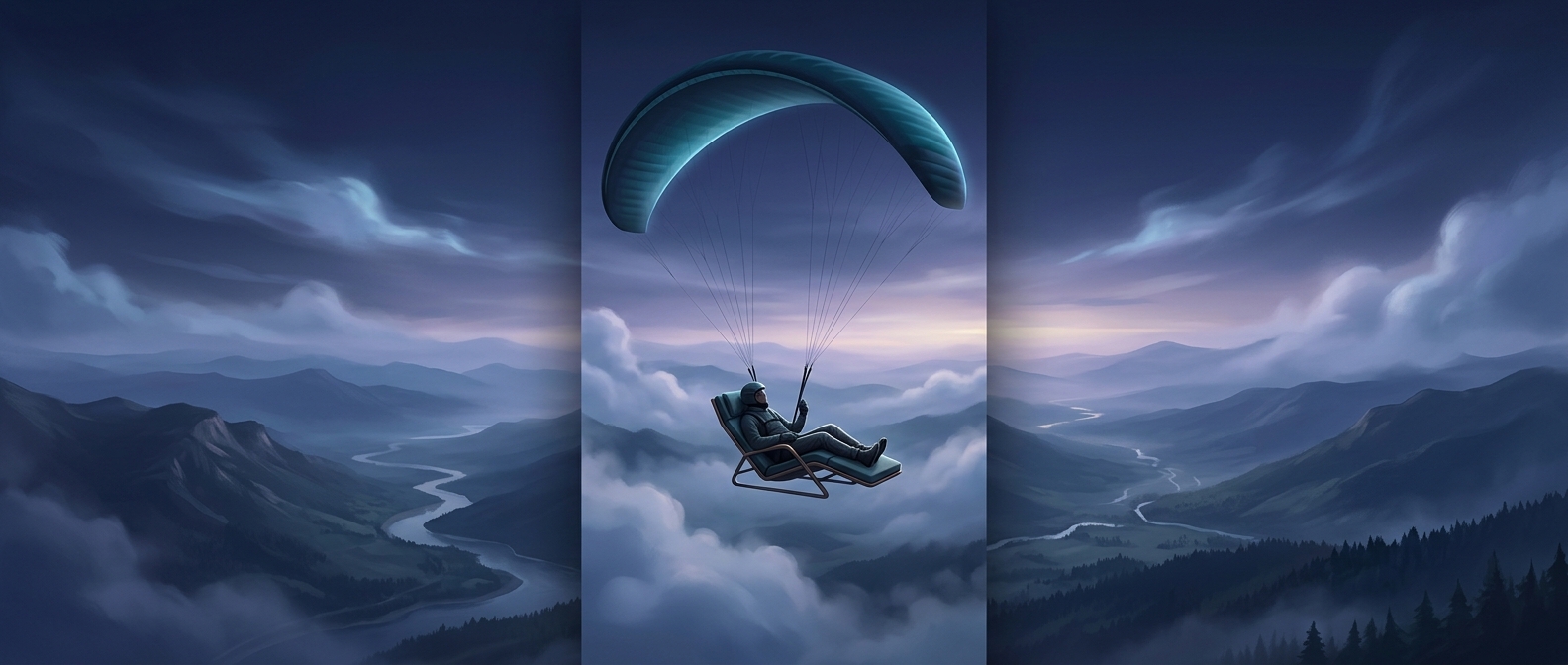
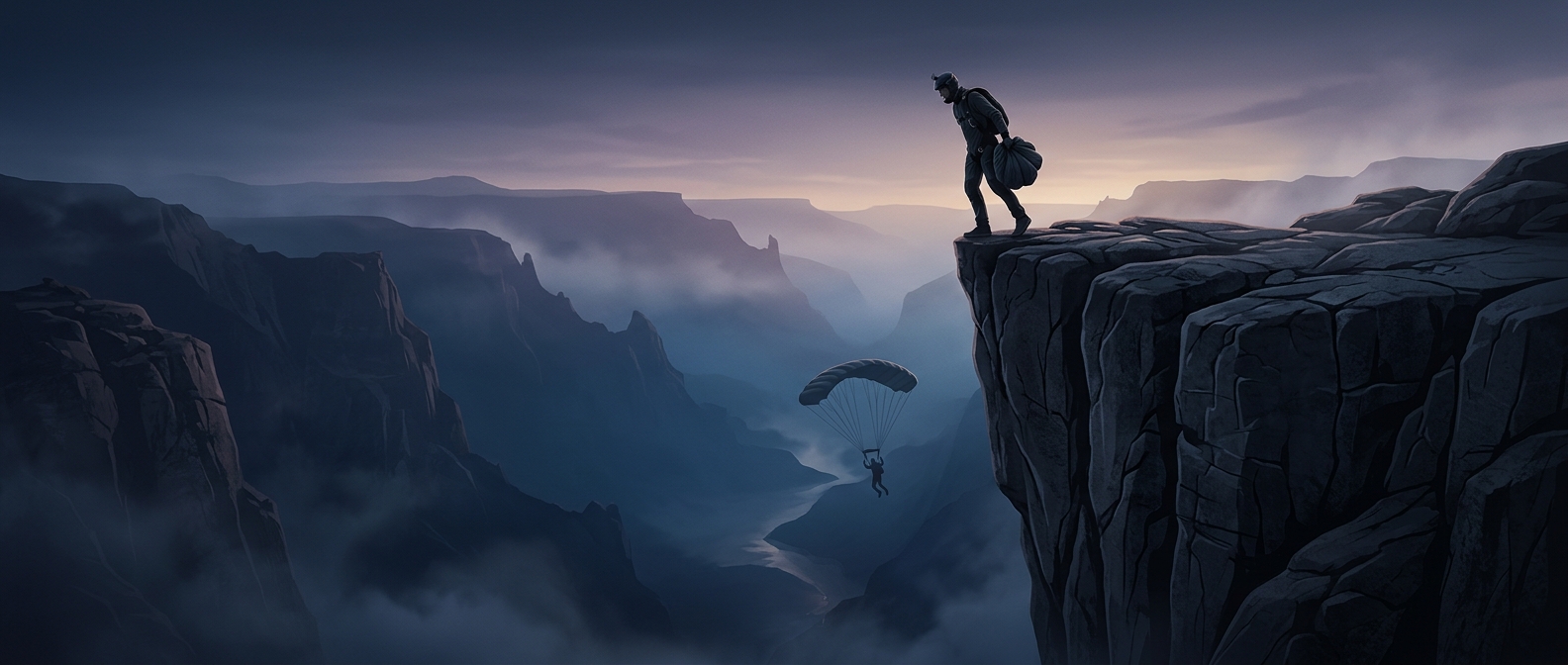
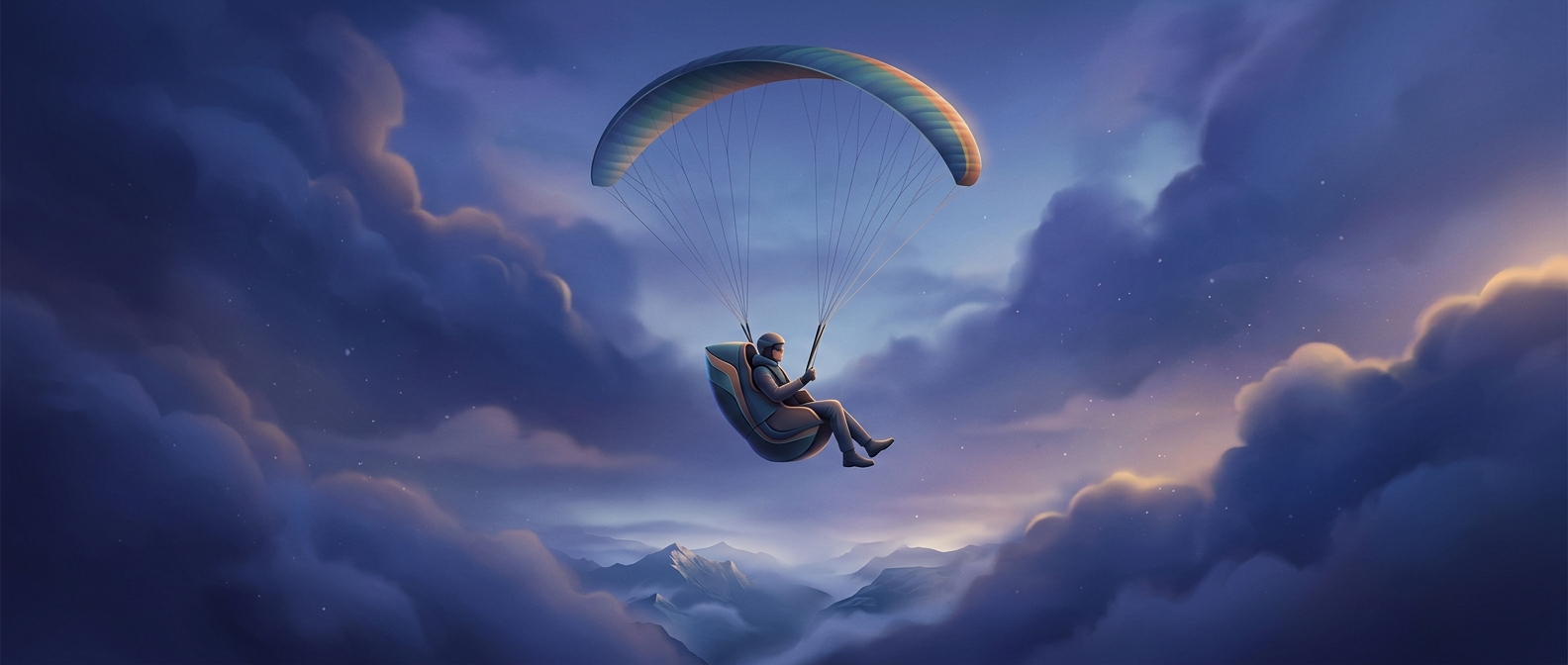
A parachute is built to slow a fall; a paraglider also needs to travel forward. Early climbers’ canopies provided the starting point, but the crucial change was using a steerable canopy that could catch moving air and convert some of the descent into horizontal travel. The pilot launches from a slope, where the canopy can fill with air, then shifts direction using steering controls and body weight.
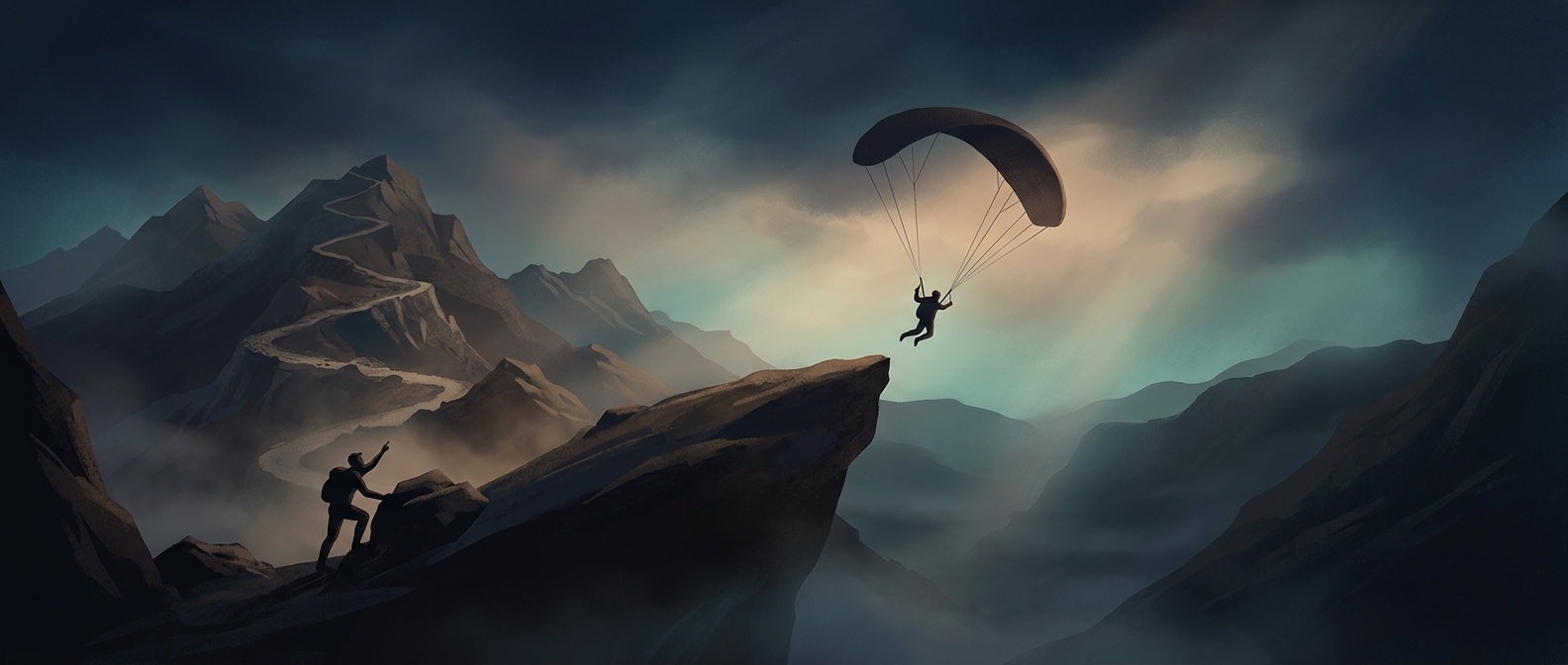
That forward motion changes the route down a mountain. Instead of dropping straight toward the valley and then facing a long walk back, a climber could follow a longer airborne path toward a landing area. The shortcut was not a powered flight: the pilot still loses altitude, and the available route depends on wind, terrain and a safe place to land.
The mountain is part of the machine
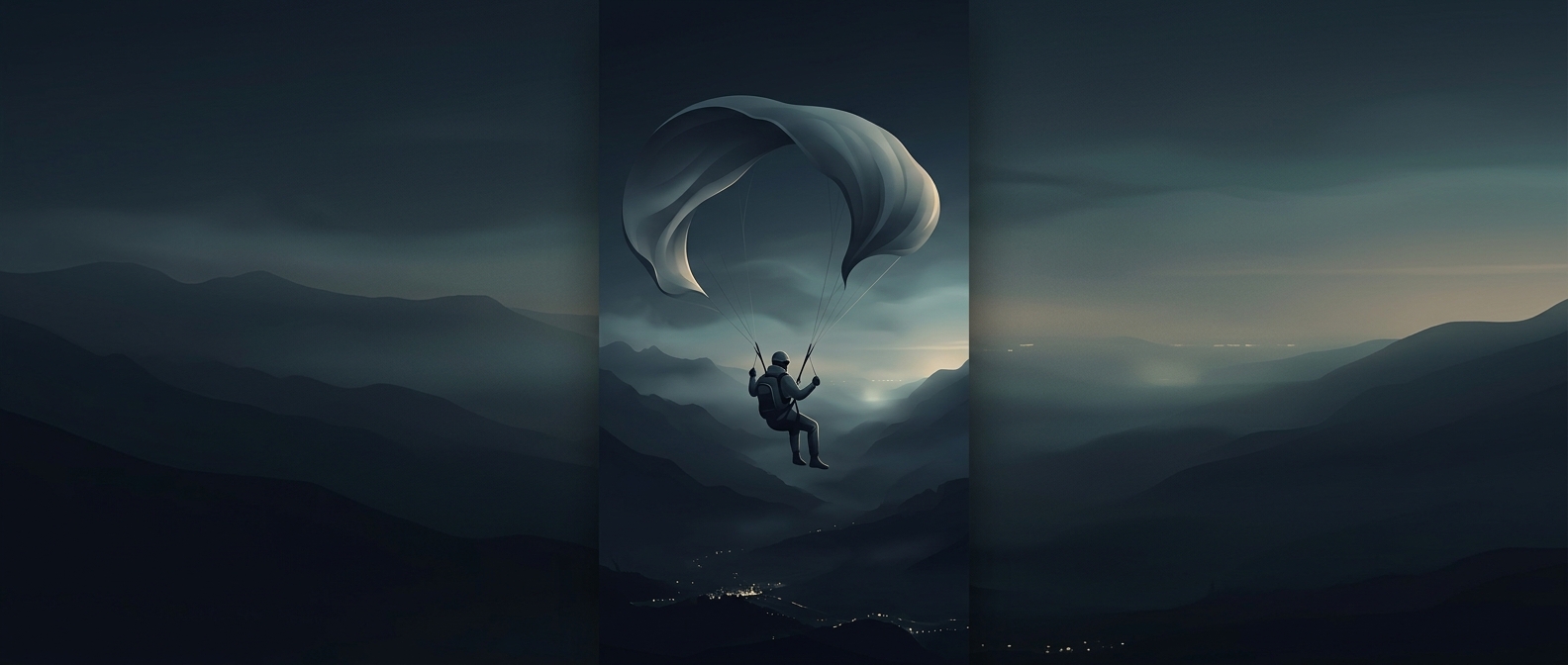
A steep launch site gives the canopy room to inflate and the pilot a way to build speed. Once airborne, the canopy’s shape helps it move forward while staying aloft; steering alters its course, but cannot erase the need to descend. That makes the landscape both runway and navigation challenge. A valley may be the destination, but ridges, changing air and limited landing space shape which line is practical.
The original appeal was therefore more than avoiding tired legs. A climber could turn a return journey into a controlled aerial route—but only by trading the predictability of a walk for dependence on air and terrain. That basic bargain still defines the paraglider: it carries no engine, so its freedom to choose a route is inseparable from the mountain and weather that make the flight possible.