How a Soft Wing Holds Its Shape
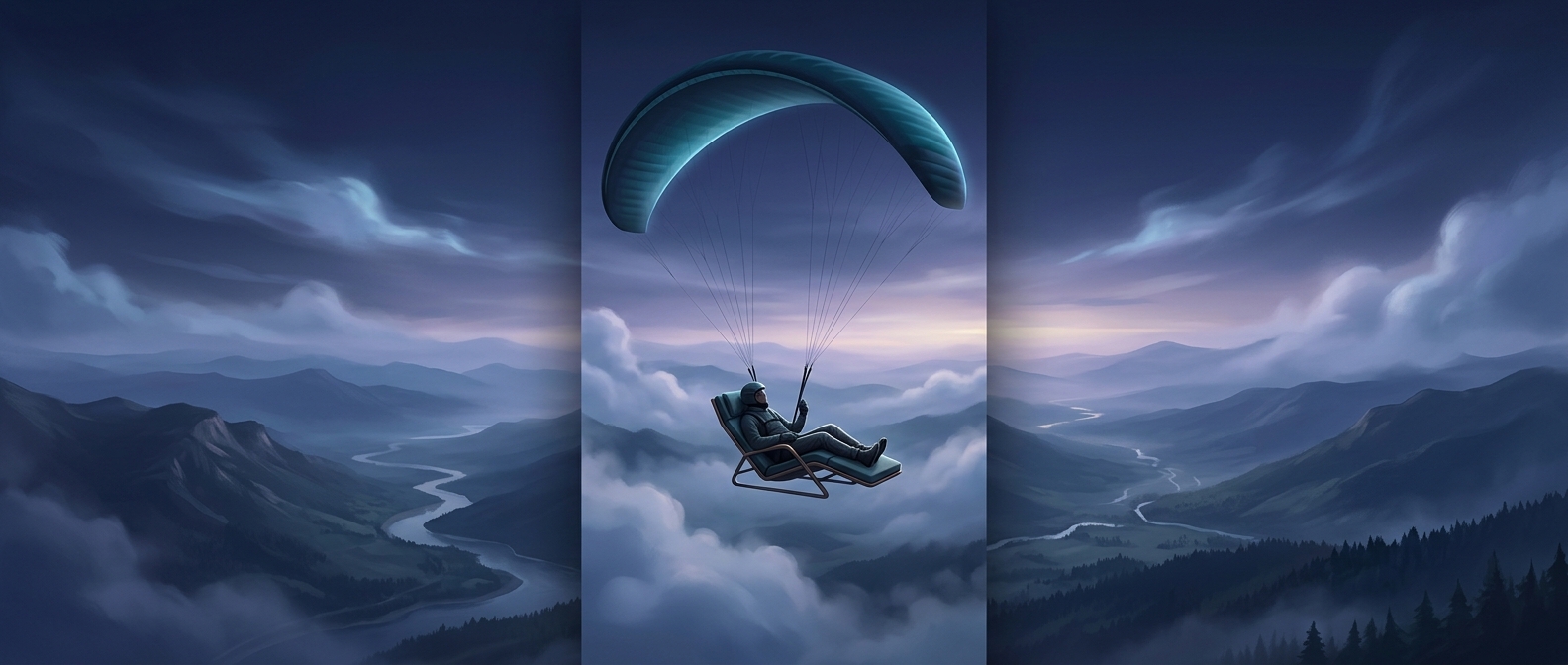
A paraglider’s canopy is not a solid surface. Its fabric forms openings at the front, where moving air enters and pressurizes the wing’s internal cells. That pressure helps the canopy keep its curved shape. As air flows around the curve, the wing generates lift, the upward force that supports the pilot.
The wing needs airflow to keep producing lift. On launch, a pilot runs downhill or into the wind to inflate the canopy and build forward speed. Once airborne, the glider continually trades height for motion: gravity pulls it forward and downward, while the wing’s lift slows its descent. Rising air, such as air pushed upward along a hillside, can provide extra height and keep a flight going longer.
Steering Without a Rigid Frame
The pilot’s controls change the flexible wing’s shape rather than turning a wheel. Pulling a brake line lowers the trailing edge—the rear edge of the canopy—on that side. The added drag slows that side, causing the wing to turn. Leaning in the harness shifts the pilot’s weight and can help guide the turn, but the brake lines provide the direct steering input.
This light, flexible design makes a paraglider portable, but it also ties flight closely to the air around it. Wind and rising currents can help or hinder, and the canopy must remain inflated and moving through the air. A pilot therefore manages not just direction, but the wing’s speed and the changing air that keeps it aloft.