How a small aircraft rises without a runway
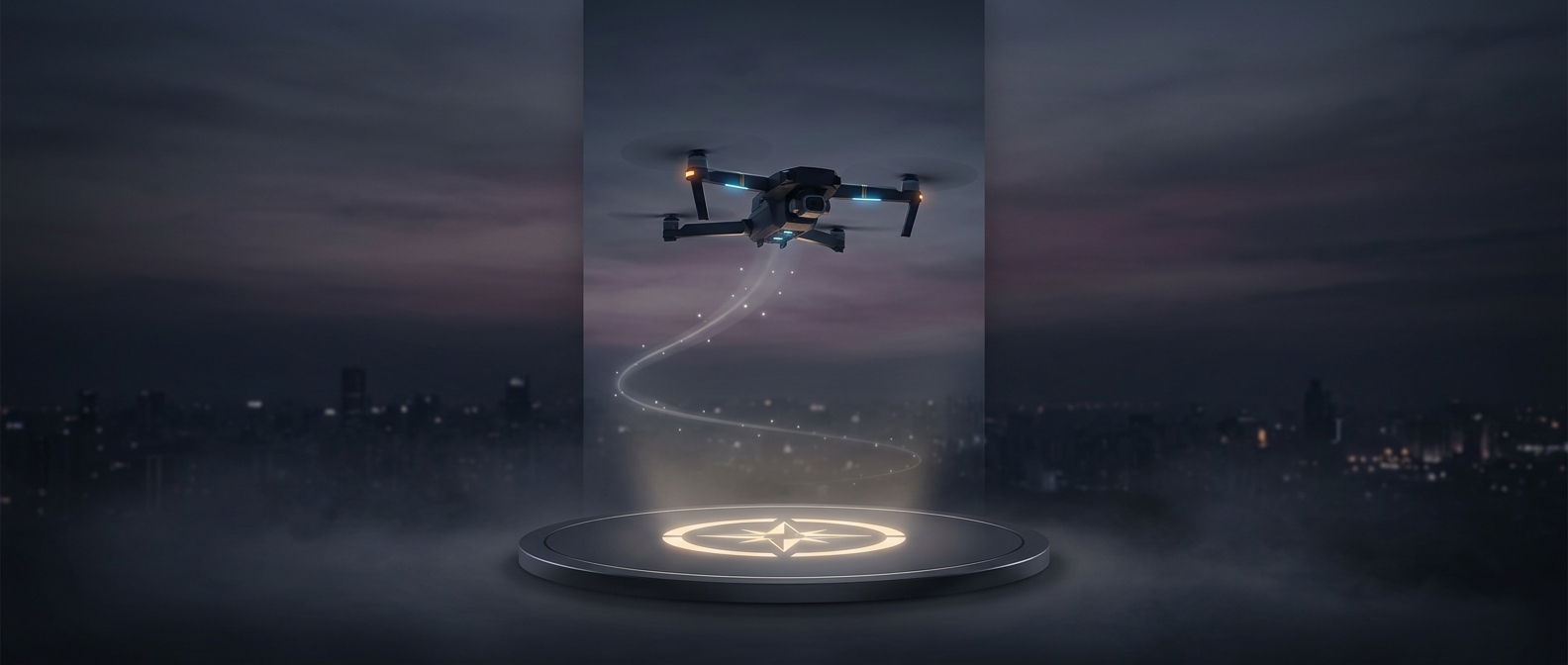
A backpack-sized camera aircraft is usually a multirotor: several small propellers push air downward, and the reaction lifts the craft upward. Because the propellers point vertically, it can rise from a patch of ground instead of needing a runway. To move, it tilts slightly, directing some of that upward thrust sideways.
The craft steers by changing how fast its rotors spin. If one side produces more lift than the other, the aircraft tips and moves; carefully balancing those changes lets it hover or turn. This rapid adjustment helps a small machine stay controllable, though gusts can still push it around.
The pilot is on the ground
There is no person aboard. A controller sends commands from the ground, while the camera’s view can be transmitted back to a screen or goggles. That lets an operator judge position and direction from above, rather than relying only on what the aircraft looks like from below. The camera feed is a view for the operator, not proof that the craft can make decisions on its own.
Shrinking the aircraft makes it easier to carry and launch, but it also leaves little room for a large battery or heavy equipment. More battery adds weight; a heavier camera also demands more lift. The result is a practical tradeoff: a compact craft can quickly provide an overhead look at a roof, field, or hard-to-reach structure, but it cannot stay aloft indefinitely or carry the capacity of a larger aircraft. Its useful trick is getting a camera into the air without transporting a runway—or a pilot—with it.